We developed this innovation to address a key gap in education: teachers are often expected to implement change, but rarely supported to design it.
We saw that traditional professional development was not leading to lasting transformation, as it remained disconnected from real classroom needs and lacked continuity.
Seed Ambassadors was created to provide a structured yet flexible model where teachers can identify real challenges, design and test solutions, and learn from each other within a supportive community.
Our goal was to shift teacher development from one-off training to an ongoing, practice-based process that builds ownership, collaboration, and sustainable change within the school.
In practice, this innovation operates as a year-long, school-based teacher development cycle.
Teachers join the program as “Ambassadors” and work in a structured yet flexible process:
They identify real needs in their classrooms or school context
They design and prototype solutions using design thinking
They test their ideas in practice and iterate based on feedback
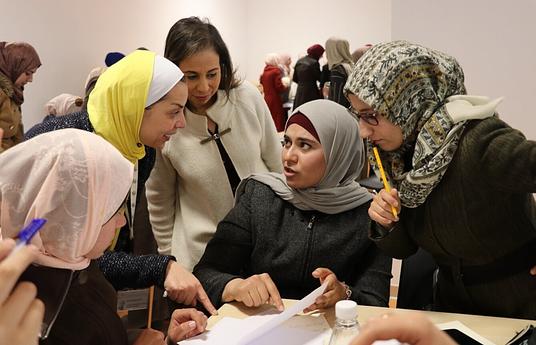
They regularly come together in facilitated sessions to reflect, share, and learn from each other
Throughout the process, teachers are supported through workshops, peer learning, and ongoing facilitation.
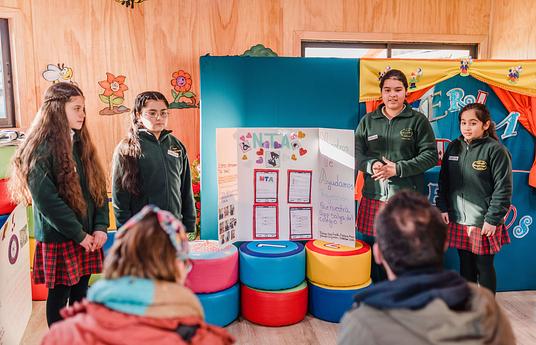
At the end of the cycle, they present their projects to the wider school community, creating visibility, shared ownership, and opportunities for scaling impact.
This makes the innovation not just a training program, but a continuous cycle of design, practice, reflection, and community learning embedded within the school.
The spread of this innovation is cumulative.
Each year, a new group of teachers joins the program (e.g., 9 teachers this year across primary, middle, high school, and counseling). As they develop and implement projects, these practices begin to influence their teams and departments.
Over time, the number of projects suitable for wider adoption grows exponentially. Successful practices are shared within the school, adapted by other teachers, and integrated into different grade levels and subject areas.
This creates a ripple effect: each cohort not only develops new solutions but also contributes to a growing pool of practices that can be scaled and sustained across the school.
The innovation is continuously evolving based on emerging needs and participant feedback.
Each year, we enrich the program with new skill areas that strengthen teachers’ design, communication, and relational capacities. This includes a year-long design thinking process as the core framework, along with additional trainings such as Nonviolent Communication to support empathetic interaction, speculative design to expand future-oriented thinking, sketchnoting for visual reflection, and presentation skills for sharing impact.
These ongoing adaptations ensure the model remains responsive, relevant, and deeply connected to both teacher needs and the evolving educational landscape.
Just contact us, we're ready for it.