Cookie preferences

HundrED uses cookies to enhance user experiences, to personalise content, and analyse our web traffic. By clicking "Accept all" you agree to the use of all cookies, including marketing cookies that may help us deliver personalised marketing content to users. By selecting "Accept necessary" only essential cookies, such as those needed for basic functionality and internal analytics, will be enabled.
For more details, please review our Cookie Policy.
Accept all
Accept necessary
search
clear

Zvimba District Alternative Learning Hub.

place Zimbabwe

Unlocking potential, learning beyond boundaries.

As Precious Hearts Haven we are solving the problem of limited access to education in Zvimba Rural by creating new ways of learning. We mix local knowledge with modern skills in the community. These let students learn at their own speed, helping them gain important skills and knowledge for a better future in their communities.

Overview

Information on this page is provided by the innovator and has not been evaluated by HundrED.

Updated May 2025
Web presence

2025

Established

1

Countries
Community
Target group
We hope to see an education system where every child, no matter where they live, has access to learning that respects their interests, talents, and pace. Our innovation aims to make learning more personal, practical, and rooted in the community. We want to see confident, skilled children who are proud of their culture and ready to build a better future.

About the innovation

Why did you create this innovation?

We created this innovation to help individuals in Zvimba Rural District who struggle with no to limited access to education. Many face different challenges like long distances to school, no classes, and lack of resources as well as poverty. Our solution brought learning closer to home through alternative learning, giving students skills, confidence, and hope for a better future. To add on our innovation seeks to equip students with life skills, practical and vocational skills. These skills involve sewing, knitting, carpentry, horticulture, basket weaving, bricklaying, entrepreneurial skills as well as environmental skills and jewelry making. These skills will equip students with life experiences and sustainable living skills. This will lead to a more developed community, youth empowerment, income generation and improved self-reliance.

What does your innovation look like in practice?

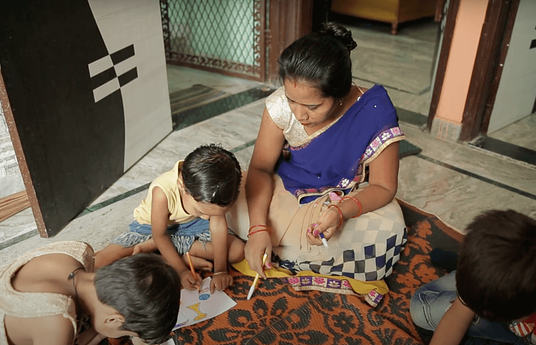
In Zvimba Rural, our learning hub is set up under a tree, creating a peaceful and welcoming space for education. Currently, 58 students attend the hub, where they are supported by dedicated volunteer teachers from the community. What makes our hub special is that each student is taught based on their interests, strengths, and existing knowledge. This personalized approach helps students stay motivated and grow in their own unique way. Instead of following a one-size-fits-all system, Precious Hearts Haven focus on helping each learner develop practical and meaningful skills that match their passions and talents. The open-air setting also allows students to feel free, connected to nature, creativity and part of a supportive learning family. Our hub is more than a classroom it’s a space where individuals in the rurals can dream, learn, and build a brighter future for themselves and the community.

How has it been spreading?

Our innovation started with just 20 learners under a tree in Zvimba Rural. As we noticed the impact of how students were learning new skills and growing in confidence more individuals became interested. Word of mouth quickly spread, and currently we have 58 learners doing alternative learning. Local leaders and families have shown strong support, helping us grow. Volunteer teachers have also increased, making it easier to reach more children. The success of our unique, personalized approach to teaching has inspired nearby villages to show interest. With continued involvement, the innovation keeps spreading naturally and with great purpose.

If I want to try it, what should I do?

Start small, find a quiet spot, gather kids, and ask for help from teachers or skilled adults. Focus on what each child likes and is good at. Use local knowledge and simple tools to teach. Work with the community and grow slowly.

Implementation steps

Identify a learning environment
Firstly find a safe, quiet, and easy to access space where children can learn in groups. This could be under a tree, in a yard or any open area in the community. Make sure it’s a place where individuals can feel comfortable and protected. You don’t necessarily need a building just a clean, shaded spot where learning can happen peacefully and without distractions. This is the foundation of your community learning hub.
Community Engagement.
Speak to the local leaders, the elders of the community, parents, and the guardians about the innovation. Explain the idea to the idea to them and make sure you really clarify its benefits to the community. Ask for their involvement, build trust and encourage participation amongst each other.
Gather the Learners.
Invite a small number of participants of different age groups. Gather them and sample the innovation. When picking learners start with those that are from struggling backgrounds and families in poverty. Also pick from those that do not attend school on a regular basis that need support.
Find volunteer teachers.
Look for individuals interested in volunteering their time. These teachers could be retired individuals, skilled workers or any other community members passionate about the innovation.
Understand each learner.
After following all the other necessary steps, in order to implement this innovation the teachers must understand each learner on a one on one basis. This contributes to the picking of strengths, talents and passion. It also helps create personalized learning experiences for every student.
Plan Learning Activities
Design learning styles and lessons according to the interests and the strengths and weaknesses of each student. During this step students are also grouped in their age groups and their talents.
Start teaching.
Begin the lessons and make sure the environment continues to be a secure and friendly space for all students.
Monitor the innovation.
Constantly meet with the teachers and the students to monitor how the alternative approaches are working for each student. Ask learners and community members for feedback. This is an opportunity to measure the impact and scalability and of the innovation.
Expansion.
As the individuals increase, train more teachers and expand into other villages.