The Explorer Curriculum was designed in 2020 during the Covid-19 pandemic by a group of educators in two schools in East London (part of the LETTA Trust). Created partly to help our students ‘bounce back’ from lockdowns, our innovation aimed to address three longstanding issues.
1. Pressure to teach all nationally-prescribed content makes it difficult for schools to prioritise any broader mission, or systematically develop the dispositions in their students
they need to thrive, both as children and in the transition to adulthood.
2. Schools rarely find opportunities for children to collaborate in mixed age groups, despite the potential benefits.
3. Schools lack strategies to use their locality as a site for learning beyond the classroom, or work with local organisations as resources for teaching and learning.
We saw a gap between our vision for our students, and the reality of their schooling. However brilliant our subject-based teaching might be, however many out-of-school and after-school opportunities we offered, however our schools’ cultures try to ensure that this vision is ‘caught’ as well as ‘taught’, we knew all this was still inadequate for the task of developing the citizens we know our children can be.
To come closer to achieving our vision for all students, we needed two elements: precision and space. “Precision" converts vague ideals into specific character behaviours, while "Space" guarantees dedicated in-school time to move beyond mandated requirements.
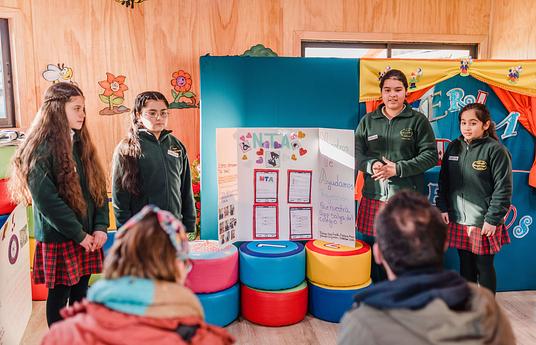
Fridays in LETTA schools are different from the rest of the week. Children are in mixed age groups, collaborating on projects that, where possible, address local real-world challenges. These enable pupils to broaden their horizons, develop specific learning and character dispositions (1), and explore their personal interests.
Much of this takes place outside classrooms, using the outdoors, the local neighbourhood and other parts of London as resources for learning. All staff, as well as parents and others in our diverse community, are involved. Older students are given genuine leadership responsibilities.
The 18 badges include: Crafter, Entrepreneur; Global Activist; Neighbour; Night navigator.
During each project, children have the chance to earn badges and exhibit the processes and outcomes of their project to others. They have opportunities to reflect on their learning and receive meaningful feedback from peers, school staff and other adults.
Our pedagogy focuses on ‘serious fun’ through four principles: prioritising oracy and dialogue; making space for reflection; building challenges requiring teamwork; and creating opportunities for playful inquiry.
On Fridays our children are learning, deeply and with purpose, about themselves, the world around them and their place in that world.
(1) The 9 dispositions are mapped through age-related progression rubrics: Creativity, Curiosity, Kindness, Citizenship, Fairness, Determination, Teamwork, Leadership, Confidence.
Our focus has deliberately been on improving this curriculum in our schools. However, we now feel ready to collaborate and scale worldwide!
Following a successful pilot, the innovation has gained significant momentum. A major achievement was being praised in an "Outstanding" school inspection report and being featured in a national toolkit for experiential learning. We are currently embedding the curriculum across five LETTA schools, harnessing our expertise as a teacher training provider to disseminate best practice.
Our goals involve moving from ‘proof of concept’ to a comprehensive understanding of impact. We aim to co-lead a full efficacy trial with partners worldwide, working across different countries. We wish to use education technology to create high-quality, locally bespoke and globally relevant projects and badges. We are looking for groups of schools, local organisations, and investors to partner with us anywhere in the world to co-design this innovation.
We have created session plans for each project, scaffolded to enable adults to lead sessions with minimal preparation, but also to empower staff to adapt and innovate - redesigning plans to suit their own levels of confidence and particular passions. Each project ideally starts with a preliminary session for older students to support the planning, design and leadership of activities. In the first session students agree on a particular disposition they wish to focus on. In the final session, they reflect on this disposition. Most projects have an opportunity for pupils to share the outcomes of their work with others and access some meaningful feedback. The Entrepreneur project ended with a fair where VIP visitors came to view pupils’ products and award prizes.
Over time, we wish to work with external partners to redesign existing projects, create new ones, and lead the delivery of both. For instance, the ‘local hero’ project was redesigned in partnership with the Mayor of London Game Changers programme. Staff from this programme will lead two of the four sessions, and provide advice throughout. Schools like ours receive a multitude of offers from people and organisations who wish to work with our children to focus on a particular agenda. At times, these can feel like random acts of kindness. From now on, where possible and appropriate, we will work with organisations to structure any offer around the delivery of an existing or new project.
Join us! We are looking for schools and other partners worldwide to collaborate on redesigning our curriculum for use with schools across the world.
If you do want to go it alone, here are a few tips to inform your approach:
● Get your subject-based curriculum right first
● Create some separate space for this… integration isn’t everything
● Keep it simple - there are many, many dispositions with value but you need to prioritise
● Ensure that you have mapped progression across your dispositions - otherwise they simply become a meaningless list of so-called '21st Century skills'
● Don’t worry about measuring impact in the first year
● Involve as many staff members as you can in designing the curriculum
● Plan the implementation carefully and make sure a senior leader is overseeing this phase
.jpg)