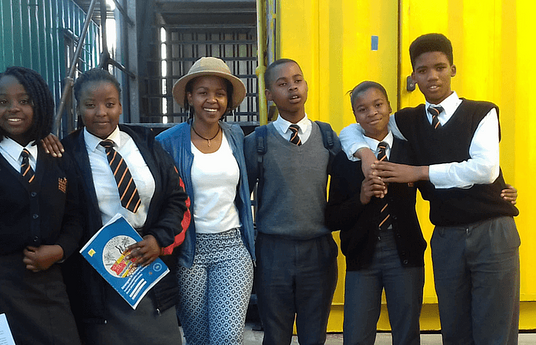
In global education, marginalised girls aren’t hypothetical. They’re the 14-year-old mother, the sibling-caregiver, or the child with a disability in a village where no one speaks her language. They are among the 133 million out-of-school girls, often overlooked by programmes offering uniform solutions that reinforce exclusion. Too often, inclusion means only school re-entry, yet a rigid, age-bound, or language-exclusive system may have pushed them out.
SAGE asked instead, “What does success look like for her today?” Marginalisation is not a fixed label, but it is shaped by intersecting factors like age, gender, disability, motherhood, religion, labour, and language.
Piloted in Zimbabwe, where gender inequality, child marriage, violence, and low female political participation are acute, SAGE targets the most excluded: married girls, young mothers, girls with disabilities, ethnic minorities, those engaged in labour, and those who have never been to school.
As a gender transformative programme, SAGE works nationally through a ministerial partnership to lead the country’s Non-Formal Education (NFE) policy reform, regionally to integrate NFE into formal systems, and locally to challenge harmful social norms. SAGE outcomes go beyond academics, fostering agency, confidence, and new choices, especially for girls who had never seen themselves as learners.
SAGE is a flexible, community-based education model for marginalized and married girls, and young mothers aged 10-19 who’ve never been to school or lacked support to complete it. It offers four girl-led pathways: re-entry into formal education, Informal or community-based learning, vocational and life skills training, inclusive of sexual and reproductive health rights education and advice, and fairly paid employment. Learning takes place in community-based learning hubs, with six hours of weekly sessions - four hours of accelerated teaching and learning (ATL) literacy and numeracy, and two hours of life skills through Champions of Change (CoC) model. ATL is delivered by female qualified teachers who are either awaiting deployment or retired, supported by formal school heads. Lessons are participatory and rooted in girls’ lived realities. Girls aged 15+ receive skills training through the Integrated Skills Outreach Programme (ISOP), led by trusted Master Craftspeople. A select group completes a four-month Technical and Vocational Education Training (TVET) in male-dominated trades. Both include financial literacy and enterprise skills, preparing girls for economic independence. Plan International Champion of Change model also supports adolescent girls and boys in building self-esteem and exploring SRHR, gender rights, and empowerment. Men’s clubs and intergenerational dialogues engage communities to champion positive masculinity and protect girls.
The SAGE model has been successfully implemented for seven years across 11 districts in Zimbabwe by Plan International and its partners - Christian Blind Mission (CBM), Apostolic Women Empowerment Trust (AWET), Open University (OU) UK - in collaboration with the Ministry of Primary and Secondary Education (MoPSE), and local communities. It has reached over 18,000 marginalised girls with accelerated non-formal education in 93 supportive community settings. The model’s spread is rooted in strong partnerships with education, health, safeguarding, and civil society actors, who work together to address the complex vulnerabilities that girls face.
SAGE operates at multiple levels: nationally, with the MoPSE and key stakeholders; at the district level, with education and health officials; at the school level, through formalised partnerships; and at the community level, through outreach and service alignment.
Its influence has extended through leading policy development, capacity development, and integration into local education systems. By building networks with schools and training government actors, SAGE has shaped how education services are delivered to out-of-school girls, laying the groundwork for replication and scale.
SAGE began as a community-based model to empower girls through education. Its rollout coincided with economic hardship, environmental instability, and the COVID-19 pandemic, disrupting local participations and structures. In response, SAGE adapted strategically to preserve impact and enhance innovation. Learning pathways expanded beyond hubs to include door-to-door engagement, phone-based sessions, and small learning groups. Material was redesigned for low-tech delivery, enabling remote facilitation, and volunteers received training to support flexible and inclusive learning. Continuous Professional Development shifted to WhatsApp, covering topics such as psychological first aid, trauma-informed care, and differentiated instruction. As GBV rose, SAGE strengthened protection by training child protection committees and linking them to district services. Climate resilience is now embedded: flexible pathways sustain learning during climate-related shocks; blended and digital-assisted approaches ensure continuity; and contextualised modules reflect realities and equip girls to face emerging challenges. These adaptations transformed SAGE into a dynamic, crisis-resilient model, one that not only survives disruption but thrives through it. The innovation now stands stronger, more inclusive, and better prepared to meet the evolving needs of girls in vulnerable contexts.
To implement SAGE, embrace its core principles: design flexible pathways — formal education, informal learning, skills training, or employment — so girls can choose what fits their lives. Go beyond test scores: measure progress through income, agency, and social participation. Identify the most marginalised - excluded by age, disability, motherhood, ethnicity, or labour – and co-create with them. Their lived experience is expertise. Engage communities early, build trust with local leaders, educators, and families. Use flexible learning spaces and participatory teaching and materials that reflect girls’ realities. Build wraparound support: mental health care, protection services, and norm-shifting dialogues. Train local facilitators to deliver content safely and inclusively. Strengthen referral systems and partner with government and civil society to align services and ensure sustainability. Focus on core interventions like Accelerated Teaching and Learning (ATL) through community-based hubs, which assess girls with disabilities and provide assistive devices for inclusive learning. For girls aged 15 and above, transition into skills training via ISOP (community-led) and TVET (vocational courses in male-dominated trades), including financial literacy and business skills via pathways into employment or entrepreneurship. SAGE isn’t a one-size-fits-all model; it’s a mindset shift. It requires listening deeply, adapting constantly, and placing girls at the centre of every decision.