Cookie preferences

HundrED uses cookies to enhance user experiences, to personalise content, and analyse our web traffic. By clicking "Accept all" you agree to the use of all cookies, including marketing cookies that may help us deliver personalised marketing content to users. By selecting "Accept necessary" only essential cookies, such as those needed for basic functionality and internal analytics, will be enabled.
For more details, please review our Cookie Policy.
Accept all
Accept necessary
search
clear

Little Gardens of Eden

place Kenya

Let there Bee Fruits in Schools

Little Gardens of Eden transforms public school land into productive fruit orchards to fight childhood hunger, promote climate resilience, and create green jobs for youth and women. By planting certified fruit trees in schools, we ensure every child can access fresh fruits while restoring ecosystems and empowering communities.

Overview

Information on this page is provided by the innovator and has not been evaluated by HundrED.

Updated April 2025
Web presence

1

Countries
All students
Target group
We envision schools as hubs for nutrition, climate action, and hands-on learning. Through fruit orchards, we hope to see healthier students, reduced absenteeism, empowered youth, and education systems that equip learners with skills to care for themselves, their communities, and the environment.

About the innovation

Why did you create this innovation?

We created Little Gardens of Eden to fight childhood hunger, climate injustice, and youth unemployment by transforming underused school land into fruit orchards that feed children, create green jobs, and restore ecosystems in communities often overlooked by food and education systems.

What does your innovation look like in practice?

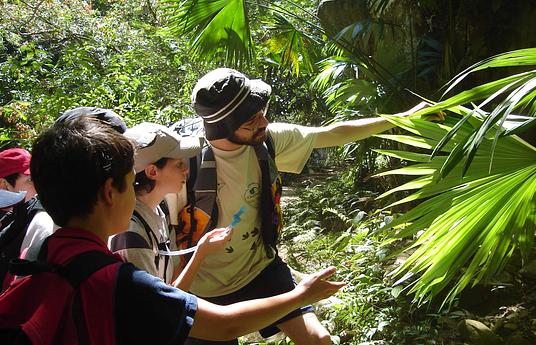
In each school, we plant 50–100 certified fruit tree seedlings. Students are trained as Fruity Rangers to care for the orchards, supported by teachers and local youth.

Trees are mulched, watered, and tracked monthly for survival, and dead trees are promptly replaced. The fruits are integrated into school meals, boosting nutrition.

Orchards double as learning labs for climate, nutrition, and environmental education. To date, we’ve planted 200,000+ fruit trees in 800+ public schools, trained over 30,000 Fruity Rangers, and offset an estimated 3,000+ tonnes of CO₂. The innovation has improved dietary diversity, reduced absenteeism, and provided a replicable model for green school transformation.

How has it been spreading?

Little Gardens of Eden has scaled rapidly through school referrals, community demand, county government endorsements, and CSR partnerships.

Our low-cost, high-impact model resonates with schools and donors alike. We’ve partnered with 10+ county governments, reached over 800 schools, and planted 200,000+ fruit trees.

Our student-led Fruity Rangers program has inspired thousands of youth, while our growing network of trained nursery partners and local mentors ensures smooth replication.

We are now building digital tracking tools to support further expansion across Kenya and into neighbouring countries.

If I want to try it, what should I do?

Start by developing a concept note and seeking approval from the Ministry of Education. Draft introductory letters, identify certified nurseries, and secure funding for seedlings.

Select schools, engage students in training, and begin planting. Fruity Schools Africa offers toolkits and support for replication.
Implementation steps

Little Gardens of Eden
Develop a concept note and seek approval from local education authorities. Identify certified fruit nurseries and secure funding. Select schools with unused land. Train teachers, students, and youth in orchard care. Plant 50–100 fruit trees per site. Monitor monthly, replace dead trees, and integrate fruits into school meals.