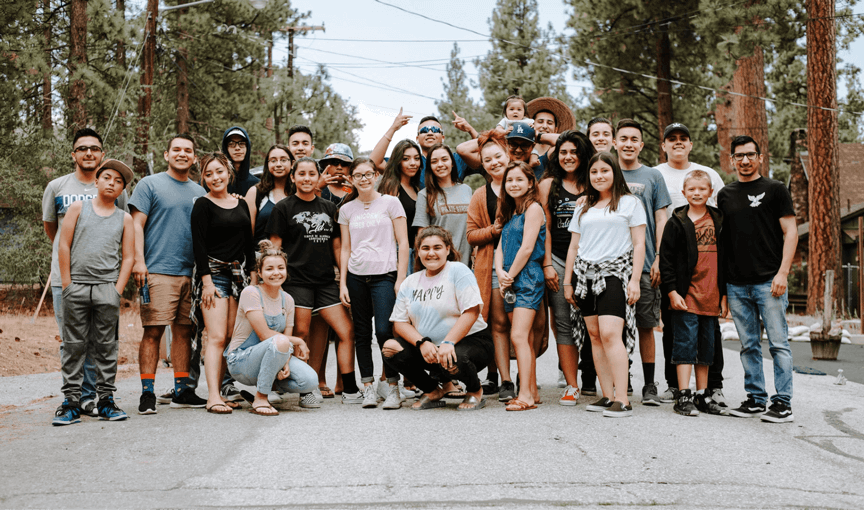
In January 2025, GII arrived in Ngecha, Kenya. What we found stopped us.
Classrooms full of students who had never touched a computer. Not because devices had been forgotten in boxes — there were no devices at all. Teachers who wanted to help but had never been trained. A community with enormous ambition and zero digital infrastructure.
We had seen this before — not in Kenya, but in ourselves. Our founder Charles Kebbi grew up connected to Sierra Leone and Cameroon, communities that global technology had decided were not worth reaching. Before founding GII, he spent a decade at Microsoft and IBM, building tools used by millions — none of whom looked like the children in Ngecha. That gap never left him.
What we found in Ngecha, we later learned was true across rural Kenya, Sierra Leone, Zambia, Gambia, and beyond. Entire regions invisible to every major EdTech organisation in the world.
We had also seen how aid works — organisations arriving once, training a handful of people, and leaving. When those people moved on, the knowledge went with them. Back to zero.
We asked a different question: what if we trained teachers so thoroughly that the education outlasted us? What if we built something permanent?
That question became the Teacher Multiplication Model.
When GII arrives at a partner school, there is nothing. No digital curriculum. No trained teacher. No pathway for students into the digital economy.
By the time we leave, all three exist — permanently.
The Teacher Multiplication Model works in three compounding phases:
Phase 1 — We show up and deliver. GII trains learners directly in partner schools using a structured 10-week curriculum aligned to Microsoft, Google Digital Garage, Cisco, and UNESCO DigComp. We build trust, establish proof, and identify the strongest teacher candidates in the room.
Phase 2 — We train the trainers. Selected teachers attend intensive certification at our permanent solar-powered hub — in Kendu Bay, Kenya or Bo, Sierra Leone. One term. Curriculum delivery, classroom management, learner assessment, ongoing support. When they leave, they are certified.
Phase 3 — We step back. Certified teachers return to their schools and deliver independently — reaching 80+ learners per year at near-zero ongoing cost. They teach for the rest of their careers. The model compounds.
Today: 16 teachers in certification from 8 schools. By end of 2026: 48 certified teachers across 30 schools. Cost to reach each learner: $2.40 per year. That is not a typo.
This is not a programme. It is infrastructure.
We did not launch with a marketing campaign. We launched with a hub, a curriculum, and a belief that if you build something genuinely useful in a community that has been ignored, word travels fast.
It did.
In Kenya, 254 learners enrolled in Month 1 in Kendu Bay — every single one with zero prior computer experience. No recruitment. No incentives. Just demand that had been waiting for someone to show up.
In Sierra Leone, our Bo Hub grew from one school to 20+ partner schools. Our entrepreneurship programme received 87 applications for 30 spots in Cohort 2. Nobody advertised it. The community did.
Cohort 1 produced 4 operating businesses. These are not certificates. These are livelihoods.
Across 6+ countries, GII has reached 2,095+ learners. 57% women and girls in Kenya. Cost: $2.40 per learner per year — 33 times more efficient than comparable NGO programmes.
We are now in partnership discussions with iAfrica Foundation — HundrED Global Collection 2026 — to integrate their content into our certified teacher pipeline.
Next 2–3 years: 48 certified teachers across 30 Bo schools by end of 2026. Kenya expansion into additional Homa Bay schools. Two new country hubs. Full open-source curriculum release.
The model is working. The question now is how fast we scale it.
Since launching in January 2025, the model has been continuously refined through field experience. We added an entrepreneurship track (ILO SIYB framework) after learners in Bo requested business skills alongside digital literacy. We expanded from Sierra Leone into Kenya based on community demand. We integrated disability-inclusive training programs through a partnership with Ummoja Disability Centre in Nairobi. Each iteration has been driven by the communities we serve, not by our original plan.
Visit global-impact-innovators.com to explore our story, field blogs, and impact data. To adopt the model, email charles.kebbi@global-impact-innovators.com. Full curriculum, teacher certification framework, hub setup guide, and cost model provided free on request.