CRAFT was created in response to persistent inequalities in access to high‑quality, engaging STEM learning. We identified STEM learning as a powerful way to have a positive, long‑term impact on children’s lives by building confidence, curiosity and problem‑solving skills, and by opening new pathways for learning, participation and opportunity.
In Limerick, a city experiencing rapid growth and innovation, we wanted to ensure that local children and families—particularly those from disadvantaged, rural or marginalised communities—were included in the prosperity and possibilities shaping their city. Too often, STEM was experienced as abstract, inaccessible or “not for me,” limiting who could imagine themselves as future creators, innovators or decision‑makers.
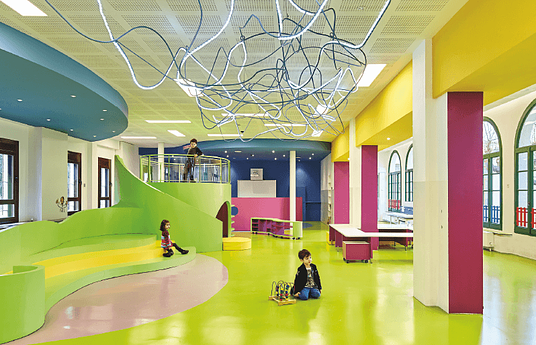
Drawing on Mary Immaculate College’s strengths in teacher education and community engagement, CRAFT was designed as a welcoming “third space” where learning extends beyond classrooms. By connecting schools, families, communities and industry, CRAFT aims to make STEM meaningful, creative and inclusive, supporting children to see themselves as capable learners with a place in the future of their city and society.
In practice, CRAFT operates as a university‑based maker space and outreach hub delivering inclusive, hands‑on STEAM experiences. Children, families, teachers (in-service and preservice) and young people take part in workshops, exhibitions, after‑school programmes, festivals and teacher professional development, both on campus and in community settings.
Activities are grounded in the Engineering Design Process and inquiry‑based learning. Participants design, build, test and improve solutions to authentic problems, using tools such as robotics, digital fabrication, coding and creative making. Programmes are co‑designed with educators, industry partners and community organisations, ensuring they are relevant, accessible and responsive to local needs.
CRAFT has spread through strong partnerships, outreach and shared practice rather than replication alone. Alongside delivery in the CRAFT Maker Space, the model extends into schools, libraries, community centres and public spaces across the Mid‑West, including sustained work with rural schools where access to STEM opportunities is often limited by geography.
To reach schools we cannot visit in person, we design and post STEM and STEAM activity packs that allow teachers to run hands‑on challenges in their own classrooms. These packs mirror the CRAFT approach, supporting inquiry, creativity and the Engineering Design Process, and enabling wider reach beyond the physical space.
CRAFT also spreads through participation in national initiatives and festivals, including Science Week, Maths Week, Cuinniú na nÓg and ESB Science Blast, bringing inclusive, high‑quality STEM engagement to large and diverse audiences. Teacher professional development, collaboration with pre‑service teachers, and co‑facilitation with community and industry partners further embed CRAFT approaches in new settings, extending impact while remaining responsive to local contexts.
CRAFT has evolved continuously in response to learner feedback, educator insight, research evidence and changing societal priorities. Programmes have expanded to include climate action, sustainability, digital technologies and AI, alongside targeted initiatives for DEIS schools, migrant families and learners with additional needs.
Delivery has also shifted from a primarily campus‑based model to a more flexible “CRAFT Across Communities” approach, allowing activities to take place in schools, libraries and community venues. The development of take‑home and classroom STEM activity packs, expanded teacher CPD, and increased co‑design with community and industry partners have strengthened the model while maintaining quality and inclusivity.
This ongoing adaptation ensures that CRAFT remains responsive, relevant and grounded in local contexts, while retaining a clear, transferable core grounded in inclusive design‑led STEAM learning.
To try the CRAFT approach, start by creating a welcoming space where learners can explore, design and make together—this does not require specialist facilities. Focus on real‑world problems that matter to your learners and use the Engineering Design Process to guide exploration.
Build partnerships with teachers, families, community organisations or industry to co‑design activities and share expertise. Prioritise inclusion by removing barriers to participation and valuing different ways of learning and knowing. Start small, gather feedback, and adapt. CRAFT shows that meaningful, creative STEM learning can grow from strong relationships and shared purpose.