But today, during Kenya Connect’s weekly story time, she leans over a bright, dog-eared book and sounds out a page – first, haltingly in Kikamba, then in English. Her son beams. For the first time, he hears his mother read to him.
Moments like this repeat every week in villages, classrooms, and community halls around the world. And while they may look small, they signal something profound: literacy is not just a school skill. It’s access and agency and dignity. It’s the power to participate in learning, in health, and in community – fully and confidently.
From conversations with innovators included in the 2026 HundrED Global Collection and listening to their communities, we find reminders of a simple truth: when literacy becomes a shared project – owned by families, powered by culture, and made joyful - its impact multiplies.
The Village That Reads (Kenya Connect), Alpha Tiles, and PadHer each reveal a different facet of what literacy can accomplish. Together, they offer a guide for how communities everywhere can help children not just learn to read – but read their world.
Why Literacy Still Matters—Urgently

Children checking out books from the library - Kenya Connect
We often talk about literacy as though it were solved. Youth literacy is near 93% globally. Many countries have near-universal school enrollment. And yet the picture on the ground tells a different story.
- 739 million adults around the world still cannot read or write.
- 73% of 10-year-olds in many countries can’t read and understand a simple text – a crisis known as learning poverty.
- In rural Kenya, where Kenya Connect works, only about half of children transition to secondary school, largely because reading levels drop sharply after Grade 3–4.
Literacy gaps aren’t just academic failures; they are systemic failures. When children can’t read, they struggle to learn science, health, or social studies. They struggle to navigate adolescence. They struggle to access higher education and dignified employment.
And when the language of school does not match the language of home, learners face a double barrier – not only to reading, but to identity and belonging.
Yet even amidst these challenges, communities are transforming literacy into a source of connection, resilience, and possibility.
What Literacy Unlocks
Across all three innovations, a pattern emerges: literacy is not merely a target—it is a catalyst. It unlocks:
1. Learning that lasts, not learning that crams
Children who read fluently read everything more fluently: instructions, exam questions, health guidelines, and stories that stretch their imagination.
2. Identity, language, and dignity
When learners encounter books, games, and stories in their own languages, something shifts. They see themselves as capable. They see their culture as worth learning from.
3. Health, safety, and agency – especially for girls
Without clear, accessible information, topics like menstrual health become barriers rather than natural parts of life. With the right literacy tools, girls gain confidence, knowledge, and school attendance.
These three innovations show what becomes possible when literacy is woven into daily life.
The Village That Reads: Literacy as Community Culture
In Machakos County, reading has become part of the community.
“Reading is not just about the exam—it’s about gaining new knowledge, new vocabulary, and connecting with the world.”
— Esther Muinde, Kenya Connect Librarian
Kenya Connect’s approach begins with access and joy. Their “Magic School Bus” and “Reading Rover” mobile libraries crisscross rural areas, bringing books directly to schoolyards and villages. On Saturdays, children gather for story time—reading aloud, sharing story boxes filled with objects from everyday life, and growing a vocabulary connected to their world.

Kenya Connect Readers
But the most transformative work happens with adults.
- Lit Moms, many of whom once felt ashamed of their reading levels, meet weekly to learn English and practice reading confidently.
- Fathers—often the most hesitant—join school meetings and begin reading with their children at home.
- A radio read-aloud show, launched during COVID and still going strong, brings stories to families who may never have held a book.
The results speak for themselves: Lit Club students score higher on national exams, parents model reading as a pleasurable, social activity. Children start reading for joy, and schools across multiple counties are now replicating the model.
Alpha Tiles: Preparing Learners to Read in Their Own Language
“Millions of children in thousands of the world’s languages have no literacy game apps. They are waiting for the opportunity to play and learn using their languages.”
— Aaron Hemphill, Alpha Tiles Creator
Imagine trying to learn to read in a language you’ve never spoken.
This is the reality for millions of children worldwide. Despite thousands of languages spoken globally, 97% have no literacy apps or digital tool designed for them.
Alpha Tiles changes that.

Wiwa Children using AlphaTiles in Colombia
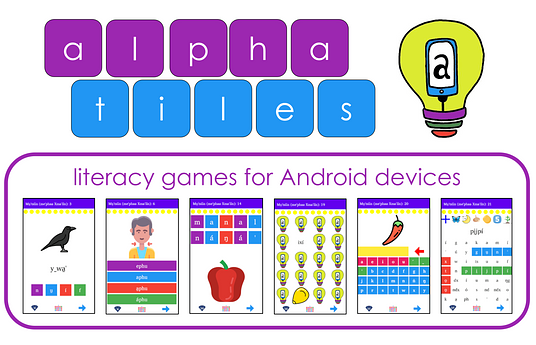
It’s an open-source platform that can generate a full offline Android literacy game in any language, often within a week. A small set of illustrated words becomes thousands of challenges. The games work offline, on low-cost phones, and can handle non-Latin scripts.
What makes Alpha Tiles extraordinary is not just the technology—it’s the ethos. Starting from its roots in Mexico, its creators have stood steadfastly by an open-source and collaborative ethos. Today, workshops in Indonesia, Senegal, Kenya, Colombia, Thailand, Cameroon, and elsewhere empower local educators to build the apps themselves. Once trained, they don’t need the Alpha Tiles team. They can continue creating, adapting, and sharing resources for their own linguistic communities.
The impact is both systemic and deeply personal:
- Children learn to read first in the language they speak at home, reducing anxiety and improving comprehension.
- Ministries and NGOs can support minority languages affordably and sustainably.
- Communities feel seen, valued, and represented in the learning process.
The innovation lies in making that right accessible to every language group, no matter how small.
PadHer: Literacy as a Tool for Health and Confidence
“We want girls to see their periods as a gift and a sign of health, not a curse.”
— Chika Nwaogu, Founder
For many African girls, menstruation is a barrier, not a biological process. Some miss up to five days of school per month due to lack of information, stigma, or pads. Many receive menstrual health lessons only in clinical, shame-tinged language, or none at all.
PadHer flips the script by starting with literacy and storytelling.

Their first product was a comic book: bright, character-driven, funny, and grounded in real adolescent experiences. When girls read it, they saw themselves, rather than a medical diagram. The team work hard to combat not just the stigma often attached to menstruation, but also harmful and stereotypical portrayals of women, medical misinformation, and the barriers that low literacy may pose to helping their lessons make it even further.
Partnerships with trusted organizations help bring PadHer to schools, youth clubs, and communities across the continent. So far, the initiative has reached around 100,000 girls, with more on the way.
With PadHer, literacy becomes health, belonging and freedom from shame.
What These Innovations Teach Us
Across wildly different contexts, a few principles repeat:
1. Start with reality, not abstraction.
Literacy is best when it’s connected to lived experience, through objects, languages, and stories.
2. Families are not an afterthought—they’re the engine.
Communities of readers - mothers, fathers, and families - catalyze literacy for their children.
3. Offline counts. A lot.
Books, comics, and offline apps reach learners that digital-only tools miss.
4. Design for dignity and joy.
None of these innovations shame learners. All assume capability and curiosity.
5. Scale happens through sharing, not control.
Open-source code, co-branded partnerships, and community replication drive sustainable growth.
A Closing Thought: Literacy as Collective Power

Mother Reader with Kenya Connect
The image returns: a mother leaning over a storybook, reading with her son for the first time.
That moment contains everything literacy can do. It builds confidence, it bridges generations, and it strengthens school outcomes. It opens conversations about health, about the world, about what a child might become.
Literacy is not a skill that belongs only to schools or curriculums.
It’s a community choosing to grow together.
Learn more about the 2026 Global Collection and celebrate all 100 Days of HundrED.