WILD HEARTS was created to fill a critical gap in early childhood environmental education. Young children are naturally curious about the world, yet many ECD centres – especially in underserved communities – lack accessible, high-quality resources that nurture this curiosity and build a strong foundation for conservation. We saw an opportunity to create something joyful, inclusive, and rooted in the realities of African childhoods.
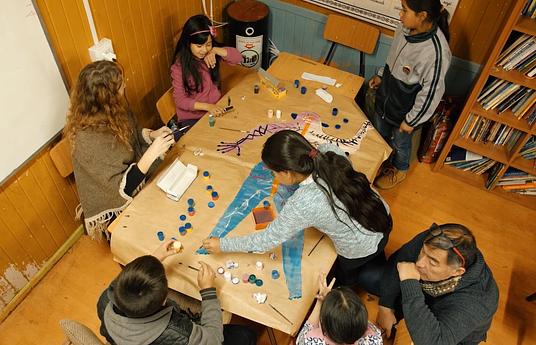
The program was designed to make environmental learning playful, affordable, and meaningful. Through art, storytelling, movement, and hands-on exploration, WILD HEARTS helps children connect emotionally to nature long before concepts like “conservation” feel abstract or distant. By reaching children early, we can grow a generation of young custodians who understand that they are part of the natural world and capable of protecting it.
Just as importantly, WILD HEARTS aims to empower teachers. Many educators want to teach environmental topics but feel under-resourced or unsure where to begin. Our structured, easy-to-use lessons and free supplementary activities give teachers confidence while keeping learning fun.
Finally, WILD HEARTS was created to strengthen community partnerships. Environmental stewardship is not a solo effort. By working with organisations, schools, and foundations across South Africa, we can ensure every child – regardless of background – has access to the wonder, knowledge, and skills that inspire lifelong care for the planet.
In practice, WILD HEARTS equips teachers with the knowledge, confidence and resources to bring environmental education into the classroom through play-based learning. Teachers receive training and access to free, developmentally appropriate, curriculum-aligned lesson plans covering 45 environmental and conservation topics. They can select topics relevant to their local environment, biome and conservation challenges.
Each lesson follows a simple, repeatable format: an engaging introduction, visual discussion and age-appropriate facts, a movement-based consolidation activity, a creative art experience and additional activities that reinforce learning through early numeracy, literacy, fine-motor development, matching, sorting and problem-solving.
Teachers are supported with ready-to-use resources, reducing the preparation and specialist knowledge normally required to teach environmental topics. In our funded projects, this is strengthened through teacher training, printed materials, art resources, ongoing support and opportunities for nature-based experiences.
Rather than WILD HEARTS simply delivering lessons to children, we build the capacity of the adults who teach them every day. This creates a model that can be repeated, adapted and embedded into everyday teaching, allowing environmental knowledge, connection and care to grow over time.
WILD HEARTS has spread through a combination of strategic partnerships, teacher-to-teacher sharing, training and freely accessible online resources. Rather than establishing new infrastructure, we partner with organisations already embedded within communities, enabling the programme to reach children through trusted local networks.
Since launching in 2023, WILD HEARTS has expanded from the Southern Peninsula of Cape Town into communities across the Western Cape, Greater Kruger, Mpumalanga and KwaZulu-Natal. Partnerships with NGOs, conservation organisations, schools and museums have enabled us to train facilitators and teachers who then deliver the programme directly to children.
This train-the-teacher approach creates a multiplier effect: instead of WILD HEARTS needing to deliver every lesson, we build the capacity of educators who can use the resources repeatedly with current and future classes. Teachers also share resources and learning within their networks.
To remove geographical and financial barriers, our lesson materials are freely available online, allowing any educator to access and implement them. As awareness grows through partnerships, professional environmental education networks, conferences and social media, WILD HEARTS can spread organically while targeted funded projects enable deeper support in marginalised communities.
WILD HEARTS has continuously evolved in response to teacher feedback, classroom experience and the needs of the communities we support. What began in 2023 with 21 environmental lessons has grown to 45 topics, supported by more than 100 additional learning activities. These additions allow teachers to select content relevant to their local species, biome and conservation challenges.
We have expanded beyond individual lessons to include teacher training, visual discussion resources, creative art activities, movement-based learning and additional numeracy, literacy, fine-motor and problem-solving activities. This strengthens both environmental learning and broader early childhood development.
As our reach has grown, we have adapted delivery to improve accessibility. Resources are now freely available online, while funded projects can include printed manuals, classroom materials, teacher workshops, online training, ongoing WhatsApp support and immersive nature experiences. Lessons can also be delivered in different languages where resources allow.
Importantly, we are strengthening our monitoring and evaluation. We are moving beyond measuring reach and lesson delivery to better understand changes in teacher knowledge, confidence, practice, attitudes and values, and ultimately changes in children’s environmental knowledge, connection, attitudes and behaviour.
Trying WILD HEARTS is simple and free. Educators can visit our online resource library: https://www.tenthousestructures.com/wild-hearts-activity-downloads, choose from 45 environmental and conservation topics, and download lessons relevant to their children, community or local biome. There is no required sequence, allowing teachers to respond to local wildlife, seasons, conservation issues and children’s interests.
Each lesson includes an easy-to-follow introduction, visual discussion resources and age-appropriate facts, movement-based learning, a creative art experience and additional play-based activities that reinforce environmental learning alongside early childhood development skills.
Teachers can start with just one topic and incorporate it into their existing classroom programme. No specialist environmental knowledge is required.
We also offer free teacher training and support. Educators, schools or organisations wanting guidance on implementing WILD HEARTS can contact us directly at joni@tenthousestructures.com. Where funding and partnerships allow, implementation can also include printed resources, classroom materials and ongoing support.