Cookie preferences

HundrED uses cookies to enhance user experiences, to personalise content, and analyse our web traffic. By clicking "Accept all" you agree to the use of all cookies, including marketing cookies that may help us deliver personalised marketing content to users. By selecting "Accept necessary" only essential cookies, such as those needed for basic functionality and internal analytics, will be enabled.
For more details, please review our Cookie Policy.
Accept all
Accept necessary
search
clear

WEvolve

place India

Life is all about evolving, Let's evolve together.

At WEvolve, we’re addressing the gap in emotional and social learning for children from under-resourced communities—an area often overlooked in traditional education. Our innovation lies in creating experiential programs that combine classroom sessions, on-field activities, and parental engagement to build emotional resilience and confidence in children. By involving parents, teachers, and volunte

Overview

Information on this page is provided by the innovator and has not been evaluated by HundrED.

Updated November 2025
Web presence

1

Countries
Students upper
Target group
We hope to see education evolve beyond academics to nurture emotional intelligence, empathy, and confidence in every child. Through our innovation, we envision classrooms where children feel safe, heard, and motivated to express themselves, and communities where parents, teachers, and volunteers work together to support holistic growth and lifelong learning.

About the innovation

Why did you create this innovation?

We created this innovation because we saw that children from under-resourced communities often struggle not due to a lack of ability, but because of emotional neglect, low confidence, and limited support at home or school. Traditional education focuses on academics but overlooks emotional and social growth. WEvolve was born to fill this gap—to help children feel seen, heard, and supported. By building emotional strength, involving parents, and creating joyful learning spaces, we aim to break cycles of fear and help every child realize their true potential.

What does your innovation look like in practice?

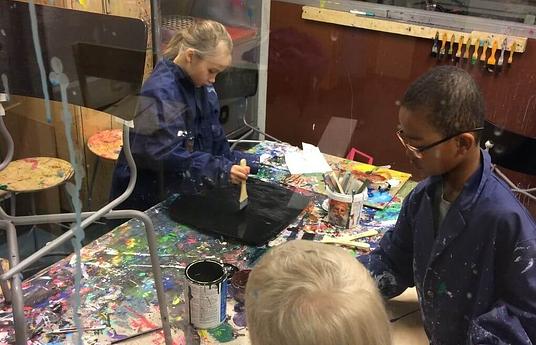
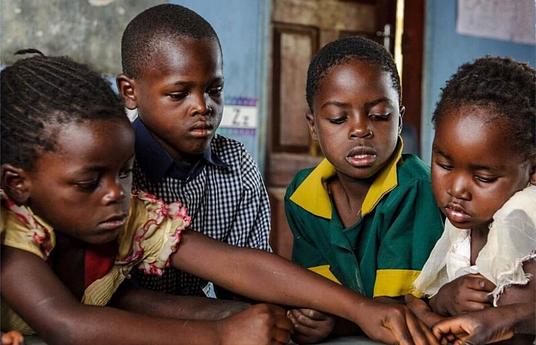
In practice, our innovation comes to life through weekly in-class sessions led by volunteers, where children engage in interactive activities that build empathy, confidence, and teamwork. These are complemented by on-field events like treasure hunts, sports days, and community drives, where children take the lead—planning, organizing, and showcasing their skills. We also conduct parent and teacher workshops and health and awareness camps to create a strong support system around each child. Together, these elements form a holistic ecosystem that nurtures emotional, social, and personal growth.

How has it been spreading?

Our innovation has been spreading organically through partnerships with schools and strong community word-of-mouth. As teachers, parents, and volunteers witness visible changes in children’s confidence and behavior, more schools express interest in adopting the WEvolve model. We’ve also expanded through collaborations with local organizations and volunteer networks, which help us reach new communities. Social media storytelling and our on-ground events—like health camps and plantation drives—further amplify our visibility, allowing WEvolve’s approach to grow sustainably and inspire similar initiatives in other areas.

If I want to try it, what should I do?

If you want to try it, start by partnering with WEvolve or inviting our team to conduct a pilot in your school or community. We’ll begin with an orientation to understand your needs, followed by a few interactive in-class sessions and a community-based activity to demonstrate our model in action. You can also volunteer or collaborate with us to experience our approach firsthand—working directly with children, parents, and teachers to see how emotional learning and community engagement can transform lives.
Implementation steps

1. Initial contact & alignment (1 week)
Meet school/partner stakeholders (principal, 1–2 teachers, parent rep). Clarify objectives, target classes/age group, dates, and expected outcomes. Sign a simple agreement or MoU that states roles and responsibilities.
2. Needs assessment & baseline (1 week)
Visit classrooms, observe for one period. Collect baseline data: attendance, teacher feedback, simple child wellbeing score. Note logistics (room, timings, volunteer availability).
Co-design the pilot and allotting volunteers
Visit classrooms, observe for one period. Collect baseline data: attendance, teacher feedback, simple child wellbeing score. Note logistics (room, timings, volunteer availability).
Parent & teacher orientation (1 session)
Hold a 45–60 minute orientation for parents and teachers: purpose, schedule, what to expect, and how they can support. Get parental consent if needed.
Run classroom sessions (weekly)
Deliver 4–8 interactive sessions (30–45 minutes each) using games, storytelling, role-play, reflection circles. Use warm-up → core activity → reflection → micro-action plan (1 small task for child to do at home or school).
Conduct an on-field/community activity
Organize one experiential event (treasure hunt, plantation drive, mini-exhibition) where children plan/lead roles. Invite parents and school to attend.
Reflect, evaluate & adapt
Hold a reflection meeting with school, volunteers, and parents. Share what worked, challenges, and children’s stories of change. Compare baseline and endline indicators to measure shifts (attendance, participation, confidence markers).