At Insight School and the Center for Social Inclusive Programs in Kazakhstan, we created a model of inclusive education where every lesson becomes a demonstration of the learning process itself. We believe teachers cannot master inclusion through theory alone — it must be seen, felt, and practiced.
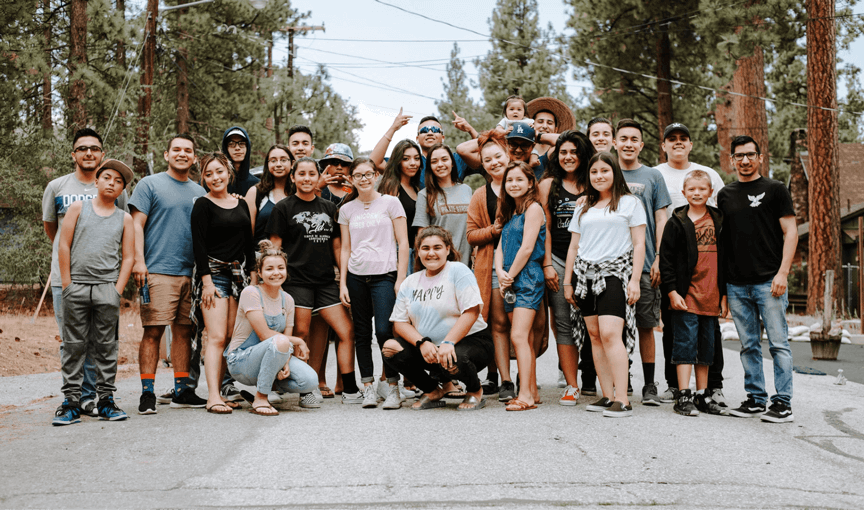
In our classrooms, neurotypical students and learners with developmental differences study side by side, showing how diversity enriches learning. Each lesson demonstrates communication, empathy, and teamwork in action. Teachers, parents, and visitors observe these classes to understand inclusion as a living process, not an abstract concept.
This model inspires educators in Kazakhstan and beyond. It proves that real inclusion does not require perfect conditions — only an open mindset and courage to learn together. By making inclusion visible, we help teachers transform fear into confidence and theory into human connection. Our school became both a learning space for children and a laboratory for teachers — showing that inclusion, when lived and shared, changes education itself.
In practice, our inclusive model looks like a living classroom where learning happens through teamwork and empathy. Each lesson at Insight School is designed so that children with and without developmental differences study and create together. The teacher guides the process, balancing different paces and communication styles.
For example, during a science lesson, one student explains, another demonstrates, and a third creates a visual summary. Everyone contributes according to their strengths. Mistakes become part of the process — moments to practice patience, reflection, and support.
Teachers use open observation: colleagues, students from universities, and parents can watch lessons to see inclusion in real action. These demonstrations are recorded and shared through the Center for Social Inclusive Programs, helping educators across Kazakhstan and other countries learn from authentic examples.
This approach turns every classroom into a training ground for inclusive practice. Children grow as empathetic teammates, and teachers grow as reflective practitioners. Inclusion is not a separate subject — it’s the atmosphere of learning itself.
Our innovation spreads through openness and collaboration rather than formal training. The Center for Social Inclusive Programs and Insight School regularly share real lesson recordings, open classes, and short video modules that show inclusive teaching in action. These materials are freely available to teachers, universities, and NGOs working in education.
We also organize teacher residencies and mentoring sessions where educators from different regions observe classes, join team reflections, and try inclusive methods in their own schools. Graduates of these sessions often become ambassadors of inclusion, adapting our model to their local contexts.
Partnerships with media, universities, and social projects help expand the reach — inclusion becomes part of public conversation, not just a school practice. This organic, peer-to-peer sharing ensures that the idea grows naturally, inspiring educators far beyond Kazakhstan’s borders.
Over time, we have expanded our innovation from classroom practice to a full ecosystem of inclusive learning and teacher development. Initially, our focus was on creating model lessons where children with and without developmental differences could learn together. Later, we realized that inclusion can only grow when teachers themselves experience it as a process — not a theory.
We added interactive video lessons with real classroom dynamics, showing both challenges and solutions. These materials became the foundation for teacher mentoring programs and online workshops led by the Center for Social Inclusive Programs.
Recently, we introduced co-teaching formats, where teachers and tutors plan and conduct lessons together, reflecting afterward on emotional and academic outcomes. We also integrated feedback loops from parents and students to make inclusion a shared responsibility.
This evolution turned our idea from a single-school practice into a replicable model of inclusive professional growth that continues to adapt to new contexts and countries.
If you want to try our model, you are already part of the movement. Inclusion begins with curiosity and the willingness to see potential in every learner. We invite you to join us — as a teacher, school leader, researcher, or community partner.
You can start by exploring our open video lessons that show real inclusive classrooms in action. We will gladly connect you with our mentors from Insight School and the Center for Social Inclusive Programs for an online or offline session where you can observe, ask questions, and experiment with your own class.
If you represent an organization or university, we can co-create a pilot project, host a training residency, or design a joint program to adapt our model to your context.
Inclusion is not something to copy — it’s something to experience. Let’s learn from each other and build a future where every child, in every classroom, belongs.