A lot of teacher training today happens in centralized, one-time workshops. Teachers travel, sit through sessions, and return to their schools with materials, but no ongoing support. There’s rarely any space to revisit ideas, ask questions in context, or adapt what they’ve learned to the realities of their classrooms.
While working closely with government schools, we began to notice something deeper. Beyond pedagogy or curriculum, teachers themselves were carrying a quiet burden. Their well-being, their sense of ownership, and their ability to think, reflect, and ideate were often overlooked. Yet these are the very things that shape how teaching actually happens in a classroom. That’s where the idea of small, school-based circles came in.
Instead of relying only on external experts, we started building facilitators within the system. People who could anchor regular, small-group conversations among teachers in their own schools. These circles are not top-down sessions. They are designed to be safe, contextual, and practical spaces where teachers can reflect on their experiences, share challenges, experiment with ideas, and learn from each other.
What makes this approach different is its grounding:
Localized - rooted in the specific realities of each school
Ongoing - not a one-off intervention, but a continuous process
Teacher-friendly -built around their time, comfort, and voice
Supportive - with real handholding through facilitators who understand their context.
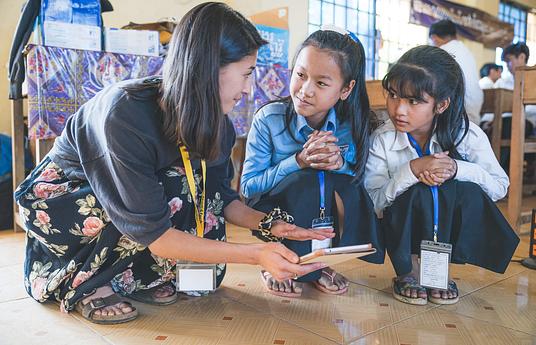
Each week, the facilitator spends dedicated time in the school, bringing teachers together in a small, structured circle. This is not a conventional training session, but a comfortable space where teachers can reflect on their classroom experiences and discuss what is working and what feels challenging.
The discussions focus on real classroom realities and collective problem-solving. Instead of prescribing solutions, teachers share practical strategies, classroom practices, and approaches that have worked for them, creating a sense of peer learning and shared ownership.
The facilitator also introduces simple and adaptable teaching methods using low-cost teaching-learning materials, visuals, and interactive approaches. A key element is demonstration—teachers experience activities as learners first, helping them understand how to apply these methods in their own classrooms.
The circles also include small games, group activities, and reflective exercises that build connection and energy among teachers. Over time, these sessions lead to visible shifts in classroom practices, with teachers becoming more experimental, interactive, and responsive to students’ learning needs.
We started this initiative in 10 schools within one block. Now, in just the second year, we are able to facilitate decentralized, context-driven teacher circles in more than 75 schools across two states and three districts without adding any additional staff. We have designed and documented the process in a way that educators across different states are now able to adopt and implement it within their own schools. At present we are working with this innovation in 2 states Madhya Pradesh and Himachal Pradesh. Coming next we wish to expand this in different states as well.
We have added a well-designed, structured, and decentralized support system for the teacher circle beyond teaching and class. We organized the quarterly collective meeting in the block to celebrate teachers’ hard work, recognize their efforts, and achievements. It's a safe space for all the teachers. We have also included a focus on teachers’ mental well-being beyond classroom practices and other related aspects.
First, connect with the teachers and discuss informally their aspirations, challenges, problems, etc. Based on these conversations, co-create the topics that need to be learned, shared, or adopted, and identify areas where support is needed for their well-being and to ensure an effective learning system in government schools.
After that, collectively—through voting or any other method of selection—choose the next 15 relevant topics for 3 months. Then plan the sessions to facilitate these topics, and also invite teachers to facilitate sessions.
Every teacher circle will follow these elements:
Start with a check-in, and each time a different person leads it using a different style.
The second stage is a quick review of the last session.
After that, spend 30–40 minutes learning a new topic together and practicing it.
This is followed by identifying things that teachers can directly take into their classrooms.
All the teachers of the same school follow this process, so within some time it becomes embedded in the system of the school.
Quarterly, all the teachers from different schools meet to celebrate the journey and share learnings with each other.