In Nigeria, only 22% of tech graduates are female (National Bureau of Statistics 2022), reflecting deep-seated cultural biases, lack of training support, and socioeconomic barriers such as early marriage and limited access to digital tools. Recognizing this digital gender divide, SustainHerbility Tech Academy (STA) was created to bridge the gap by empowering marginalized rural girls with 21st-century digital skills. Our innovation aims to equip girls aged 9-14 with mobile app development, coding, leadership training, and norm-shifting education that challenges societal stereotypes.
Through a four-phase model of preparation, training, community engagement, and evaluation, STA ensures sustainable impact by not only training the girls but also enabling them to create localized mobile apps addressing real-life community issues. The innovation also promotes gender-inclusive education advocacy by engaging stakeholders like school administrators and the Ministry of Education. SustainHerbility Tech Academy positions its beneficiaries as future innovators and role models, contributing to a pipeline of empowered, tech-savvy female leaders capable of driving change in their communities and beyond. Our efforts were recently recognized by the United Nations Global Youth Initiative, which named STA one of the Top 50 Young Education Innovations in Nigeria, reinforcing our mission to empower rural girls through tech.
STA is a gender-responsive EdTech program implemented in rural schools to advance digital inclusion. It uses a three-pronged approach: norm-shifting education, digital skills training, and community innovation. Girls learn UI/UX design, mobile app development, norm-shifting and leadership, applying these to solve real issues in their communities.
Each school develops localised mobile app prototypes addressing education and gender challenges. The program culminates in a Tech Exhibition where girls showcase innovations to parents, peers, and education stakeholders, amplifying advocacy for gender equity in education.
Monitoring and evaluation involves spotlight interviews, baseline, midline, and endline surveys to track growth in skills and gender attitudes. Carried out within schools, STA ensures sustainability and scalability across underserved communities in Southwest Nigeria.
STA evolved from our earlier SustainHERbility Tech workshop and webinar, reaching 200+ educators and students. Since its launch, STA has empowered 40 rural girls across two states, who in turn trained 1,000+ peers through school-based mini-projects that addressed highlighted in their communities ranging from quality education to gender equality. The model is gaining recognition: featured in UNICEF’s Purple Book 2024, presented at FEMNET’s Gender Transformative Education Workshop in Kenya, and shortlisted among UNESCO’s Top 50 Education Innovations in Nigeria. Our recent partnerships with Sidlabs (India) are scaling STEAMspark into a functional tool, while exhibitions amplify replication and policy dialogue.
Innovation demands evolution. In 2025, we upgraded STA’s curriculum to include AI literacy, recognising that girls must not only use technology but create and shape its future. This shift moves beyond basic mobile app development to incorporate user experience design, enabling girls to build intuitive, impactful digital solutions for their communities.
To extend reach and build sustainability, we are introducing a "trainer-of-trainers" model starting with the next cohort, enabling graduates to mentor new participants and support peer-led knowledge transfer.
In our pilot phase, our beneficiaries demonstrated their digital leadership by designing four localized mobile app prototypes, tackling challenges such as literacy promotion, STEAM engagement, and mindfulness practices. These prototypes reflect their creativity and problem-solving skills and are set to be unveiled during the 2025 SustainHERbility Tech Exhibition, creating a platform for public recognition and policy dialogue.
We are also strengthening engagement with education stakeholders by facilitating roundtable discussions with school leaders and government representatives, ensuring girls’ innovations inform education strategies.
These upcoming adaptations sharpen STA’s mission: transforming it from a skills acquisition program into a systemic movement that drives gender equity, digital innovation, and community-led change in rural education ecosystems.
If you want to try SustainHERbility Tech Academy (STA), the first step is to reach out to our team to get access to the STA Starter Toolkit. This toolkit provides everything needed to launch the program, including our curriculum guide, facilitator training materials, and templates for organizing community innovation projects and exhibitions. We encourage implementation partners to work closely with rural or underserved schools and youth organizations, identifying girls aged 9–14 who can most benefit from digital skills, leadership training, and norm-shifting education.
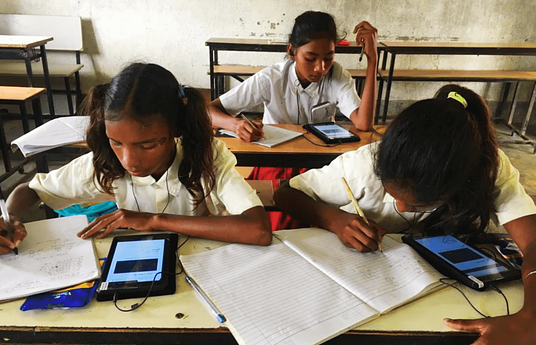
Creating a safe and supportive learning environment is essential, with access to basic technology such as laptops or tablets, and ensuring materials are adapted for low-resource settings where necessary. Local educators or volunteers can be trained to deliver the program effectively, using our gender-responsive teaching approach. Implementation follows STA’s proven four-phase model: preparation, digital skills training, community innovation projects, and a final Tech Exhibition where girls showcase their mobile app solutions to real-world challenges.
Trying STA means not just offering digital education but building a movement. To begin, simply contact us via email or connect with us on our social media platforms. Together, we can create a generation of empowered, tech-savvy young female leaders.