We created "Life Through Water" to address a critical gap in early childhood education (ages 3–8): while young children are increasingly exposed to global climate and water crises, traditional curricula either overlook environmental issues or convey them passively, triggering eco-anxiety rather than action.
Our core motivation was to transform this passive anxiety into play-based agency. Young minds naturally possess innate curiosity and empathy toward nature. By combining Nature-Based Solutions (NBS), storytelling, and hands-on STE(A)M tinkering, we designed a holistic "Think-Feel-Act" framework tailored for early childhood.
In "Think," children explore water cycles and scarcity through inquiry. In "Feel," they develop socio-ecological empathy for aquatic life and water-stressed communities. In "Act," they construct low-cost water filtration prototypes, rainwater harvesting toys, and biodiversity habitats using natural and recycled materials.
In practice, "Life Through Water" operates as an immersive, play-based "Living Lab" across early childhood centers (ages 3–8), transforming classrooms and outdoor spaces into active inquiry hubs.
The innovation unfolds through a 3-phase journey:
1. Think (Inquiry & Storytelling): Children start with interactive puppet storytelling and nature inquiry. They explore water cycles, pollution, and conservation through guided play, questioning how water shapes ecosystems.
2. Feel (Socio-Ecological Empathy): Outdoor sensory exploration—such as stream visits and soil-water tables—helps young learners connect with aquatic life, building emotional resonance and care for nature.
3. Act (STE(A)M Tinkering & Prototyping): Working in teams with natural (sand, gravel, charcoal) and upcycled materials, children build mini bio-filtration prototypes, rainwater harvesting toys, and gravity-fed garden systems. They experiment, test, and redesign through playful trial-and-error.
Practically, the model uses a "Whole-School Approach." Children showcase mini-inventions at community "Water Play Fairs," transferring water-saving habits to homes. Requiring no costly technology, it uses accessible, low-cost materials, making it easily replicable in any kindergarten globally.
"Life Through Water" has spread through a multi-tiered scaling model combining grassroots classroom implementation, higher-education partnerships, and international knowledge networks.
1. Local & District Expansion: Originating at Murat Kantarcı BİLSEM, the model expanded across public kindergartens and early childhood centers, directly impacting over 1,000 young learners (ages 3–8) through hands-on water tinkering and "Living Lab" activities.
2. University-K12 Clinical Partnership: In collaboration with Erciyes University Faculty of Education, the framework was integrated into teacher training. Pre-service early childhood educators are trained in our "Think-Feel-Act" methodology, spreading the curriculum to new classrooms each semester.
3. National Network Dissemination: Spread nationally via Scientix STEM Campaigns and open-access teacher networks. We provide low-cost STE(A)M activity guides that enable educators across Turkey to replicate water-filtration and conservation activities without expensive tools.
4. Global Recognition & Replication: The innovation's global spread is driven by its official recognition as a "Good Practice" on the UNESCO SDG 4 Knowledge Hub and inclusion in the UN UNECE 2026 ESD Compendium. Presented at forums like TACTYC 2026, it offers a tested, adaptable blueprint for early childhood centers worldwide.
Since its inception, "Life Through Water" has continuously evolved to deepen its pedagogical impact, inclusivity, and scalability for children aged 3–8:
1. Digital & Green Tech Integration: We enriched physical tinkering by incorporating "Green Coding" and unplugged robotics. Young learners use coding cards, augmented reality (AR) water-cycle tools, and robotic kits (e.g., LEGO/Twin) to simulate rainwater flow and soil absorption before building physical filtration models.
2. Inclusive & Play-Based Adaptations: Integrating "World Play Day" concepts, we modified activities to be fully inclusive for diverse learning profiles, including young gifted learners and children with developmental variations. Unused outdoor spaces were transformed into student-designed "Eco-Play Spots" built from upcycled materials.
3. "Think-Feel-Act" Framework Refinement: Aligned with UNESCO Greening Education Partnership (GEP) pillars, we strengthened the "Feel" dimension by introducing socio-ecological empathy journals (using drawings and audio reflections) to mitigate early climate anxiety and foster care for nature.
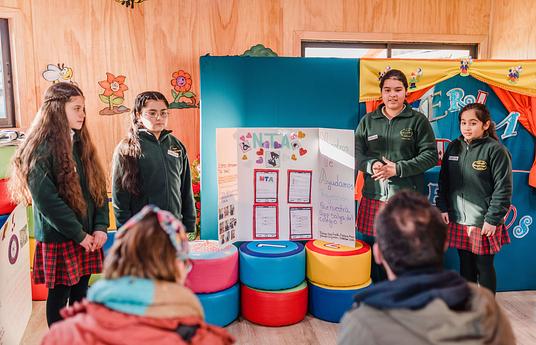
4. Community & Living Lab Extension: We expanded classroom tasks into whole-school "Living Labs" and interactive "Community Water Fairs." Children demonstrate their mini bio-filters and water-saving toys to parents, local engineers, and municipal stakeholders, turning early learning into a catalyst for household sustainability.
If you want to try "Life Through Water" in your school or classroom (ages 3–8), follow these 4 simple, low-cost steps:
1. Step 1: Start with Storytelling & Sensory Play (Think)
Introduce water cycles using interactive puppet stories or picture books. Set up a sensory "Water Inquiry Station" in your classroom with pebbles, sand, and water trays to explore buoyancy, flow, and filtration.
2. Step 2: Explore Outdoors & Build Empathy (Feel)
Take children into the schoolyard or local garden. Observe rain puddles, soil moisture, and plants. Have children keep "Socio-Ecological Empathy Journals" (using drawings or voice notes) about how aquatic life and plants need clean water.
3. Step 3: Hands-On STE(A)M Tinkering (Act)
Collect upcycled materials (clear bottles, sand, gravel, charcoal, cotton). In small teams, guide children to build simple bio-filtration toys, rainwater harvesters, or drip-irrigation models. Let them test dirty water, observe filtration, and redesign through trial-and-error.
4. Step 4: Create a "Water Play Fair" (Community Impact)
Transform your school into a Living Lab. Have young learners showcase their mini-inventions to parents, peers, and local leaders during a school "Water Fair," spreading water-saving habits to homes.
Ready-to-Use Resources:
Access our open-access "Life Through Water Early STE(A)M Toolkit" (developed at Murat Kantarcı BİLSEM) for step-by-step activity cards requiring zero expensive equipment!