Cookie preferences

HundrED uses cookies to enhance user experiences, to personalise content, and analyse our web traffic. By clicking "Accept all" you agree to the use of all cookies, including marketing cookies that may help us deliver personalised marketing content to users. By selecting "Accept necessary" only essential cookies, such as those needed for basic functionality and internal analytics, will be enabled.
For more details, please review our Cookie Policy.
Accept all
Accept necessary
search
clear

Digital MicroSchools - Teach the World Foundation

We provide functional literacy/21st century skills in marginalized contexts via digital technology.

The education crisis affects 1 in 10 people who cannot read or write. Millions of children in developing countries are out of school. Traditional education can't solve the problem quickly, but Teach the World's digital learning solution using eLearning, tablets, and gamification, is a proven game changer, providing access to quality education to underserved populations.
HundrED Global Collection
play_arrow

Overview

HundrED has selected this innovation to

HundrED Global Collection 2026

EdTech: Bangladesh

Updated November 2025
Web presence

2016

Established

4

Countries
Students early
Target group
We hope to mitigate the crisis of illiteracy around the world. We hope that the Digital MicroSchools model will be replicated across the world to provide functional literacy effectively in areas with a lack of teachers and infrastructure, alongside other benefits including digital literacy and self-learning attitudes.

About the innovation

Why did you create this innovation?

The education crisis is global, with developing nations being hit the hardest. In Bangladesh, 4.3 million children are out of school and 58% of Grade 5 students struggle to read and comprehend a simple text. Traditional education models are too slow to solve the problem, but digital technology coupled with self-learning and gamification provide a cost effective and scalable solution.

What does your innovation look like in practice?

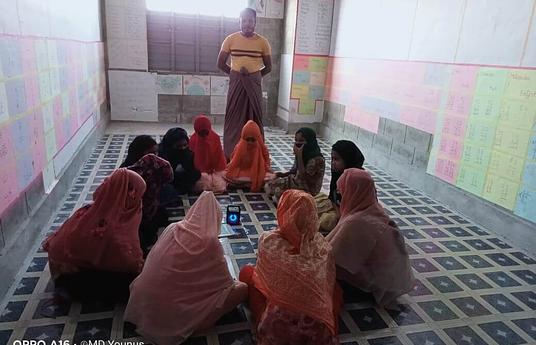
Teach the World’s model is a simple and scalable “functional literacy” solution for students in Pre K to Grade 2. It has been deployed with excellent results in Pakistan, Bangladesh, and Malawi, in varied settings, from urban slums to refugee camps and remote Himalayan villages.

Our students outperform students in traditional schools, achieving at least 1.5 times the learning gains, as measured by independent third parties across time, multiple geographies, and environments.

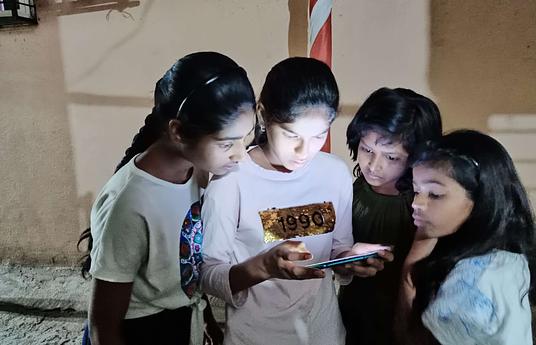
We partner with best-in-class award-winning content providers and deploy their content on tablets and smartphones. The model does not require reliance on a trained teacher. The model delivers world-class reading, writing, and math applications in a gamified format, on low-cost tablets and smartphones. Children learn math, English and their local language in a gamified format for 2 hours a day/6 days a week in a facilitated setting within existing schools or in community-based learning centers powered by solar technology.

How has it been spreading?

Over the last 2 years, Teach the World has scaled to 15,000 learners in 3 countries, with validated impact evaluations showing students outperform traditional models by 1.5x. Teach the World has also received global recognition, winning the World Bank’s Ideas4Action competition and featured by UNESCO among the best COVID-response interventions in 2021. Teach the World was a finalist in the MIT Solve Global Challenge in 2022 and finalists for MIT Solve Tiger Challenge for Bangladesh in 2019, which we presented in Dhaka. Teach the World was also among the winners of the 2023 MIT LEAP Challenge.

We have partnered with the Government of Sindh in Pakistan to scale to establish 125 new deployments which are serving almost 12,500 students in Pakistan. 100 more Digital MicroSchools are planned for the next year. Till 2030, we aim to scale to 200,000 learners globally by partnering with local governments for policy integration and implementation. We will create lasting social impact by:

Accelerating access to education
Enhancing socio-economic well-being
Empowering girls, women and communities

How have you modified or added to your innovation?

Teach the World's Digital MicroSchools model has been further tested at scale through partnership with the local government. We have set up a dedicated field structure including Community Officers, Technical Officers, Monitoring & Evaluation Officers as well as Area Managers to support the digital learning facilitators. Area offices have been established and embedded directly within beneficiary communities.

As part of recent program improvements, we’ve adopted a stronger community-driven design approach. Over 3,000 community members are now engaged annually through surveys, focus groups, and workshops. Regular feedback from parents, facilitators, and local leaders directly informs curriculum and operations, ensuring alignment with local values and needs. All new initiatives are piloted and refined within communities before scaling, making the program more responsive, inclusive, and impactful.

We are also moving towards more efficient methods of conducting assessments by piloting digital self-assessments to replace the current enumerator-based method. We are also partnering with MIT as well as our content providers to provide us a road map to holistically and regularly analyse in-game engagement data and provide ley insights.

If I want to try it, what should I do?

Teach the World created The Digital MicroSchools model with the intention of replication across the developing world. We use off-the-shelf hardware to deploy content from internationally recognized providers. We can provide training and strategic oversight for deployment of the model. Organizations interested in partnering with us can contact our Vice President Adnan Ahmed at adnan.ahmed@teachtheworld.org.

Impact & scalability

Impact & Scalability

ELAN transforms early learning in low-resource settings with gamified, offline apps that deliver 1.5x literacy and numeracy gains, alongside boosts in confidence and digital skills. Its low-cost, teacher-light model and strong partnerships enable scale across refugee camps, rural areas, and underserved communities worldwide.

HundrED Academy/Advisory Board Reviews

Having addressed one of the most important educational problems and targeting in very young students, allows ELAN to see great results in only 4 months. This is due to the fact that their gamification method has been well thought for them.

ELAN’s model is highly scalable because it uses low-cost digital tools like tablets and gamified lessons that can be rapidly deployed in resource-limited settings. Its plug-and-play nature allows it to expand across different regions and languages.

- Academy/Advisory Board member
Academy/Advisory review results
Impact
Scalability
Exceptional
High
Moderate
Limited
Insufficient
Exceptional
High
Moderate
Limited
Insufficient
Read more about our selection process

Implementation steps

Step 1: Review of Content and Hardware
The team conducts a thorough review of existing e-learning content and off-the-shelf hardware to determine which would suit our needs and contexts best.
Step 2: Community Identification and Mapping
Through implementing partners and local governments, we identify areas with high concentrations of out-of-school children. Community mapping surveys are carried out.
Step 3: Hiring of Program Officer and Facilitators
Area Managers, Community Officers and Field officers are hired for liaising with the community and providing field monitoring and oversight. Local women from the community who have completed their matriculation are hired as digital learning facilitators.
Step 4: Community Surveys and Identification of Learning Space
Surveys are conducted within the community to determine needs. Program officers liaise with the community members to identify and lease a one-room space to be used as a digital learning center.
Step 5: Installation of Solar Power
The digital learning space is equipped with solar power in partnership with existing providers.
Step 6: Identification and Enrollment of Students
Program officers and digital learning facilitators conduct household visits and awareness sessions with the community, parents and community elders in particular, to encourage them to enroll their children into school. For each school, 100 students are enrolled from the community.
Step 7: Hardware and Software Procurement
Up to 26 Android-based tablets are procured for each school. 25 of these tablets are to be used by students in 4 shifts of 25 students each. The remaining tablet is for the facilitator's use.
Once the hardware is procured, we also acquire user licenses for each student from our e-learning content partners.
Step 8: Training of Facilitators and Field Staff
Our facilitators and field staff are engaged in a 5-day training covering areas such as content, classroom management, mechanisms for monitoring and reporting, and technical troubleshooting. The training is conducted by experts from our implementation team.
Step 9: Deployment and Launch
Our digital learning center is launched with a small event attended by community members, parents, donors and other relevant stakeholders.
Step 10: Ongoing Monitoring and Assessment
A baseline assessment is conducted 1 week after the launch of the digital learning center. Subsequent midline and endline assessments are conducted at 3-month intervals to determine efficacy and impact.
Our implementation team regularly monitors the deployment making use of hardware such as CCTV cameras as well as weekly reviews of in-app usage data provided by our e-learning content partners.

Spread of the innovation

loading map...