Cookie preferences

HundrED uses cookies to enhance user experiences, to personalise content, and analyse our web traffic. By clicking "Accept all" you agree to the use of all cookies, including marketing cookies that may help us deliver personalised marketing content to users. By selecting "Accept necessary" only essential cookies, such as those needed for basic functionality and internal analytics, will be enabled.
For more details, please review our Cookie Policy.
Accept all
Accept necessary
search
clear

DIY LEFTOVERS

"Composting" is the magical transformation of organic materials into rich earth.

Our school took action by launching the Food Waste Challenge to encourage everyone, to reduce, recover, and recycle food waste. One of our goals goals of the Food Waste Challenge is to disseminate here the best practices!

Overview

Information on this page is provided by the innovator and has not been evaluated by HundrED.

Updated January 2021

2021

Established

1

Countries
All students
Target group
Compost: Your Trash, Nature's Treasure!

About the innovation

Why did you create this innovation?

By composting you can reduce the amount of waste sent to landfill.

What does your innovation look like in practice?

Landfills seal rubbish in airtight spaces so air cannot get to organic waste. This means it decomposes anaerobically (without oxygen) and creates powerful greenhouse gases, in particular methane which contributes to global warming and climate change.

How has it been spreading?

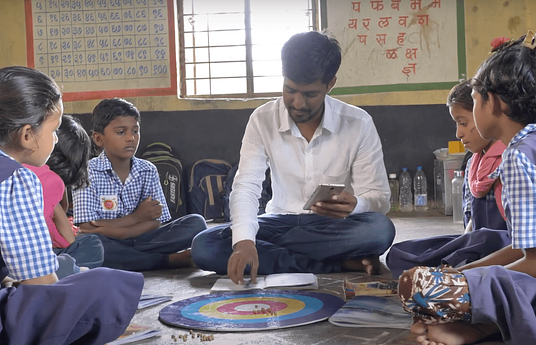
But sending organic waste—a chaotic jumble of yard material and discarded food—to a landfill takes up a lot of space. More troublesome, however, is that when organic waste is buried, it decomposes under oxygen-free, or anaerobic, conditions, producing gases that pollute the atmosphere. The decomposition is driven by microbes that grow in the absence of oxygen. We took a film video sequence about it ,with the interaction of the whole class.

If I want to try it, what should I do?

What do you need?
banana peels, egg shells, coffee residue, water, blender

1. Place everything in the blender,  mix it up for a minute or three. And you’re done!
2.Pour the fertilizer you made in the watering can and add some extra water
3.Afterwards just clean your blender and your watering can and you are ready to start watching your plants grow.

Media

Implementation steps

DIY organic fertiliser from leftovers

What do you need?


  • banana peels

  • egg shells

  • coffee residue

  • water

  • blender


  1. Place everything in the blender, mix it up for a minute or three. And you’re done!

  2. Pour the fertilizer you made in the watering can and add some extra water

  3. Afterwards just clean your blender and your watering can and you are ready to start watching your plants grow.