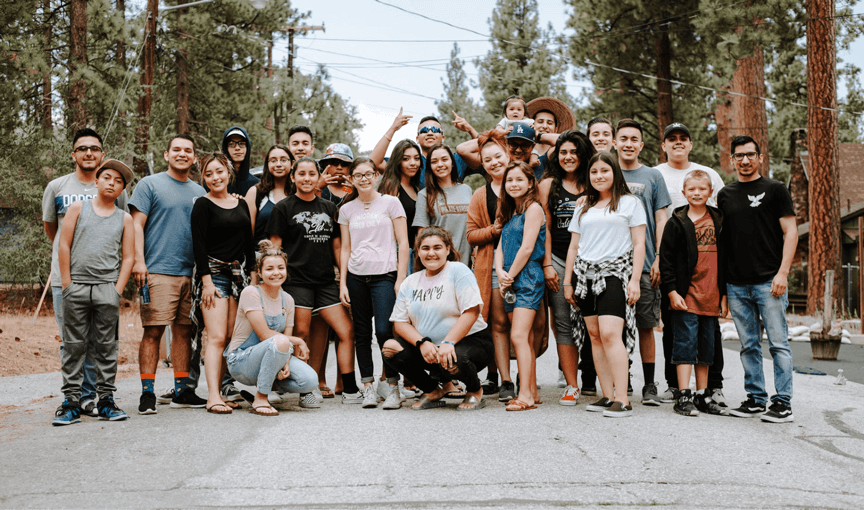
The Champion Model began with people, not positions. Working in early childhood education, I saw talented educators experiencing burnout, feeling undervalued and questioning their professional identity. Many brought qualifications, cultural knowledge, previous careers and remarkable personal strengths that remained invisible within traditional leadership structures.
I began questioning why leadership opportunities were largely determined by job titles when so much expertise already existed within our teams. What might change if we designed leadership opportunities around people rather than expecting people to fit predetermined roles?
I started having conversations with educators about who they were beyond their professional titles, what brought them joy, what they cared deeply about and what they would love the opportunity to lead.
These conversations became the foundation of the Champion Model. Developed through years of practice, reflection and refinement, the model creates meaningful pathways for educators to influence educational practice while rediscovering their professional purpose and sense of belonging.
At its heart is my belief that the quality of children's early learning experiences cannot be separated from the wellbeing, confidence and professional agency of the adults who support them. When educators flourish, children flourish.
Every Champion role begins with a conversation. Educators identify their strengths, passions, cultural identities and previous experiences, which become the starting point for meaningful leadership opportunities.
An educator with a background in music became our Music and Wellbeing Champion, using music to support children's emotional expression and connection. A First Nations educator leads reconciliation and cultural learning. A passion for gardening became a sustainability portfolio, while previous experience in accounting informed internal compliance and quality improvement. A soccer coach brought his expertise into children's fundamental movement skills.
Champions influence practice across the entire service, mentor colleagues, initiate projects and contribute to decision-making. Individual development plans, peer observations, collaborative reflection and regular leadership conversations support their growth.
Our five-stage process, Discover, Empower, Develop, Connect and Impact, allows leadership to emerge naturally and evolve over time. Champion portfolios connect with Australia's National Quality Standard and Early Years Learning Framework, ensuring individual passions translate into meaningful educational outcomes.
Progress is captured through our 'You Said, We Did, Impact' approach, making educator voice, practice improvements and their influence on children's experiences visible.
Different people, different strengths, different pathways, one collective impact.
What began at one early childhood service in Canberra has grown organically into a wider professional conversation about leadership in early childhood education.
A turning point came in July 2025 when my article, “Leading with Curiosity: How distributed leadership is redefining the future of early childhood education”, was published in The Sector. It attracted a growing following of educators and leaders, many reaching out to explore how the model could be implemented within their own settings. A second article in June 2026 illustrated how distributed leadership could deepen reconciliation and cultural responsiveness.
Through professional networks, service visits, mentoring and presentations at the 2026 Early Childhood Australia National Conference and ECA ACT Showcase, the model has inspired other services to adopt and adapt the approach.
The model is now informing the development of proposed specialist leadership workshops through Communities at Work, creating opportunities for wider sector implementation. It has also been accepted for presentation at the 2027 ECLD Conference in Perth.
These experiences have shaped my proposed doctoral research into distributed leadership, educator wellbeing, professional identity, belonging and workforce sustainability, with the intention of strengthening the evidence base for the sector.
Its reach continues to grow through people who see possibilities within their own teams, rather than simply replicating what we have created.
The Champion Model was never designed as a finished product. It has evolved through years of listening, experimentation, critical reflection and learning alongside educators.
Initially, the focus was on recognising individual strengths and creating opportunities for educators to lead. Over time, I recognised that offering leadership opportunities alone was insufficient. Educators also needed psychological safety, trusting relationships, mentoring and the confidence to exercise professional agency.
The model gradually evolved into a whole-service approach connecting educator wellbeing, inclusion, professional development, educational leadership and continuous quality improvement.
Individual development plans, peer mentoring, reflective conversations and collaborative decision-making became integral to the approach. Champion portfolios were aligned with national quality standards and children's learning outcomes, strengthening the connection between individual leadership and collective educational impact.
We also introduced mechanisms to make educator voice and the impact of their initiatives visible, moving beyond simply documenting activities to reflecting on what had changed and who had benefited.
Champion roles continue to evolve as people discover new interests, develop capabilities and respond to emerging community needs. Educators are not confined to a particular portfolio or expected to follow a predetermined leadership pathway.
Start with a conversation, not an organisational chart.
Discover: Spend time getting to know your educators beyond their qualifications and job descriptions. Ask what brings them joy, what experiences have shaped them, what they care deeply about and what they would love to influence.
Empower: Co-create meaningful Champion opportunities around these strengths, connecting individual interests with the needs of children, families and the service. Give educators genuine ownership and space to make decisions.
Develop: Provide mentoring, professional learning, time for reflection and opportunities to experiment. Create an environment where people feel safe to ask questions, challenge existing practices and learn from mistakes.
Connect: Bring Champions together to exchange knowledge, mentor colleagues and connect their initiatives with curriculum, educational priorities and whole-service improvement. Leadership should strengthen collective capability rather than create isolated areas of expertise.
Impact: Regularly reflect on what has changed for educators, children and families. Gather feedback, document improvements and use the findings to refine the approach.
Start small and allow the model to grow organically. Champion roles should never become additional duties imposed on already stretched educators.
You do not need a new hierarchy or an expensive program. Begin by seeing the people you already have differently. Every strength has a place to lead.