We created this innovation because traditional development and education practices were failing to reach the children and families who needed support the most. In marginalized communities, especially among Horijan and other underserved groups, children were growing up with limited voice, low confidence, and almost no structured opportunities to identify their strengths or dreams. Interventions often arrived from the outside, treating communities as beneficiaries rather than partners, which meant meaningful change rarely lasted.
Through our long-standing community work, we saw a clear gap:
children needed a space where they could lead, where they could recognize their own potential, and where their families and community could become active supporters of that growth. That is why we created this innovation, a community-rooted, SALT-inspired approach that nurtures agency, empathy, and leadership in children while activating parents, teachers, and local leaders as allies.
At its core, this innovation was built to shift the mindset from “people need help” to “people have strengths and can lead their own progress.” This shift has transformed passive communities into active changemakers, improved confidence among children, and created an environment where learning, safety, and wellbeing can thrive sustainably.
In practice, our innovation operates as a daily, community-rooted ecosystem where children lead and adults support. It begins with structured SALT-inspired conversations in small groups of children. Facilitators guide them to recognize their strengths, articulate their dreams, and identify challenges they want to solve in their own community.
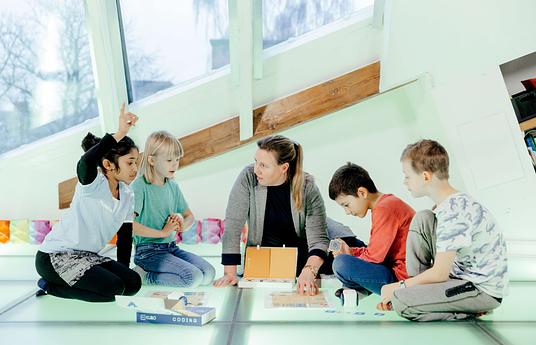
Each week, children participate in “Leadership Circles” where they practice skills such as communication, empathy, problem-solving, and collective decision-making. These sessions are held in accessible community spaces, often courtyards, school verandas, or local meeting spots, so participation is open and inclusive.
Parents, teachers, and local leaders are activated as partners through short community sessions. Instead of instructing them, we engage them to reflect on their aspirations for their children and how they can contribute. This shifts their mindset from passive recipients to active supporters.
Children also lead simple, visible community actions, clean-up days, safety mapping, climate-friendly habits, peer-support activities, which reinforce confidence and show the community what young people can achieve when trusted.
What makes the model powerful in practice is its simplicity:
regular conversations, child-led decisions, community participation, and small but consistent actions.
This combination creates a self-reinforcing environment where learning, safety, and leadership grow naturally from within the community.
Our innovation has spread primarily through organic community demand and practical demonstration rather than formal promotion. Once children began leading visible activities—clean-up drives, safety mapping, peer-support sessions, neighboring communities started asking how they could adopt the same approach. This created a natural “pull effect,” where interest grew because people saw tangible changes happening in real time.
Facilitators who initially worked in one neighborhood were invited informally to guide sessions in new areas. Parents also played a key role; as they observed their children becoming more confident, expressive, and responsible, they encouraged relatives and nearby communities to start similar circles.
Schools became another channel of expansion. Teachers who participated in the parental reflection sessions requested training to run child-led circles inside their classrooms. This helped the model spread from community spaces into school environments with minimal adaptation.
Because the approach requires very few resources, local youth volunteers also began replicating it independently. They used our simple structure, conversations, weekly circles, and small child-led actions, to start their own versions in nearby villages.
In short, the innovation spreads not through large campaigns, but through visible results, community curiosity, and the ease of replication. Its growth has been driven by people who experienced the impact and chose to carry it forward.
We continuously refine our innovation based on community feedback, children’s behavior, and changing local needs. Over time, three major modifications have strengthened the model.
First, we expanded the child-led approach.
Initially, facilitators guided most discussions. But we observed that children became far more confident when they were given full ownership. So we introduced “Child Leaders” who now lead conversations, assign roles, and guide small activities. This shift significantly increased engagement and accountability.
Second, we added structured parental and community involvement.
Early pilots showed that children’s progress would plateau unless adults around them also shifted their mindset. In response, we introduced short reflection sessions for parents, teachers, and local leaders. These sessions helped align expectations and created a supportive environment around each child.
Third, we integrated practical micro-actions.
At first, sessions focused mainly on dialogue. Later, we added simple community actions, clean-up drives, safety mapping, climate-friendly habits, led by the children themselves. These visible actions strengthened confidence and showed the community the real value of child leadership.
Across all these improvements, one principle guides our evolution:
we redesign the model whenever children’s needs, community dynamics, or external challenges change.
This flexibility has made the innovation resilient, scalable, and consistently relevant.
We continuously refine our innovation based on community feedback, children’s behavior, and changing local needs. Over time, three major modifications have strengthened the model.
First, we expanded the child-led approach.
Initially, facilitators guided most discussions. But we observed that children became far more confident when they were given full ownership. So we introduced “Child Leaders” who now lead conversations, assign roles, and guide small activities. This shift significantly increased engagement and accountability.
Second, we added structured parental and community involvement.
Early pilots showed that children’s progress would plateau unless adults around them also shifted their mindset. In response, we introduced short reflection sessions for parents, teachers, and local leaders. These sessions helped align expectations and created a supportive environment around each child.
Third, we integrated practical micro-actions.
At first, sessions focused mainly on dialogue. Later, we added simple community actions, clean-up drives, safety mapping, climate-friendly habits, led by the children themselves. These visible actions strengthened confidence and showed the community the real value of child leadership.
Across all these improvements, one principle guides our evolution:
we redesign the model whenever children’s needs, community dynamics, or external challenges change.
This flexibility has made the innovation resilient, scalable, and consistently relevant.