Arus Kualan was founded by Plorenthina Dessy, Florentini Deliana, together with their father Julianus Julin, siblings, and members of the Dayak Simpakng community. The initiative arose from growing concerns about the rapid loss of cultural heritage and local ecological knowledge in West Kalimantan, Indonesia particularly among Dayak youth. Recognizing the urgency of this decline, the founders sought to transform these concerns into concrete, community-driven action, leading to the establishment of Arus Kualan as a practical and culturally grounded response.
Together with the sisters and the Dayak Simpakng community, we as the next generation of Indigenous Dayak feel a deep responsibility to preserve the culture and wisdom passed down by our ancestors. Like many Indigenous communities, the Dayak have long been guardians of the Borneo rainforest, a vital to both our community and planetary health.
Today, climate change, modernization, illegal logging, mining, and policies that overlook Indigenous rights threaten our heritage. Arus Kualan was founded to bring hope and continuity. It passes the cultural baton to youth, showing that even small actions make a difference. By learning their own culture, language and ecosystem, supporting each other, and honoring ancestral knowledge, young people can protect both our forests and our community. Together, our culture survives, our forests thrive, and our impact endures.
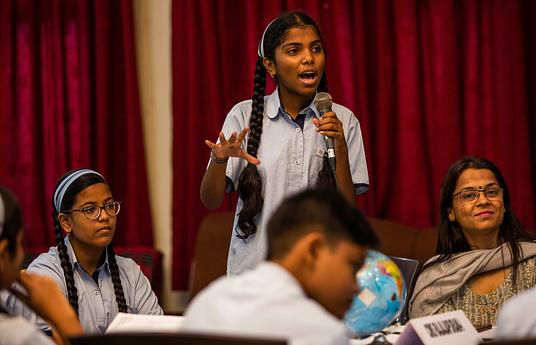
Sekolah Adat Arus Kualan, or the Customary School Arus Kualan, is a project led by young Dayak leaders in West Kalimantan, Indonesia with the goal of creating a generation that values and protects the Dayak culture. The school emphasizes learning from traditional indigenous knowledge in various fields, such as environmental issues, social relations, art, and literature.
The school focuses on two main areas: Education and Environment. We learn from our traditions such as dance, food, medicinal plants, foraging skills and indigenous music.
In environmental activities, we engage in forest clean-ups, organic community farming, recycling waste into bags or jewelry, eco-posters, short films, awareness campaigns, community mapping, and workshops in neighboring villages. Through these hands-on experiences, we learn to care for our forests and support sustainable living. As Arus Kualan students, we share what we learn and collaborate with other communities, encouraging participation and spreading the spirit of Arus Kualan.
By combining cultural knowledge, environmental sustainability management, and educational innovative tools, we see how even small actions can empower our community and protect our rainforest for future generations.
Arus Kualan began with only six students in 2014, but has steadily expanded to 138 students (in 2023) across four branches in different villages: Sekolah Adat Arus Kualan Tahak, Sungi Bansi, Kelipor, and Banjur. Despite challenging access due to remote locations and limited roads, the program has grown through community engagement and demand for culturally grounded education.
Looking ahead, we hope the seeds of Arus Kualan will spread to all Dayak sub-tribes across Borneo which includes up to ~450 ethnolinguistic groups, empowering youth to preserve their heritage and forests. Participation in platforms like HundrED also helps us to amplify the voices and innovations of the Dayak community, inspire adaptation in other indigenous communities, and connect our locally rooted approach to global indigenous-led initiatives.
If you want to try the Arus Kualan approach, begin by learning about the local Indigenous community both in general and locally where you live; its culture, ecosystem, traditional knowledge, and current challenges. Then, observe the Arus Kualan model, which is multidisciplinary, combining cultural preservation, environmental science and biology, traditional ecological knowledge, arts, literacy, and community-based learning. Next step, you can think on which aspect of Arus Kualan model can be merged with the indigenous community where you live.
Collaborate with elders, volunteers, facilitators, and youth to co-design a program rooted in local wisdom and respectful of cultural protocols. Use nature as a classroom to integrate biological and ecological learning with traditional practices. Monitor progress, adjust activities based on community feedback, and document and share results. Build connections with other Indigenous communities and seek government or international support when possible.
Through this process, the Arus Kualan concept can be adapted to Indigenous contexts around the world while honoring each community’s unique identity, environment, and knowledge systems.