India faces a critical paradox: its youth spend years preparing for competitive exams with selection rates below 1%, while less than 10% of the workforce holds formal jobs—a sector unlikely to expand given AI and automation. The education system perpetuates this crisis through outdated rote learning, preparing students for jobs that barely exist. This creates deep inequity and severely limited pathways for advancement. The Economic Survey reveals only 51% of graduates are job-ready, highlighting a massive employability crisis.
Yet India is the world's youngest nation, brimming with potential that remains tragically untapped.
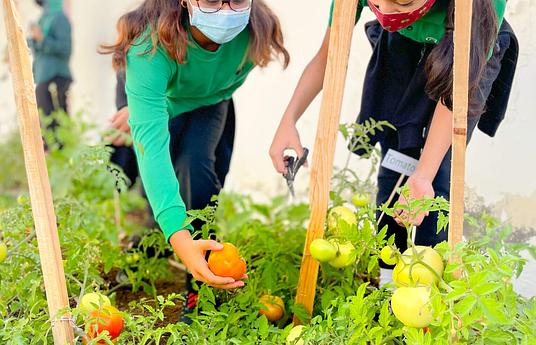
Udhyam Shiksha was created to break this cycle for youth from underserved communities. Rather than preparing students for non-existent formal jobs, our program develops entrepreneurial mindsets and 21st-century skills through immersive, real-world learning experiences. We work within government schools and resource-constrained environments, empowering teachers to facilitate experiential pedagogy.
Students engage in authentic projects that build agency, creativity, critical thinking, and resilience. They learn to identify opportunities, navigate complexity, and create their own pathways rather than competing for vanishing positions.
Our innovation transforms education from a bottleneck into a launchpad, enabling youth to become economically productive and agentic contributors who can shape their futures and drive inclusive growth.
Udhyam Shiksha cultivates entrepreneurial mindsets through a 4-year curriculum delivered by government school teachers at scale. Each year presents students with distinct real-world project challenges.
Students choose projects aligned with their interests and contextual opportunities—addressing social innovation, community issues, or local economic challenges. This grounds learning in authentic problems that matter.
All projects are team-based with deep real-world engagement. Students conduct community need assessments, perform market research, build prototypes, interview potential customers, consult mentors and experts, and present their solutions to stakeholders. This isn't simulation—it's genuine entrepreneurial practice.
Critically, students engage in continuous reflection on their evolving mindsets and competencies, learning collaboratively from each experience. This metacognitive practice builds lasting agency and adaptability.
Projects are intentionally designed for minimal resources and technology, ensuring accessibility in underserved settings while preparing students for real-world constraints. Students learn that innovation stems from creativity and persistence, not expensive tools.
Over four years, this experiential journey transforms students from passive learners into confident problem-solvers who can identify opportunities, navigate complexity, and create value in their communities—essential capabilities for India's evolving economy.
Over the last 9 years our programme has seen increasing interest and adoption by governments, educators and other non profits.
Till date, Udhyam Shiksha has empowered 4.75million learners, and enabled over 55,000 educators across more than 15,000 government schools and ITIs across 12 states in India.
Entrepreneurship mentors and institutional volunteers across India play a pivotal role in students’ journeys. Our alumni have formed a student-led community named Sarvo Udhyam to encourage other young entrepreneurs. Funders and successful entrepreneurs are also contributing to this journey financially.
Researchers from McGill University have established a lab in collaboration with Udhyam to understand youth agency and entrepreneurial mindsets more deeply in India. Findings of this longitudinal research will be used for policy reforms.
Over the next 3 years, Udhyam Shiksha aspires to establish at least 4 Exemplar State programs, which serve as Role Model State Implementations of our program combining Impact with Scale. These exemplar models will serve as a blueprint for a Pan India rollout and replication, combining robust process driven execution, deep institutional capability building, and data dashboards for effective near real time decision making. Achieving the above over the next 3 years, will take us closer to our mission of ‘Making Bharat Entrepreneurial’.
- Udhyam has launched its alumni community - Sarvoudhyam, where budding young entrepreneurs aged 18 to 25 years come together for peer learning, support, and creating sustainable and profitable enterprises post the Shiksha program.
Established in 2024, Sarvoudhyam currently mentors over 83 young enterprises in the NCR area, and, with continued support from Udhyam Shiksha, hopes to roll out chapters at a national level.
- Udhyam is actively leveraging AI and data-driven dashboards to enhance program delivery and monitoring student progress at scale. Udhyam Saarthi, an AI-powered curriculum companion — selected for the OpenAI and Agency Fund AI for Global Development Accelerator, supports students and teachers with the curriculum journey at crucial steps. In Phase 1, Saarthi delivered a 163% increase in idea novelty and a ~30% improvement in submission quality — demonstrating that AI integration is actively deepening the quality of learning, not just delivery efficiency.
- Udhyam has partnered with Dr. Joseph Levitan - Associate Dean, Department of Integrated Studies in Education, McGill University for a longitudinal study to assess the impact of the Entrepreneurial Mindsets Curriculum as a 4-year curriculum journey in Uttarakhand. McGill and Udhyam Shiksha M&E have co-created research frameworks and tools to measure entrepreneurial mindsets and competencies relevant to the context of India and other developing countries.
Using participatory approach and design.
Our curriculum, implementation process and MEL documents are all open source and have been adopted by 4+ organisations already. We encourage educators to read through those documents and reach out to us at shyam@udhyam.org. We engage with our ecosystems intently to help adapt our programme to their contextual needs. We fully assist in co-creating, piloting and implementing the programme.