Indian classrooms need culturally relevant, accessible ways to build 21st-century skills while nurturing wellbeing, equity and agency. Yet most computational thinking and AI resources available today are western, technology-heavy and disconnected from the realities of low-resource Indian schools. Teachers often feel unprepared to introduce these concepts and reflective practices and students rarely see how technology can relate to their lives, communities or local challenges.
We created Think Create Code Solve, a textbook to bridge this gap with a joyful, locally rooted curriculum that helps learners think creatively, solve problems and act responsibly using examples drawn from their own contexts. The programme empowers students to address issues such as climate and environmental awareness, sustainability, gender equity and digital responsibility through playful, narrative-based hands-on activities and QR-initiated creative coding projects that do not require advanced devices or continuous connectivity.
A practical teacher guide that corresponds to the textbook, supports educators with simple strategies, culturally grounded examples and low-cost materials, reducing anxiety and increasing confidence. By combining computational thinking with creativity, wellbeing and social purpose, this innovation ensures every child, regardless of background, can build future-ready skills and see themselves as capable, responsible changemakers.
Think Create Code Solve is a 21st-century skills curriculum for Grades 5–8 that blends computational thinking, design thinking, AI literacy, digital citizenship and creativity through culturally rooted stories, art, crafts and real-life Indian contexts. Lessons link to climate action, nutrition, sustainable farming, community safety and social justice, making learning relevant and meaningful.
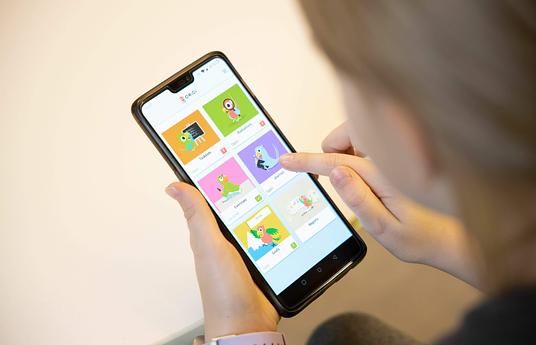
Each unit and lesson includes unplugged and digital pathways so classrooms with limited devices can participate fully. Students create projects on Scratch or CodeMitra, a contextual coding app and connect concepts to math, science, art and social studies. The Teacher Guide provides clear pedagogy, scaffolds, localization cues, success criteria, exit tickets and formative assessments so educators of any background can teach confidently.
In practice, students design prototypes for societal challenges such as traffic safety, water wastage, malnutrition, clean energy and accessibility using CT and DT mindsets. These tasks draw from SDG themes and community issues, helping children analyse inequities, practice empathy and co-create inclusive solutions.
The curriculum follows a spiral progression, deepening skills each year. By Grade 8, learners explore AI ethics, bias, accessibility and physical computing with Arduino. The programme works in low-resource settings, supports wellbeing through reflection and storytelling, and builds student agency through iterative, hands-on problem-solving.
The curriculum began with pilots in government schools across India and expanded through partnerships with state bodies. Select lessons are now embedded in SCERT’s Digital Literacy curriculum, reaching 8,783 teachers through state-level workshops. Through the CodeMitra app, several hundred thousand students across 30+ states have engaged with lesson activities as of November 2025. States like Maharashtra, Chhattisgarh and Jammu & Kashmir show over 70% completion, indicating strong sustained participation.
The work has gained academic recognition as well. Our textbook was showcased at IIT Madras, and our research was published in the ICCE 2025 conference proceedings, strengthening credibility and positioning the program as a scalable Global South model for culturally grounded computational thinking and AI literacy. Researchers and professors at the Center for Educational Technology, IIT Bombay have reviewed and endorsed the textbook, noting its relevance and pedagogical rigour.
Requests for training, adaptation and teacher network engagement have increased nationally and internationally. Educators and researchers from countries such as Malaysia, Thailand and the United States have expressed interest in contextualised, low-resource models of 21st century-skills learning, further expanding the program’s reach and potential collaborations.
Schools or organizations can begin by selecting the grade-level book and teacher guide, choosing specific lessons that fit their timetable. Teachers may attend an orientation or use the built-in facilitation notes to begin immediately. For digital tasks, CodeMitra and Scratch are free to use. Contact PiJam Foundation for training or support at elavarasi.manogaran@thepijam.org
.png)