Too many children fall behind and are unable to receive enough individual support, especially in the early years when foundational skills are formed because of the many constraints and loads on the education system. Without this support, learning gaps widen over time and become difficult to recover.
At the same time, many young people complete school but cannot access further education or meaningful work, leaving their potential untapped and limiting their ability to contribute to their communities.
YearBeyond connects these challenges by addressing a shared constraint. Education and public service systems lack the human capacity to provide consistent, individualised support, while young people remain excluded from opportunity despite their readiness to contribute.
We saw the potential to link these realities. With the right structure, training, and support, young people can strengthen the system while building their own pathways forward.
YearBeyond turns untapped youth potential into real capacity for learning, helping children stay on track while opening pathways into further education, employment and entrepreneurship.
YearBeyond operates through a network of local partners who deliver learning support within their communities. We recruit and train young people, then place them across schools, ECD centres, libraries, and community sites where additional capacity can improve learning outcomes.
Local partners host placements and manage day-to-day delivery. YearBeyond provides training, curriculum, and implementation systems to ensure consistent quality across diverse settings.
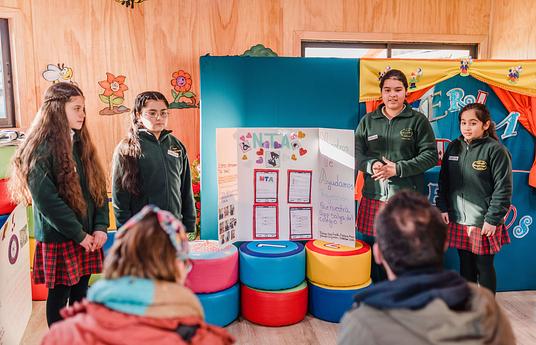
Young people take on defined roles that extend the reach of educators. They run small-group literacy and numeracy sessions, support classroom activities, facilitate enrichment programmes, and work with caregivers to strengthen learning beyond formal settings. Learners typically receive around 150 hours of additional support, while caregivers access practical workshops and materials.
Youth receive structured training before placement and continue learning throughout the year, completing around 96 hours of curriculum content alongside ongoing mentorship.
A shared digital platform tracks attendance, delivery, and reach in real time, enabling partners and programme teams to monitor performance and respond quickly where support is needed.
By working through local partners, YearBeyond embeds capacity within existing systems and delivers consistent support at scale.
YearBeyond has scaled rapidly by building a distributed, partner-led model that expands learning support while creating pathways for young people. What began with just 16 youth at 4 sites, has grown to nearly 4,000 annually a decade later, and more than 900 sites reflecting sustained, exponential growth. It is set to expand to 6000 youth annually.
We have expanded our network to more than 65 local partners, with a footprint in three provinces, reaching into diverse contexts including over 250 libraries, many in remote and underserved areas, as well as a growing number of ECD centres. This partner-led approach allows the model to embed within existing systems and extend reach without requiring new infrastructure.
Alongside this growth, we have strengthened the systems that enable consistent delivery at scale. We moved from a largely paper-based model to a blended, tech-enabled approach, supported by standardised training, implementation manuals, and a strong quality assurance framework.
A shared digital platform provides real-time visibility on attendance, delivery, and reach across sites, allowing us to actively manage performance and maintain quality across contexts.
The model continues to deliver strong outcomes. 70%+ of participating youth progress into further opportunities, while teachers and partners report improved learner attendance, engagement, and gains in literacy, numeracy and a range of behaviours e.g. increased confidence, self-esteem
As YearBeyond has scaled, we have strengthened both our learner support and youth development components to improve quality, consistency, and long-term impact.
Across our beneficiary programmes, we have improved our implementation and programme delivery manuals, standardised training, and baseline and endline assessments to better track progress and outcomes. We also deepened our focus on caregiver engagement, recognising the role of families and communities in supporting learning, and built stronger feedback loops with public service partners to continuously improve delivery.
We expanded the range of delivery settings to include libraries and community platforms, allowing us to reach learners in more diverse and often underserved contexts.
On the youth development side, we have strengthened our personal and professional curated programme for youth to support successful pathways beyond the programme and by applying our learning to the broader ecosystem. This includes the development of the YeBo Academy, which provides accredited, practice-based training for practitioners working with young people.
Through these additions, YearBeyond has evolved from a programme into a more comprehensive model that builds system capacity, supports learners, and strengthens the wider youth development sector.
Organisations can adopt YearBeyond as a structured, partner-led model that expands learning support while creating pathways for young people. The model includes three integrated components: a youth development pathway that equips young people with skills, experience, and access to opportunity; structured literacy and learning support programmes for children; and a delivery model for scale, including systems, training, and onboarding processes.
We work closely with partners to integrate the model into existing education and community platforms, ensuring it responds to local needs while maintaining consistency and quality. Partners receive implementation guides, training, and ongoing support, alongside access to tools and systems that enable effective delivery and performance tracking.
The model is designed to be adaptable across different contexts, including schools, ECD centres, libraries, and community settings. Its partner-led approach allows it to scale without requiring new infrastructure, while maintaining strong oversight and quality assurance.
To explore implementation, organisations can connect with our team, visit programme sites, and access onboarding support. Contact admin@yearbeyond.org