Cookie preferences

HundrED uses cookies to enhance user experiences, to personalise content, and analyse our web traffic. By clicking "Accept all" you agree to the use of all cookies, including marketing cookies that may help us deliver personalised marketing content to users. By selecting "Accept necessary" only essential cookies, such as those needed for basic functionality and internal analytics, will be enabled.
For more details, please review our Cookie Policy.
Accept all
Accept necessary
search
clear

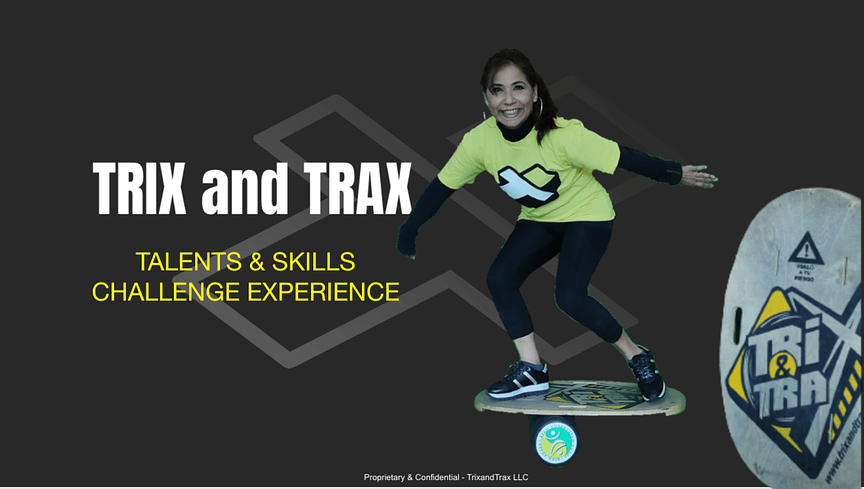
Talent and Skills Challenge Storytelling Edition

Building Essential Skills Through Creative Storytelling and Team-Based Filmmaking

Storytelling EditionChallenge solves the "shyness barrier" and passive digital consumption in youth. Through an 11-week immersive journey, we turn classrooms into production houses. Using the Skillstracker app, students master the "6 Cs" (Confidence, Creativity, Collab, Critical Th.) by rotating roles and creating content. They evolve from spectators into Protagonists of the Future, ready to lead.

Overview

Information on this page is provided by the innovator and has not been evaluated by HundrED.

Updated April 2026
Created by

Trix and Trax Academy

Visit Organisation's Site
Web presence

1

Countries
Students lower
Target group
The innovation seeks to shift education from a model of passive consumption to one of active protagonism. 1. From "Shyness" to Agency The innovation aims to dismantle the "shyness barrier" that prevents students from expressing their potential. By making audiovisual creation a core pedagogical tool, education evolves from a place where students sit and listen into a "Safe-to-Fail" laboratory. Here, they experiment, take risks, and discover their own voice through the lens of a camera. 2. From Isolated Subjects to the "6 Cs" Framework The hope is for education to prioritize socio-emotional skills (Communication, Collaboration, Critical Thinking, Creativity, Confidence, and Content Creation) as measurable outcomes. Through the Skillstraker, these "soft" skills become visible and attainable, ensuring that storytelling is not just an art, but a vehicle for building resilience. 3. From Students to "Protagonists of the Future" The ultimate goal is to redefine student identity. The innovation moves education away from traditional grading and toward empowerment. Schools become production houses of human potential where young people realize they are creators capable of impacting their community. The change is to graduate citizens who are no longer spectators, but ethical leaders of their own narratives. In short, student graduates with the confidence and skills to thrive in the complex landscape of the 21st century.

About the innovation

Why did you create this innovation?

We designed the Talent and Skills Challenge “Storytelling Edition” to create an engaging, hands-on experience where participants develop essential life skills while producing original audiovisual content. The core idea is simple yet powerful: participants form teams, create their own audiovisual production company, and produce a short film that combines specific talents with a literary genre.
The main objectives were to:
* Foster self-awareness of personal strengths and talents
* Build collaboration, leadership, and teamwork in a real-world creative setting
* Develop creativity, problem solving, and digital skills through practical production
* Encourage communication (speaking, listening, and storytelling)
* Provide opportunities to practice staying positive and aiming high under time pressure and with public presentation
This challenge directly maps to Skills Builder’s Universal Framework by making skill development visible, measurable, and celebrated.!!!

What does your innovation look like in practice?

The Challenge: Structured Stages
1. Team Formation & Leadership
Captains select their members through a leadership exercise where students pitch their specific talents. This provides immediate practice in Confidence and self-awareness. It fosters essential Leadership skills (delegation and motivation) and collaborative Teamwork from the outset.

2. Creation of a Production Company
Each team invents their own audiovisual production company, designing a unique logo and brand identity. This stage is heavily focused on Creativity and Problem Solving as they define their professional image.

3. Short Film Production
Using a “Talent Wheel,” teams are assigned random categories that combine personal skills with literary genres. The production flow includes:

Ideation & Scriptwriting: Focuses on Creativity, Speaking (storytelling), and Listening (exchanging constructive feedback).

Filming & Editing: Develops technical skills, Problem Solving, and Staying Positive through creative blocks, while Aiming High for cinematic quality.

Promotion: Teams generate social media engagement, practicing communication and collective effort.

4. Presentation & Celebration
The journey concludes with a screening of the films at the Trix and Trax Awards. Categories include Best Captain, Script, Editing, Acting, Logo, and Most Popular Video.

Mentors provide guidance and evaluate both the final product and the process—focusing on collaboration, communication, and the integration of new skills.

How has it been spreading?

We started this pilot with 7th graders in 2020 with 100 students. Turn the online experience to in presence experience and we have been able to play this experience over the last 6 years and reach over 600 students

How have you modified or added to your innovation?

We have included the skillstracker-tt app as a measuring tool to have a better and on time information of what the students needs are and help the facilitators to mentor and attend students issues one to one
https://skillstracker-tt.lovable.app

If I want to try it, what should I do?

Contact Lissette@trixandtrax.com
1. Get the Experience Rules, Class structure teacher's Handbooks, Captain Guide (student) and Presenter Guide (student)
2. Step by Step Case Study. https://drive.google.com/file/d/1ikZ74LokrpZdCaRTwoYYOZ0TdaWOVAzL/view?usp=sharing

Implementation steps

The challenge unfolds in structured stages:
1. Leadership: Captains pitch and form teams based on talents. 2. Branding: Teams create a production company and logo. 3. Ideation: Use the "Talent Wheel" to script original stories. 4. Production: Film and edit while practicing Problem Solving. 5. Promotion: Build buzz for the film. 6. Awards: A red-carpet celebration of the 6 Cs, turning students into Protagonists. 7. Detail INFO https://drive.google.com/file/d/1ikZ74LokrpZdCaRTwoYYOZ0TdaWOVAzL/view?usp=sharing
1. Team Formation & Leadership
Captains select team members through a leadership exercise. Students share why they should be selected based on the talents and skills they have. This gives participants immediate practice in Confidence, fostering self-awareness of personal strengths and talents, Leadership (step: delegating and motivating) and Teamwork (step: collaborating effectively).
2.Creation of Audiovisual Production Company
Each team invents their own production company, designs a logo, and defines their identity. This stage heavily targets Creativity and Problem Solving.
3. Short Film Production
Teams receive random categories via a “Talent Wheel” (combining two personal talents/skills with a literary genre). They must create an original short film (specific duration) that tells a compelling story.
-Ideation & Scriptwriting → Focus on Creativity, Speaking (storytelling), and Listening (giving/receiving feedback).
-Filming & Editing → Develops Problem Solving, digital/technical skills,
- Promotion → Teams generate engagement (likes/comments).
4. Presentation & Celebration
Films are screened, and winners are announced at the Trix and Trax Awards (categories include Best Captain, Best Team, Best Script, Best Video, Best Editing, Best Actor/Actress, Best Logo, and Most Popular Video). https://www.instagram.com/reel/DXPoxi4CWIA/?utm_source=ig_web_copy_link&igsh=MzRlODBiNWFlZA== Mentors provide guidance and evaluate not only the final product but also the process (collaboration, communication, and integration of skills).
Key Learnings and Recommendations
The Talent and Skills Challenge proves that complex, project-based activities can effectively embed essential skills when they are made explicit and celebrated. Key success factors include:
Clear mapping of activities to specific Skills Builder steps
Structured stages with built-in reflection points
Authentic outcomes (a real short film + public awards)
Strong facilitation/mentoring to highlight skill use in the moment
We recommend this model for Creative skill-boost.
Students learnings

Students Learnings

Watch learnings from studentsTeam DG2

“Surpassing ourselves as a group was one of the most difficult things about this experience. Our goal was to see the evolution in the execution of each challenge… we had to do better each time, if one time it was good the other one should be perfect and the next one excellent and so on … although it was complicated I believed that we succeeded”

Andres Prada

“I learned to work as a team. Being a captain taught me to listen, to motivate, it taught me that with my help or without my help all my team should shine and that a group is a whole!”

Juan Moros

“I learned that peers ideas can be very different regardless of whether it is the same topic”

Camila Rodriguez

“I learned to adapt to the situation. If they tell you 15 sec it is 15 sec at the end your idea must be adapted to that time”

Andres P

“I learned to have confidence in myself, I learned from my friends and their talents because I saw them in the videos, I learned that you should not hide your talents because a person tells you that you are not good, you should not stop doing what you like because of the opinion of another person”

Valentina, Julian, Mateo

IMPACT Report
The 2026 impact report https://drive.google.com/file/d/1PszCPqorH4vCTvxryMXSkfXfRzjtbx9F/view?usp=drive_link
The Skillstracker- TT app
https://skillstracker-tt.lovable.app

Spread of the innovation

loading map...