Because I am selfish.
I have a 2-year-old son. I want the India he grows up in to have more trust, better civic sense, and less of the scarcity mindset that keeps us stuck. The cutting in queues. The large scale corruption. The individual over collective mindset. That is what started this.
It is not that people are fundamentally flawed. It is more of a system-level problem. I remember littering when I was younger, because I simply did not know any better. Most of us were never taught how to reason about shared systems: how individual incentives create collective outcomes, how cooperation often beats short-term self-interest, how misreading intent fuels unnecessary conflict. So we improvise. And when millions of people improvise poorly inside shared spaces, daily life becomes exhausting for everyone.
Schools are not solving this. They give kids textbooks and exams. Nobody is giving them tools to think: about themselves, about their choices, about how to live responsibly alongside other people. There is a curriculum gap that is upstream of everything.
I spent nearly a decade as a professional poker player and coach before building TLR. That shaped me in ways that connect directly to this work: decision-making under uncertainty, emotional resilience, and the discipline to trust a process when outcomes go against you. Before that, I built Musicfellas, an indie music platform. What I learned there is that audiences can discern quality if someone acts as an agent to unlock it.
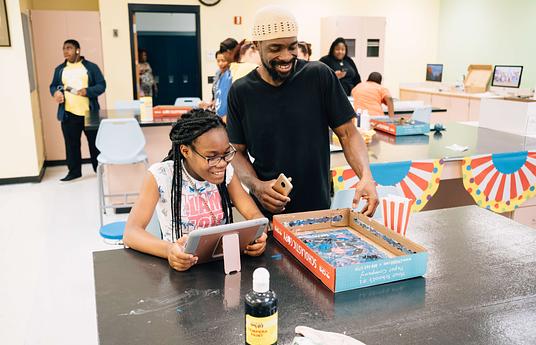
Each TLR session is a 45 to 90 minute facilitated workshop built around one concept, delivered through a simulation, group exercise, or real-world scenario.
The session opens with a dilemma students recognise from their own lives. The concept is experienced before it is named. In the Cookie Game, students play a live Prisoner's Dilemma with cookies as stakes. In the Broken Windows session, they examine how small signals of disorder shape behaviour, then trace the same dynamic in their WhatsApp groups and school corridors. In HACKED!, they reverse-engineer how apps are designed to capture their attention, and leave with a framework for reclaiming it. In the Pale Blue Dot session, students zoom out to the scale of the universe before applying that perspective to their own problems.
Questions we ask: What does Instagram actually sell? Can you prove Sharing is Caring with maths? Your friend hasn't replied in three hours. What is the most likely reason?
Every concept has a TLR name students own: The Cookie Trap, The Domino Check, The Zoom Out, HACKED. These names travel outside the classroom. When a student uses them with a friend who never attended, word of mouth happens naturally.
Each workshop maps to one of three pillars: Clear Thinking, Resilience, or Society Living. Sessions are fully facilitated by TLR. No teacher involvement required.
TLR is in its founding batch phase. We have delivered 20+ workshops across government and private schools in Bengaluru, reaching 160+ students to date. Our current focus is East Bengaluru and Whitefield, with active school pipeline conversations underway in Mumbai.
Early spread has been entirely through warm introductions. The first government school came through a contact. The second school approached us directly after hearing about the work. That is the pattern we are building on.
Teacher feedback has been a stronger signal than expected. After a Two Razors session at a government school in Whitefield, a math teacher wrote: "The content was unique and adults too can learn a lot from it." After a Prisoner's Dilemma session, a class teacher said she would be joining future sessions herself. When teachers want to attend, the content is working.
We have built a BOGO model into our school pricing: every paid private school workshop sponsors a free workshop at a government school. Equity is structural, not bolted on later.
TLR was also selected into the build3 Impact Accelerator, which has added structure, advisors, and ecosystem connections to the build.
Over the next two years, the goal is 30 schools across Bengaluru and Mumbai, a validated 10-session Level 1 curriculum, and enough pre and post assessment data to demonstrate measurable improvement in student reasoning quality.
Most recently, we have begun testing poker as a teaching tool in direct-to-consumer online workshops. Poker is applied game theory: it teaches probability, reading intent, managing uncertainty, and the discipline of process over outcome. In a controlled online format with motivated learners, it serves as a live laboratory for the same mental models TLR teaches in schools, and early sessions suggest it is one of the most visceral ways to make these concepts land.
The other significant addition has been "The Algorithm," a 10-session serialised narrative arc running across the full Level 1 curriculum. Students follow Arjun, a 19-year-old who accidentally goes viral, and collectively manage his decisions as a content creator. Each session, the existing TLR activity teaches the concept. Then students face a choice in Arjun's story that applies it. Three stats are tracked across all sessions: Followers, Reputation, and Well-being. Most decisions force a tradeoff between at least two. That tradeoff is the engine of every debrief.
There is no pre-recorded space for this right now. You can follow us on social media and see how our classrooms sessions look. Or you can visit littlerationals.com to get more details on it.