Unemployment in Lebanon is at a record high, with a 47.8% unemployment rate.. This figure is higher for Syrian refugees, with 55% out of employment and 71.9% of youth not in education, employment, or training. At the same time, however, many companies both in Lebanon and abroad are facing difficulties hiring qualified individuals—indeed, 87% of executives globally grapple with or expect to experience talent gaps in their workforce.
Among the many reasons for this labor market mismatch is that the traditional education system in Lebanon leaves little room for critical thinking, problem-solving, creativity, and collaboration —the very skills in high demand in the modern workforce. Rapid advancements in technology and automation also necessitate a shift toward teaching digital literacy, coding, data analysis, and AI, among others. By neglecting to integrate such skills into their curriculum, schools risk leaving their students unprepared for the evolving job market, hindering their potential for success in an increasingly competitive and technologically driven world.
In response, Jusoor launched the Future Skills Project (FSP) to empower displaced adolescents in Lebanon with the most relevant and practical skills for today’s and tomorrow’s workforce. FSP focuses on coding, robotics, critical thinking, problem-solving, and English language proficiency, preparing them for decent work opportunities and supporting long-term economic resilience for marginalized communities.
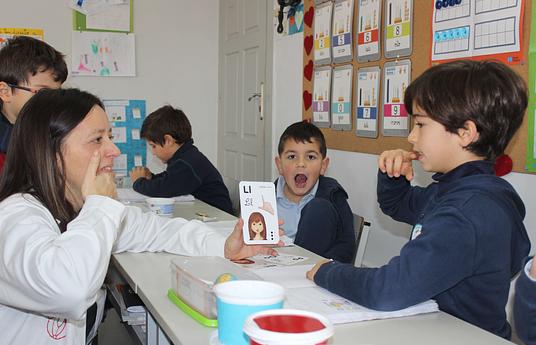
The Future Skills Project (FSP) equips marginalized Syrian refugee youth in Lebanon with critical 21st-century skills: coding, robotics, critical thinking, and English to bridge the education-to-employment gap. In practice, FSP offers a blended learning model combining in-person classes in underserved areas with project-based learning, competitions, and mentorship. This approach addresses the urgent need for accessible, future-oriented education among displaced youth, who face limited opportunities in traditional schooling.
In particular, FSP delivers:
- Foundational Coding and Robotics Training that introduces students to programming and hands-on tech skills
- Cognitive and Critical Thinking Development through real-world problem-solving and interactive, project-based learning
- English Language Instruction that strengthens communication skills and boosts employability in a global workforce
- Career Exploration Activities that help students envision and pursue tech-related career paths
- Employability Skills Building, combining technical expertise with soft skills such as collaboration and adaptability to increase job readiness
FSP has demonstrated success: over 80% of participants showed measurable improvement in digital literacy, problem-solving, and language skills. The program integrates technology through robotics kits and online coding platforms and uses a customized, context-sensitive curriculum tailored to refugee needs.
The Future Skills Project has expanded across three locations in Lebanon: Jeb Jennine and Al Marj in West Bekaa, and Bourj Hammoud in Mount Lebanon, reaching over 196 refugee adolescents since its launch.
Demand has steadily grown, supported by strong community engagement, effective local partnerships, and high student retention rates.
Over the past two years, FSP has achieved measurable success: participants have shown a notable 80% improvement in their skills. In addition, the program has hosted robotics competitions, and integrated critical thinking into traditional STEM (Science, Technology, Engineering, and Mathematics) tracks., fostering more holistic learning.
Over the next 2–3 years, FSP aims to double its reach, deepen partnerships with private sector employers, integrate AI literacy into the curriculum, and explore adaptation of the model to other refugee-hosting countries. With the great appetite from both young learners and employers for tech knowledge and skills training programs, FSP represents a powerful opportunity to bridge the gap between education and employment, unlocking the potential of refugee youth and contributing to a more inclusive, future-ready workforce.
To adopt FSP, organizations should assess local youth needs, secure basic technology infrastructure, and adapt our flexible curriculum to their context. We provide training, curriculum guides, and technical support. Interested partners can contact Career Development Program at Careerdevelopment@jusoor.ngo for collaboration.