We created this innovation to address a core crisis in India’s education system. Secondary schools face high dropout rates (14.1%), driven by rote learning that feels irrelevant & offers limited pathways to careers.
At the same time, India suffers a severe skill deficit: only 2% of youth (15–29) received formal vocational training, and 63% of employers cite lack of skills as a major hiring barrier. Despite this, the education sector grapples with a perception that skill education is inferior to mainstream education and is meant largely for students who are unable to cope with the latter.
The system was preparing children for exams—not for life. Students completed schooling without building practical skills, exploring careers, or understanding the world of work. This contributed to a high NEET% (Not in Education, Employment & Training) (29%), especially for girls.
We developed this innovation to bring real learning into classrooms through hands-on projects, multi-sector exposure, and workplace experiences. We strive to integrate this as a part of the mainstream curriculum. The goal is to make learning relevant, engaging, and future-ready for all students, so that they can confidently navigate higher education and employment.
The journey is now backed by the National Education Policy 2020, which mandates no-hard-separation between vocational and other streams and creates an opportunity to scale skill education from 20,000 to 300,000 schools, reaching 36 million students.
In practice, our innovation transforms secondary schools into spaces where students learn by doing, not memorizing. Skill Education becomes a core subject, taught through hands-on projects across multiple sectors—agriculture, engineering, energy, environment, entrepreneurship, AI, and more. Students spend time in fully functional vocational labs, rotate through real-life tasks, and understand concepts by applying them.
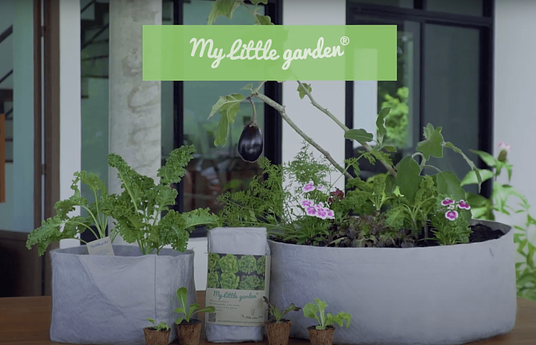
This journey begins in Grades 6-8, where students get exposure to vocational education through hands-on projects like school gardens and simple robotics, supported by guest lectures and field visits. They typically do it on “bagless days” in a week. In Grades 9-10, students learn foundational vocational skills using modular toolkits in a dedicated skill lab. Students explore sectors like agriculture, mechatronics, healthcare, and coding, building portfolios of real work. By Grades 11-12, they specialize in a chosen path and undertake 80-hour internships with local businesses, gaining direct workplace experience.
The model is supported by a skilled trainer/teacher in a school, a functional lab, a practical curriculum, engagement with employers, and practical assessment of students. It ensures every child—regardless of background—gets practical skills and early workplace experience. It bridges the gap between school learning and life, helping students make informed choices and preparing them for higher education, vocational pathways, or employment.
The innovation has spread through a combination of initial pilots, strong evidence, government partnership, and policy adoption.
It began as a small experiment in 2006, with 100 schools in rural India. It evolved into a proven, scalable model aligned with national priorities, supported by school education societies across the state.
The breakthrough came in 2014, when the government launched a scheme to introduce skill education in schools. This is when Lend A Hand India launched Project Catalyst—a system-change model that embeds technical support teams within government education departments, at no cost to the state. By strengthening public systems instead of creating parallel structures, we have supported 20+ states in operationalizing skill education, enabling its spread to over 20,000 schools. Through this partnership and catalytic support , Lend A Hand India also brought in several innovations to improve the quality, efficiency and effectiveness of the program viz. Internships for high school students, real time monitoring system, teacher training modules, and student tracking. Advocacy through Karigar School of Applied Learning and Skills on Wheels (A fleet of Mobile Skill Buses) have further accelerated uptake.
Finally, with National Education Policy 2020 & subsequent National Curriculum Framework 2023, have now mandated the skill education to be integrated into mainstream education, creating further scale up from 20000 schools to over 290000 schools, nationwide
Our innovation has evolved in step with India’s changing education landscape. What began as an additional fun course for rural schools has now become a full-credit main subject with year-end assessments and certification.
>Curriculum
-The curriculum has expanded and aligned with the National Skill Qualification Framework to ensure industry-relevant certification, and is now being upgraded to meet the multi-sector approach of the National Curriculum Framework 2023.
-We continue to add future-ready domains—Coding, AI, Mechatronics, and Finance—alongside core areas such as Agriculture and Healthcare, reflecting shifting macroeconomic needs.
>Delivery Models
To overcome space & resource constraints, we introduced multiple delivery models:
-A portable modular toolkit that turns any classroom into a skill lab.
-Skills on Wheels mobile labs: deliver equipment and training directly into the remote schools without labs.
-Hub-and-Spoke model where one equipped hub school serves 4–6 nearby schools
-Technology-enabled learning through AI modules, simulations, and digital content strengthens access & quality.
>Internship
A structured 80-hour internship for Grades 11–12 places students in local MSMEs, extending learning beyond the classroom and improving work readiness.
>An enabling ecosystem supports scale
-Karigar School of Applied Learning for teacher training
-Real-time MIS & digital monitoring dashboards
-Student call centre that tracks aspirations and provides targeted support
>> Start by introducing a small yet structured version of the model
> What you need is a trained teacher & a functional space where students can learn by doing.
> Begin with 2–3 sectors that are easy to implement locally (e.g., Agriculture, Basic engineering, Environment, Finance, or Food processing). Set up a simple vocational lab with essential tools and materials. Use structured lesson plans, hands-on activities in a weekly continuous session of 3-4 Hrs.
>> Train teachers or instructors in experiential pedagogy and safety protocols. Even a short orientation helps them shift from lecture-based teaching to facilitation & practical demonstration.
>> Next, introduce short workplace exposures. Bring in practitioners as guest lecturers. Then start with a 20–40 hour internship or job-shadowing opportunity with local micro enterprises—workshops, farms, repair shops, service units, or community organisations.
>> Track simple indicators—attendance, engagement, skills practiced, and student reflections. Use these insights to refine implementation.
>> If you’re a government or funder, you can pilot the model in a cluster of 20–50 schools, integrate it with state curriculum goals, and scale using existing infrastructure and budgets.
Trying the model begins small, but it quickly becomes a transformative shift in how students learn, think, and prepare for life and work. Get in touch with Lend A Hand India for technical assistance and e-resources. (info@lendahandindia.org)