I kept meeting the same three students.
The one who had no idea what they wanted and was waiting for someone to tell them. The one who had too many ideas and couldn't choose between them. And the one who had one strong idea — but had never actually examined it.
Three different problems. One common root: nobody had ever taught them how to think about who they are.
The career guidance I saw in schools was trying to answer "what should you become?" before students had any honest answer to "who am I right now?" The result wasn't guidance. It was a list of options handed to someone who didn't yet know how to evaluate them.
So I built My Career Path from a different premise. A career is not a profession you choose once at 17. It is a life path you navigate continuously — through changing jobs, industries, technologies, and versions of yourself. The skill that matters is not knowing the right answer early. It is knowing how to ask better questions, consistently, for a lifetime.
The program gives students that skill. Not through tests or lectures. Through a structured sequence of missions — each one producing something real they take out of the room and use.
And honestly, the students who need it most are not the lost ones. They are the ones who think they already know — and have never been given a reason to look again.
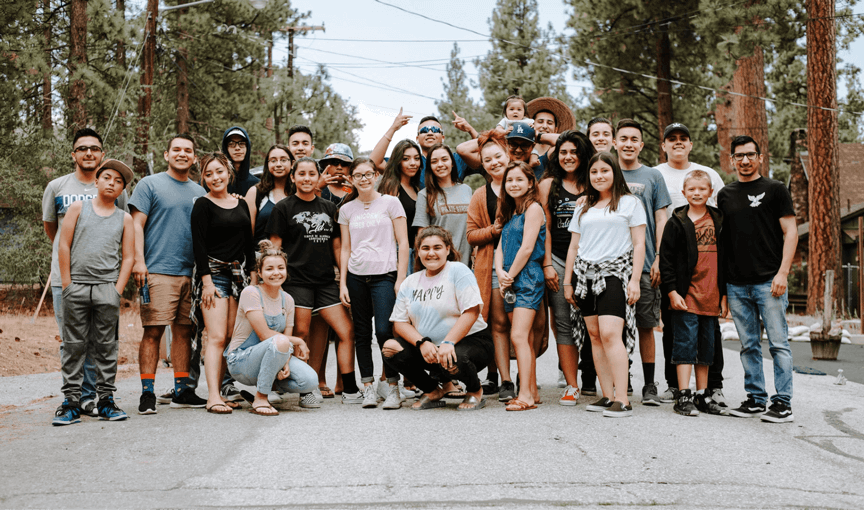
A group of 25 students. A board on the table. A deck of cards face-down in the middle. And a facilitator who says: "Pick three cards that feel true about you right now. Not what you want to be. What you actually believe."
That is how My Career Path begins.
The program runs across four missions, each 45–90 minutes, delivered in a regular classroom by any teacher or mentor — no specialist required. Students work with physical cards, a shared board, and their own notebook. No technology, no tests, no external assessment.
In Mission 1, students trace where their beliefs about themselves actually came from — distinguishing what they chose from what they inherited. Each student leaves with a written Personal Constitution: three qualities they can back with real evidence.
In Mission 2, they map where genuine passion and real competence overlap — and design a small real-world test to verify it. Not hypothetically. They execute it between sessions and report back.
In Mission 3, they expand their view of what is possible — systematically, using structured methods to explore careers and directions they had never considered.
In Mission 4, they build an action plan and commit to a specific first step they will take within 48 hours. Then they move their piece on the board and say it aloud to the room.
Every activity produces a written output the student takes home. Every mission ends with a declaration made in front of peers. The program closes not with inspiration — but with a plan alread
Updated:
My Career Path has reached over 800 students across secondary schools in Bulgaria, delivered by teachers and career professionals who were trained to facilitate it — not coached specialists brought in from outside.
To date, 45 teacher trainers and 50 career consultants have gone through the program's facilitator training. They are the ones carrying it forward — into classrooms, school counseling offices, and youth programs where it runs without the founder in the room.
The program has also crossed borders. Two career consultants in Spain and the Human Innovation Hub in Ireland have independently adopted and delivered it — early proof that the model transfers outside its country of origin.
That was always the design intent. A program that depends on one person to deliver it doesn't scale. So the training was built into the architecture from the start: any teacher with the materials and one day of preparation can run a full mission.
The program is currently delivered under the EduCompass Foundation and is being developed for broader international adaptation.
Order the game kit directly at edu-compass.com/en/game
The kit comes in two sizes: for groups of up to 10 students, or up to 35 students. It includes the board, all card decks, the mission guide, and access to an online platform with facilitator materials and video instructions. No advance preparation required.
For schools and organizations looking to train a team of facilitators, a one-day training is available. After training, any teacher or career professional can run the program independently.
For international partnerships and adaptations, reach us at info@edu-compass.com
%20(1).jpg)