We created this innovation to address an urgent and persistent crisis in Colombia: domestic violence and its impact on the mental health of young people, especially in rural areas. We identified that, although the country has recent regulatory frameworks promoting social-emotional learning and family involvement in the education of children and adolescents, in practice there is a critical lack of intervention models that are cost-effective, culturally relevant, and applicable in real school settings.
This need arises from a combination of structural factors: high rates of domestic violence, the persistence of intergenerational trauma associated with the armed conflict, multidimensional poverty, and limited access to mental health services, particularly in rural areas. In these territories, where nearly a quarter of the population lives, educational institutions are often the only institutional space for young people to meet, but they lack effective tools to address the family dynamics that directly affect their well-being.
Furthermore, we observed that young people have historically been excluded as active agents in transforming their family and community environments. However, they directly face the consequences of family dysfunction, including high levels of violence, communication difficulties, and negative impacts on their mental health, which in extreme cases translate into aggression or self-harm.
The innovation functions in practice as a comprehensive model implemented within the school environment, connecting students, teachers, and families through an artistic-creative pedagogical methodology called "The Chameleon's Path." Its operation is based on integrating socio-emotional development into the regular academic day, leveraging the existing infrastructure of rural educational institutions and transforming the classroom into a space for the active prevention of domestic violence.
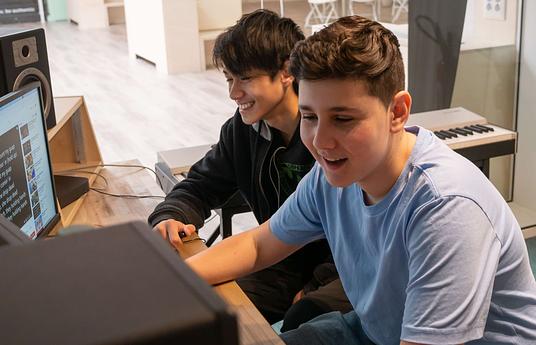
At the central level, the methodology is implemented through weekly sessions with students aged 14 to 17, initially facilitated by trained teachers and supported by Chameleon mentors. Through the journal "The Chameleon's Path," the young people go through a structured process in three stages. First, they develop self-awareness through creative writing and symbolic expression exercises that allow them to narrate their personal and emotional history in a safe environment. Then, they move toward connection, creating spaces for dialogue with their peers, teachers, and families to recognize conflicts and strengthen empathetic bonds. Finally, they take action, designing and implementing small, concrete actions to improve communication, care, and coexistence in their homes.
Innovation has spread through a combination of territorial implementation, strategic alliances, and positioning within the socio-emotional well-being ecosystem. In the last year, the Kamaleón model was validated through a proof-of-concept study in six rural educational institutions across different regions of the country, reaching more than 200 young people and their families. This study generated quantitative and qualitative evidence of its impact on self-esteem, emotional expression, and perceptions of family functioning.
One of the main achievements has been the high level of acceptance and ownership by the educational community: more than 90% of administrators would recommend the program, 86.6% of teachers expressed interest in training as facilitators, and 75% of the young people expressed interest in remaining involved as junior mentors. Furthermore, key alliances were established with Departments of Education, universities, educational networks such as Teach For Colombia, and stakeholders in the mental health ecosystem, which has allowed for greater visibility and increased scalability. Progress was also made in dissemination through audiovisual production, narratives of change, and the initial marketing of the diary-book, whose stock was fully adopted.
If an institution or region wishes to implement La Ruta del Kamaleón, they can follow these steps:
1. Initial Contact
Visit www.mixera.org and contact the La Mixera Foundation team. This initial contact involves a needs assessment to understand the institution's context, needs, and capabilities, and the service portfolio is shared.
2. Definition of Modality and Timeframe
Based on the portfolio, the most appropriate implementation modality and duration are selected, which can be adjusted to an academic term or a full school year:
Training for Trainers: teacher training with support, materials, and personalized guidance.
Self-Sufficient Package: essential resources (books, methodological and evaluation guides, and interactive tools) for independent implementation.
Digital Courses and Diplomas: capacity building in social-emotional education using the methodology.
3. Training and Preparation
Teachers or facilitators are trained in the methodology (creative writing, symbolic art, and creating safe spaces), ensuring a contextualized implementation. 4. Delivery of Materials
The institution receives the "Chameleon's Path" journals for each participating student and teacher, along with session guides for the teacher and pedagogical tools.
4. Classroom Implementation
Teachers integrate the methodology into their weekly subject-area classes, either per academic term or as part of a year-long process.
We aspire to transform education toward a model where the socio-emotional well-being of adolescents is a genuine and cross-cutting priority, not a marginal component. We envision educational institutions, especially in rural contexts, that have cost-effective, creative, and replicable strategies to strengthen their students' socio-emotional skills and build safe, empathetic, and violence-free school environments. We hope that all adolescents, regardless of where they live, will have access to concrete tools for self-awareness, emotional management, assertive communication, and building healthy relationships. We believe this not only improves the school climate but also reduces violence, the stigma surrounding mental health, and strengthens young people's agency to influence their families and communities.
Through this innovation, we aim for schools to move beyond a purely academic focus and recognize emotional development as an essential condition for learning and life. In this sense, we promote a pedagogical shift where art, reflective writing, and symbolic expression are integrated as everyday classroom tools for processing experiences, constructing meaning, and strengthening relationships.
In the long term, we aspire for the Kamaleón methodology to be formally integrated into the coexistence and well-being curricula of rural educational institutions in Colombia, implemented autonomously by trained teachers.
.png)