Cookie preferences

HundrED uses cookies to enhance user experiences, to personalise content, and analyse our web traffic. By clicking "Accept all" you agree to the use of all cookies, including marketing cookies that may help us deliver personalised marketing content to users. By selecting "Accept necessary" only essential cookies, such as those needed for basic functionality and internal analytics, will be enabled.
For more details, please review our Cookie Policy.
Accept all
Accept necessary
search
clear

Design Thinking with Children with disabilities

place Ghana

Design thinking

"Imagine a world where every child, regardless of ability, is seen as a designer of their own future. By applying Design Thinking with children with disabilities, we don’t just solve problems—we empower them to co-create solutions that dismantle inequalities. This approach fosters empathy, creativity, and collaboration among all children, building classrooms and communities.

Overview

Information on this page is provided by the innovator and has not been evaluated by HundrED.

Updated December 2025
Web presence

2025

Established

1

Countries
Students early
Target group
Education shifts from being about fitting in to being about belonging. Every child — regardless of ability — is seen as a designer, a thinker, and a contributor. That’s the deeper change: schools as incubators of empathy-driven innovation and social cohesion.

About the innovation

Why did you create this innovation?

The innovation is not about teaching design—it was about reshaping mindsets so that inclusion, empathy, and equality become natural parts of how children grow, learn, and interact. This will shift them from being passive recipients of support to active co-creators of change, be a problem-solver to address barriers and ensures that solutions are inclusive from the start.

What does your innovation look like in practice?

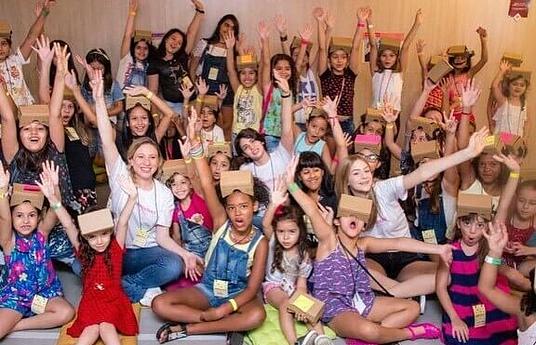
This is a practical innovation that are not abstract theory, it creates opportunity for children to sit together, building, testing, laughing, and solving problems side by side. This ensures the challenge reflects lived realities, not assumptions as well as where the magic of inclusion and social cohesion happens.

How has it been spreading?

Imagine a schools in northern Ghana piloting inclusive playground design. The success story gets shared at a regional education forum. Other schools adopt the method, NGOs replicate it in community centers, and soon it’s part of national teacher training programs. That’s how the innovation moves from local practice → regional adoption → global influence.

How have you modified or added to your innovation?

In short, the innovation has grown from a creative classroom exercise into a community-driven, multi-sensory, and advocacy-oriented movement.

If I want to try it, what should I do?

In practice, it’s about creating a safe, joyful space where children of all abilities can co-create solutions. The process itself is as valuable as the outcomes, because it builds empathy, confidence, and unity.
Implementation steps

Design Thinking with Children with disabilities to address inequalities, and fostering social cohesi
Set intent: Define a simple, inclusive goal (e.g., “Make recess fun for everyone”) and clarify that all voices are equal. Prepare space: Ensure physical accessibility, flexible seating, quiet zones, and clear visual signage; remove clutter and create safe pathways. Gather materials: Provide low-cost, multi-sensory tools (sticky notes, markers, cardboard, textured objects, audio cues, tablets if available). Build trust: Open with icebreakers and group agreements (listen, respect, one voice at
