Bartók 4.0 was created in response to a growing educational imbalance: many learners engage with culture, heritage and even place itself through screens, fragmented information and ready-made interpretations, while direct encounter, observation and collective meaning-making are weakening. At the same time, schools need practical ways to connect heritage education, global citizenship, sustainability, arts education and emerging AI tools without reducing learning to passive digital consumption or abstract values language. Bartók 4.0 addresses this need through an intermodal, place-based methodology that helps learners move back and forth between site visits, field observation, dialogue, documentation, digital inquiry, reflection and responsible AI-supported exploration. It builds multiliteracies across analogue, digital and algorithmic environments while remaining grounded in lived experience, human presence and contextual understanding. The aim is not to reject technology, nor simply to use it after “real” learning has happened, but to place it in a dynamic and responsible relationship with encounter, interpretation, empathy and judgment.
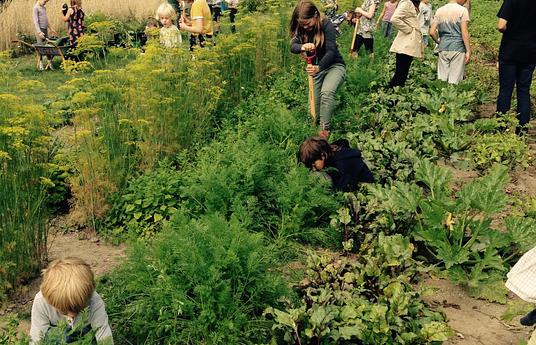
In practice, Bartók 4.0 combines guided preparation, site-based encounter, participatory reflection, digital inquiry and knowledge harvesting. Students work with mentor teachers to identify research questions or angles of inquiry and formulate them in a short paragraph. They may use libraries, digital tools, Google search and chatbots to prepare, but these tools are treated as part of a wider learning process, not as substitutes for encounter. The fieldwork unfolds through a flexible intermodal cycle. Learners gather for a warm-up, shared discussion and explanation of the programme; engage in walks, guided tours and direct encounters with the landscape and local knowledge holders, such as experts, residents, monks or geotour guides; participate in workshops using mind maps, socio-drama, story circles and group discussion; and collect, review and organize harvested data, impressions and feedback. Digital and AI-enhanced tools may enter before, during or after fieldwork: to prepare questions, document observations, compare interpretations, identify gaps or support creative synthesis. Each use is followed by human critique, contextual verification and collective meaning-making. The process has a twofold objective: to offer a rich, memorable learning experience and to generate new data, information and knowledge about the place, which can feed a structured database and, where relevant, provide the basis for an AI Companion.
Bartók 4.0 began to take shape in 2025 as a national pilot, “AI with UNESCO Challenge,” among secondary schools, and has since been refined reflexively and iteratively across several interconnected cultural, educational and heritage contexts. It has been presented at UNESCO HQ in Paris at a side event of the 47th session of the World Heritage Committee, informed poster and workshop contributions within UNESCO ASPnet-related work, and has been linked to World Heritage education. It has also been tested in local and international settings, from Hungary to East Africa and beyond. The methodology has spread conceptually through presentations, applications, publications and pilot initiatives connected to ethical AI, living heritage, place-based learning and educational innovation. Its growth has been organic rather than mass-scaled: it spreads through adaptation, partnership and demonstration rather than through a fixed curriculum package. Over the last 1–2 years, its main achievement has been to articulate a transferable intermodal model that connects embodied learning, heritage, multiliteracies, socio-emotional development, cognitive autonomy and responsible AI use. In the next 2–3 years, the goal is to develop further pilots, teacher-facing guidance, youth-generated outputs and international partnerships that allow the methodology to be adapted in schools, heritage sites and community learning environments across different regions.
Bartók 4.0 has evolved from an analogue-first fieldwork model into a more nuanced intermodal framework in which analogue, digital and AI-enhanced tools interact dynamically before, during and after site-based learning. This development was important: rather than opposing digital tools or placing them only at the end of the process, the methodology now defines their role as part of a guided movement between encounter, inquiry, interpretation and synthesis. Preparation may include guided digital inquiry; fieldwork may involve smartphones, photography, sound recording or other documentation tools; and post-visit learning may include collective interpretation, creative digital outputs and AI-supported reflection. The innovation has also expanded conceptually by integrating multiliteracies across analogue, digital and algorithmic environments, socio-emotional reflection, cognitive autonomy, and attention to key moments when generative AI requires human attunement and ethical judgment. In this sense, Bartók 4.0 has become not only a heritage-learning cycle but a broader pedagogical response to contemporary educational conditions. It has also been enriched by intergenerational encounters: between pupils and local communities, and between pupils, international university students and young adults.
Begin by selecting a meaningful local site and defining a clear educational purpose. Students work with mentor teachers to identify research questions or angles of inquiry and formulate them in a short paragraph. They may use libraries, digital tools, Google search and chatbots, but these should support inquiry rather than replace observation or judgment. Design the process as an intermodal learning cycle. Include a shared gathering with warm-up, discussion and explanation of the programme; walks and guided encounters with the landscape, local people and experts, such as a mayor, monks, residents or geotour guides; participatory workshops with locals using methods such as mind maps, socio-drama, story circles and group discussion; and the collection and review of harvested data, impressions and feedback. Digital and AI-enhanced tools can be used at different moments: to prepare questions, document experience, organize materials, compare perspectives, generate hypotheses or support creative outputs. Each step should return to human interpretation, contextual verification and ethical reflection. The process has a twofold objective: to provide a rich, innovative and memorable learning experience, and to generate new data, information and knowledge about the place that can feed a structured database and, where relevant, form the basis of an AI Companion. Feel free to reach out for more detailed guidance and references.