The world invests heavily in responding to violence, inequality, and conflict. We build prisons, try to negotiate ceasefires, and rebuild cities after they have been destroyed. Yet, we rarely address the more fundamental question: where do these behaviours begin and how can they be prevented?
Across education systems, literacy and numeracy are mandated, but learning to value another and lead healthy relationships is left as optional. The provision of psychosocial support, development of wellbeing, nurturing of good mental health, emotional intelligence, and social justice are neglected. Families all too often lack the skills and tools to support, nurture, or even value these skills.
Leslee Udwin founded Think Equal following her documentary, India’s Daughter, which exposed the deep-rooted social conditioning underpinning gender-based violence. The insight was clear: violence is not the disease, but the symptom of the disease; the disease itself is the discriminatory mindset learned early in life, which accords lesser or no value to the other, whether based on gender, race, religion or any other background. Neuroscience is clear that the early years represent a critical window of opportunity when the brain is most malleable. Yet this is precisely where education systems are weakest.
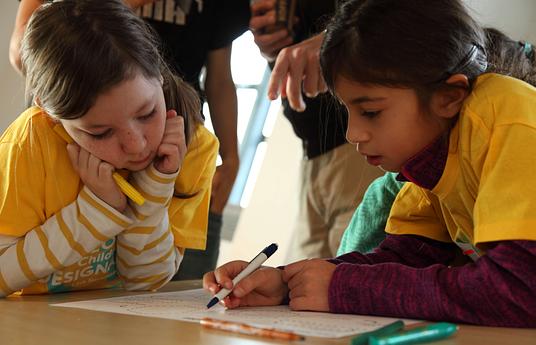
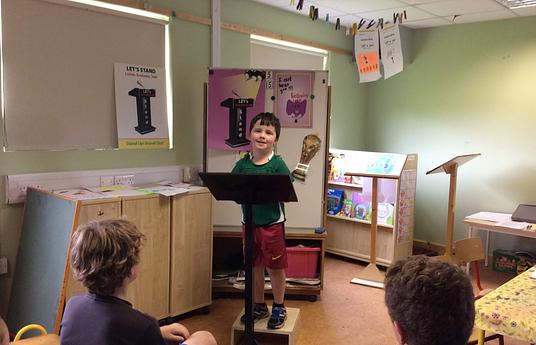
Think Equal is delivered through a 30-week structured programme for children aged 3-6, designed to operationalise SEL within everyday classroom practice through structured, developmentally appropriate pedagogy. It integrates seamlessly into early years systems as a tool that operationalises national curricula.
Each classroom is equipped with a complete set of:
- 24 original narrative picture books (printed)
- A printed booklet of 90 step-by-step session guides (printed + shared as a booklet)
- A booklet of classroom resources
- Home Kits and animations for parental engagement (digital, audio, and printed adaptations)
The model enables teachers to deliver high-quality SEL three times a week, without requiring prior expertise and with minimal preparation. Through story-based learning and guided activities, children develop core competencies and skills with powerful and measurable improvements observed within a single school term.
Think Equal is implemented in partnership with Ministries of Education, ensuring alignment with national curricula, integration into teacher training and Quality Assurance systems, and long-term sustainability. The programme is grounded in neuroscience and supported by three independent Randomised Controlled Trials, which demonstrate significant reductions in anger, aggression, anxiety and withdrawal, alongside increases in empathy, prosocial behaviour, and emotional regulation.
Think Equal has operated in 39 countries to date, reaching over 892,000 children and 30,000 educators. The programme is available in 57 languages and has been adopted across diverse contexts, including national education systems in 6 continents, low-resource settings and conflict-affected environments.
In recent years, Think Equal has deliberately shifted to system-led scale. 14 Ministries of Education have partnered with Think Equal to embed the programme into national curricula, daily timetables, teacher training and monitoring and evaluation systems, moving to sustained, government-owned implementation. The model is designed for transfer of ownership, with governments receiving perpetual programme licences and implementation capacity embedded within existing systems. In several countries, this has already led to formal handover and integration within national or sub-national education frameworks, enabling full saturation over time.
This approach is strengthened by the Think Equal matching Multiplier Fund, a philanthropist-supported mechanism that provides catalytic co-funding where governments commit to system integration and scale. Think Equal’s model has also been recognised globally, including through the WISE Award, inclusion in the HundrED Global Collection 2021, and recognition at the UN Transforming Education Summit.
Over the coming years, Think Equal aims to extend national rollouts, reaching 10 additional countries at full saturation each year.
The core Think Equal model - a 30-week, structured SEL classroom-based delivery model remains unchanged. What has evolved is how the programme is embedded, transferred and sustained within education systems. The most significant evolution has been the shift from pilot-based delivery to system-wide integration. Think Equal is increasingly embedded within national and sub-national systems through Ministry partnerships, curriculum alignment, teacher training and monitoring mechanisms, enabling SEL to become part of everyday classroom practice, and essentially to a significant system change in the purpose of education. This shift has been accelerated by the Think Equal Multiplier Fund, which provides catalytic 50% co-funding where governments commit to system integration, scale and sustainability, helping unlock national adoption for every child.
Think Equal has also expanded its focus on pre-service teacher training, working with universities and teacher training colleges so future educators are equipped to deliver SEL to a high standard.
A further evolution is the transfer-of-ownership model. Governments receive perpetual programme licences, while implementation capacity is embedded within existing systems, enabling Ministries to manage training, delivery, monitoring and scale-up independently.
Finally, accessibility has been strengthened as an enabler of inclusive scale, with materials adapted into audio and sign language, alongside mobile, radio and TV-based delivery.
Think Equal partners directly with local in-country partners and with Ministries of Education to co-design implementation and integrate rollout plans. If you wish to partner with us and can facilitate a Ministry introduction or would like to support or match-fund a project, please contact sana.vaidya@thinkequal.org. For families or private pre-school settings, materials and training are available online via thinkequal.org