Cookie preferences

HundrED uses cookies to enhance user experiences, to personalise content, and analyse our web traffic. By clicking "Accept all" you agree to the use of all cookies, including marketing cookies that may help us deliver personalised marketing content to users. By selecting "Accept necessary" only essential cookies, such as those needed for basic functionality and internal analytics, will be enabled.
For more details, please review our Cookie Policy.
Accept all
Accept necessary

VISIBLE IN Play

Inclusive football that develops abilities in everyone

Young people with a disability are often excluded from mainstream football. VISIBLE IN Play brings them together with players from regular teams in inclusive training where both groups develop and demonstrate skills, character and meta-learning. COMPASS 4D, inspired by the CCR, guides each session. Awareness campaigns with leading clubs aim to challenge stereotypes beyond the pitch.

Overview

Information on this page is provided by the innovator and has not been evaluated by HundrED.

Updated October 2026
Created by

Fundació Itinerarium

Visit Organisation's Site
Web presence

2016

Established

7

Countries
All students
Target group
We want education to move beyond inclusion as simply allowing young people with disabilities to participate, towards recognising diversity as a powerful opportunity for everyone to learn and grow. In VISIBLE IN Play, young people with and without disabilities train as teammates, not as helpers and beneficiaries. Through shared challenges, they develop communication, collaboration, critical thinking, creativity, courage, resilience and empathy. Every participant has abilities to contribute and opportunities to develop new ones. We envision football clubs becoming genuine learning environments, where coaches intentionally develop and observe competencies through COMPASS 4D, inspired by the Center for Curriculum Redesign. Its four dimensions—Knowledge, Skills, Character and Meta-learning—help make learning visible and assessable. Ultimately, we want professional and community clubs worldwide to adopt this approach, transforming not only how young people learn together, but also how families, teams and communities perceive disability. Awareness opens the door. Shared experiences generate capacities and lasting change.

About the innovation

Why did you create this innovation?

Young people with disabilities are too often excluded from regular football environments, while players in mainstream teams have few opportunities to learn alongside them. Their abilities remain invisible, and stereotypes persist.

VISIBLE IN Play grew out of the ANNA typeface, created from the handwriting of Anna Vives, a young woman with Down syndrome. Leading football clubs have featured her lettering on their shirts during official matches, bringing a powerful message to audiences worldwide: a person too often defined by a disability can be recognised for her creativity and contribution.

But visibility is only a starting point. We wanted to transform this awareness into shared experiences where young people with and without disabilities play, cooperate and develop abilities as teammates.

Through inclusive football and intentional competency development, VISIBLE IN Play seeks to change both what participants can achieve together and how clubs and communities perceive disability: from seeing limitations to recognising abilities.

What does your innovation look like in practice?

VISIBLE IN Play combines two complementary strands.

**AWARENESS** uses the global reach of professional football to challenge stereotypes about disability. Leading clubs, including FC Barcelona, River Plate (Argentina), Corinthians (Brazil), Cruzados (Chile) and Club América (Mexico), have featured the ANNA typeface on their shirts during official matches. Created from the handwriting of Anna Vives, a woman with Down syndrome, the typeface transforms football into a powerful platform for social awareness.

**PLAY** turns this visibility into meaningful experiences. Young players with and without disabilities train together through structured football sessions, combining guided challenges, collaborative activities and open play.

Our COMPASS 4D framework, inspired by the Center for Curriculum Redesign, guides coaches in developing and observing skills, character and meta-learning in every participant.

The framework covers four dimensions: Knowledge (curricular content); Skills (critical thinking, creativity, communication, collaboration); Character (curiosity, courage, resilience, ethics); and Meta-learning (reflection, self-regulation, adaptability, emotional awareness). Coaches select one priority competency per session and look for evidence of it in play.

A practical coaching and assessment kit is being refined through inclusive training sessions in Argentina, with the aim of making the methodology transferable to clubs worldwide.

How has it been spreading?

VISIBLE IN Play builds on ANNA, the typeface created from Anna Vives's handwriting, which has carried disability inclusion messages into official football matches around the world.

For the campaign around 21 March 2027, World Down Syndrome Day, we are working to expand participation in Argentina from one club to five, engaging River Plate, Vélez Sarsfield, Independiente, Argentinos Juniors and Boca Juniors. These are ongoing discussions, not yet confirmed commitments.

In parallel, we are inviting professional and community clubs to move from awareness to action by introducing inclusive training where young people with and without disabilities play and learn together. Sessions in Buenos Aires are helping us refine a COMPASS 4D-based coaching and assessment kit.

To support adoption in diverse contexts, we are also designing an AI-assisted coaching prototype for a proposal to MIT. It is intended to help coaches plan adapted sessions, document observable competencies and use post-session reflections to improve the next training. The AI component is still at concept stage, not deployed.

Our goal is to reach over 1,000 young training participants by May 2028, counting players separately from campaign audiences.

How have you modified or added to your innovation?

Since 2016, our Inclusive Football initiative has brought players with and without disabilities together through tournaments and club training. The original focus was on meaningful participation, cooperation and changing perceptions of disability.

In 2026, we began enriching this experience by integrating COMPASS 4D, our educational framework inspired by the Center for Curriculum Redesign (CCR). It considers four dimensions: Knowledge (football), Skills (communication, collaboration, creativity and critical thinking), Character (including courage, resilience and ethics) and Meta-learning (reflection, self-regulation and adaptability).

Rather than trying to assess every competency at once, coaches focus on one priority competency per session and observe relevant behaviours during play. After training, short audio reflections help document participation, learning opportunities, difficulties and possible improvements.

This approach has begun to be introduced in inclusive training sessions in Buenos Aires with River Plate's academy, Independiente, Argentinos Juniors and Vélez Sarsfield.

We are using these experiences to refine our coaching and assessment kit and progressively build evidence of competency development.

If I want to try it, what should I do?

Contact Fundació Itinerarium to explore a pilot. Your club can join an ANNA awareness campaign, organise inclusive training for young players with and without disabilities, or both. Together, we plan accessible activities, select one COMPASS 4D competency per session, observe participants' actions and use coaches' feedback to improve future training.

Media

Photo
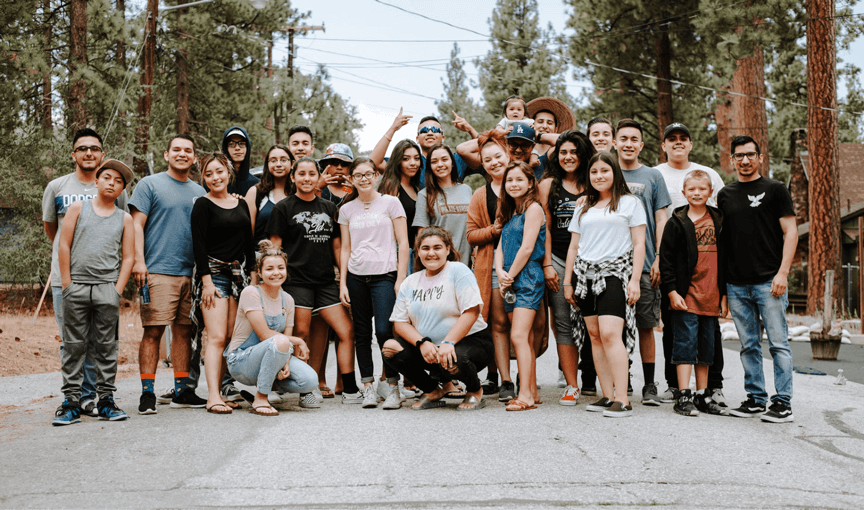
Buenos Aires · Inclusive football in action In October 2026, players with and without disabilities trained together in sessions involving River Plate's academy, Independiente, Argentinos Juniors and Vélez. Coaches began integrating COMPASS 4D to observe cooperation, meaningful participation and learning opportunities. Short audio reflections after each session help us improve the methodology.
Update
Awareness · Making abilities visible In 2026, FC Barcelona, River Plate, Corinthians, FC Porto and Club América featured ANNA, the typeface created by Anna Vives, a woman with Down syndrome, on their shirts. Her creativity challenges stereotypes worldwide. This is the VISIBLE IN https://youtu.be/R2xbkSZ-CzU?si=Wecosystem: Awareness changes perceptions; Play turns visibility into shared learning.
Photo
From tournaments to club training Since 2016, Inclusive Football has grown through five tournaments involving around 500 participants with and without disabilities, and inclusive training in approximately 25 clubs, averaging 30 players each. These figures are estimates and may include repeat participants. This experience laid the foundations for VISIBLE IN Play.
Video
FIRST BARÇA-MADRID INCLUSIVE (2017)
In 2017, players with and without disabilities shared the pitch in a pioneering inclusive Barça–Real Madrid match. More than a football event, it showed that inclusion means having real opportunities to play, cooperate and contribute. This experience helped lay the foundations for VISIBLE IN Play, developed by Fundació Itinerarium. https://youtu.be/hcrT6y3Kvr0?si=Re1ZvmU9yrtjyHqR

Implementation steps

Step 1 — Join VISIBLE IN Play and build an inclusive group
Contact Fundació Itinerarium to explore participation. Bring together a football club, coaches, young players with disabilities and players from regular youth teams. Identify accessibility and support needs, agree on safeguarding measures and ensure that everyone can participate as an active teammate, not merely as an observer.
Step 2 — Identify needs and select a COMPASS 4D competency
Get to know the players, their abilities, interests and support needs. Using COMPASS 4D, select one priority competency for the session, such as collaboration, communication, courage or adaptability. Define observable behaviours that will help coaches recognise how participants demonstrate and develop this competency during play.
Step 3 — Design an accessible football training session
Select football exercises that help develop the chosen competency. Combine them into a coherent training session, adapting rules, space, equipment and support to the players' needs. Our pilot Regla de Tres model uses 50 minutes: 10 minutes of guided activity, 15 of open play, 15 of transfer and adaptation, and 10 for cross-cutting learning.
Step 4 — Play, cooperate and learn together
Run the session with players with and without disabilities participating together. Encourage shared challenges, passes, decisions and teamwork. Coaches adapt activities when necessary to ensure meaningful participation without removing the learning challenge. Every player contributes, learns and has opportunities to demonstrate their abilities.
Step 5 — Observe, assess and improve
During the session, coaches observe behaviours linked to the selected COMPASS 4D competency. Afterwards, they complete a simple record of participation, adaptations, observable evidence and challenges. They reflect on what worked and what should change. These observations inform the next session and help build evidence of educational impact over time.
Step 6 — Amplify inclusion through Awareness campaigns
Clubs can also join VISIBLE IN Awareness, particularly around March 21, World Down Syndrome Day. By featuring the ANNA typeface on football shirts and sharing inclusion messages, they can bring the project's values to wider audiences. Awareness and inclusive training reinforce each other, although clubs may begin with either activity.

Spread of the innovation

loading map...