Cookie preferences

HundrED uses cookies to enhance user experiences, to personalise content, and analyse our web traffic. By clicking "Accept all" you agree to the use of all cookies, including marketing cookies that may help us deliver personalised marketing content to users. By selecting "Accept necessary" only essential cookies, such as those needed for basic functionality and internal analytics, will be enabled.
For more details, please review our Cookie Policy.
Accept all
Accept necessary
search
clear

Thriving Centre

place India + 1 more

Creating Pathways for Young People to Thrive

Many young people from vulnerable backgrounds take on adult roles early, often becoming family earners in the unorganised sector. They are unsure of how to navigate life and thrive as the system around them limits their opportunities. The Thriving Centre offers a safe, inclusive, out-of-school learning space for young people to explore interests, build life skills and prepare for the real world.

Overview

Information on this page is provided by the innovator and has not been evaluated by HundrED.

Updated December 2025
Web presence

1

Countries
All students
Target group
We hope to see education evolve into an inclusive space that nurtures every young person’s potential, where learning goes beyond academics to build life skills, empathy and agency. Through the Thriving Centre, we envision systems that listen to young people, honour diverse journeys and enable them to thrive in every context with confidence and purpose.

About the innovation

Why did you create this innovation?

We saw many young people, especially from vulnerable backgrounds, leave school after Class 10 due to misaligned interests, academic failure, pressure to work or lack of guidance. Thriving Centre began in 2010 to offer a safe community space where they could access learning, build life skills and prepare for real-world pathways. The centres enable thriving for all young people.   

What does your innovation look like in practice?

The Thriving Centre is an ecosystem where young people from vulnerable backgrounds access life-skill–based, experiential learning through programmes such as Life Skills 360, Skills Up, Learning Assist, Launch Pad, Mentoring, Yuvatharanga, Support Calls and Alumni Connect. Each journey is personalised, non-linear and rooted in care, agency and listening. The innovation lies in creating safe learning spaces beyond academics to build confidence, wellbeing and purpose. Impact is tracked through Life Skills Assessment Scale (LSAS), Socio-Emotional Wellbeing Scale (SEW) and qualitative evidence from stories and feedback. In 2024-25, 95.7% of participants improved their life skills scores with an attendance and retention rate above 90%. The global SEW score in the Thriving Centres increased from a baseline mean of 73.13 to an end line mean of 74.05 (Mean Difference = 0.92, p < .001), indicating a meaningful enhancement in students’ overall emotional health and social functioning. 

How has it been spreading?

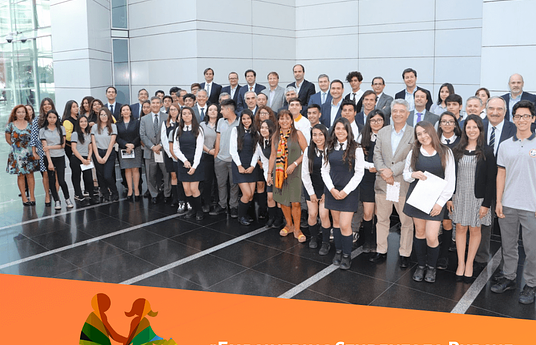
The Thriving Centre has grown through youth advocacy, with 59% of new enrolments in 2024–25 coming from community engagement. Platforms like Anavarana and Alumni Connect amplify youth voices and build strong peer networks. At Anavarana 2025, 141 young people and 116 stakeholders celebrated diversity and leadership. Alumni Connect continues to foster collaboration and mentorship. The plan for the next 2-3 years is to deepen our impact by amplifying youth voices, advocate for inclusion in our programmes, support young people to transform into changemakers and engage with the community to be the co-partners in creating thriving journeys for the young people. The goal is to share these insights with the larger system to promote life skills to enable thriving in young people.

If I want to try it, what should I do?

You can begin by understanding the needs of your target group and learning from organisations doing similar work. Map the community, build local partnerships and design a values-based programme. Hire and train facilitators in life skills facilitation, conduct outreach and contextualise the programme to diverse learners. To collaborate, contact pavithra@dreamadream.org.

Implementation steps

Assess the need (1–2 weeks)
Visit the community, speak with young people, families and local schools. Document gaps, barriers and aspirations. Output: short needs brief.
Learn from others (2–3 weeks)
Do online research and visit 1–2 comparable programmes. Note what worked, what did not and relevant adaptations.
Map the community (1 week)
Identify partners, youth hubs, schools, employers and local leaders. Produce a simple map of resources and barriers.
Build local partnerships (2–4 weeks)
Meet potential partners, secure at least one implementing partner and one venue. Agree roles, expectations and basic MOUs.
Co-design programme and values (2–3 weeks)
With young people and partners, define programme goals, core values, learning outcomes and a rough curriculum outline.
Recruit and train facilitators (3–4 weeks)
Hire facilitators who can listen and relate to young people. Provide training in life skills facilitation, safeguarding and basic data collection.
Set up the learning space (1–2 weeks)
Reimagine the learning space with stakeholders that enables the feeling of belonging and ownership. This allows for the further journey to be co designed and experienced. Ensure the space includes basic materials, schedules and simple monitoring tools. Ensure accessibility and inclusion in all aspects of design.
Outreach and enrollment (2–4 weeks)
Run community sessions, peer outreach and referral drives. Use youth advocates and community to invite participants. The outreach strategy has to be diverse and contextualised to different stakeholders; parents, educational institutions, youth brigades etc.
Deliver a pilot cycle (8–12 weeks)
Run the first full programme cycle. Use experiential methods (play and art based), personalise pathways and embrace failure.
Monitor and support (continuous)
Track attendance, use simple pre and post life skills checks, collect participant stories and run regular support calls for graduates.
Review and adapt (2 weeks after pilot)
Analyse quantitative and qualitative data with partners and youth. Revise curriculum, facilitation and outreach based on feedback.
Scale thoughtfully
Add partners, formalise training, document protocols and share learning with local systems. Keep youth voice central at every stage.
For collaboration,
contact pavithra@dreamadream.org

Spread of the innovation

loading map...