.jpeg)
In the remote hills of Uttarakhand, migration has emptied hundreds of villages. Families leave not just for jobs, but because local schools have lost meaning. Children sit in rote-based classrooms disconnected from their land, language, and life. Teachers, often untrained and demotivated, replicate outdated lessons without real connection to their students. Having worked within both classroom and system-level reforms through Teach For India and Central Square Foundation, we saw how most efforts improved access, but not purpose. Schools were open, but children’s curiosity and confidence were shut.
We created SURAAH to reimagine what a good rural school could look like if it truly balanced the Head, Heart, and Hands of every child. Our vision is to nurture children who can think critically, feel deeply, and act meaningfully for their own communities.
Instead of building new infrastructure, we adopt under-resourced schools and transform them from within, reviving local trust, redesigning curriculum, and building teacher capacity. Founded in 2023, SURAAH brings together joyful pedagogy, nature-based learning, and community partnership to show that quality education need not imitate cities; it can emerge from the mountains themselves. Our innovation grew out of a simple question: What would it mean for a child to fall in love with their village again?
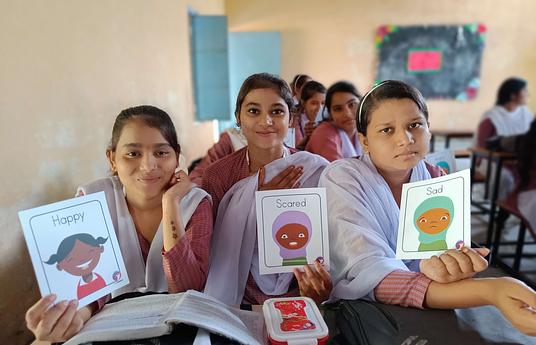
At SURAAH, a school day flows with rhythm, play, and purpose. Mornings begin with silence and collective movement. Children then explore the world through six strands, Jagatgyan (World Learning), Khoj (Scientific Inquiry), Mauj (Nature Play), Abhivyakti (Artistic Expression), Swagyan (Self-awareness), and Yogdaan (Community Contribution).
A lesson on water, for example, might begin by mapping local canals (Khoj), shift into reflecting on what it means to be as pure or adaptable as water (Swagyan), and culminate in creating an awareness mural for villagers (Abhivyakti and Yogdaan). This interconnectedness makes learning both rigorous and rooted.
Teachers receive weekly coaching and co-plan lessons using clear objectives and formative assessments aligned to child-friendly rubrics. Classrooms extend into the playground, fields, and community spaces. Assessment goes beyond marks, tracking curiosity, collaboration, and empathy.
Parents visit often, sometimes co-teaching folk songs or farming wisdom. Students show improved attendance, emotional vocabulary, and initiative. For many, school has shifted from a compulsory space to one of joy, identity, and belonging. SURAAH is not a single method, it is a living, evolving ecosystem that proves education can be both excellent and contextual.
SURAAH began with one adopted school in Katapathar, Dehradun, serving 80 children. In two years, its story has inspired local educators, funders, and policymakers who visit to witness what “Head–Heart–Hands” learning looks like in practice. We’ve hosted immersion days for teachers, parent groups, and NGO partners from across Uttarakhand. Through these, over 900+ individuals, students, teachers, and families, have directly experienced our approach.
Partnerships with Teach For India, The Circle India, Rotary International, and the ISB Alumni Association have supported training modules and infrastructure prototypes. SURAAH has also begun influencing nearby schools that adapt elements of our pedagogy, such as Swagyan reflection circles and Yogdaan community projects, without needing full adoption.
We’re now developing our second demonstration school in another hill district, alongside a Community Evening Centre for adolescents aged 11–18. By 2026, we aim to codify our model into an open-source School Transformation Toolkit for small rural schools across India.
Our growth is intentionally organic. Rather than scaling by replication, we scale by relationship, building local ownership and trust so that each school evolves in its own soil.
Begin small, but begin deeply. SURAAH’s model can be piloted in any school by adopting its Head–Heart–Hands framework and the six learning strands. Start with a core team of teachers willing to co-plan lessons that connect academics with context. Replace rote instruction with inquiry, reflection, and creation, for example, learning measurement through cooking, or empathy through reflective journaling.
Interested educators can:
1. Visit SURAAH’s Demonstration School in Dehradun for immersion.
2. Access our open resources, lesson plan templates, teacher rubrics, and strand overviews, available via www.suraah.org
3. Join our Community of Practice, where we mentor schools online in implementing contextual, balanced learning.
You don’t need expensive technology or infrastructure, only belief, curiosity, and community trust. SURAAH offers support through training workshops and school walkthroughs. Write to namaste.suraah@gmail.com to start the conversation.