LivePBL was created at a time when education critically needed to engage hybrid local communities, especially in areas such as music education, yet lacked a practical design method to do so. Many programmes promoted student-centred or project-based learning, but these often remained within classrooms or short-term workshops. They rarely connected learners with real families, community groups, or cultural institutions in a sustained and structured way. As a result, knowledge and skills were taught, but their social meaning and practical value remained limited.
In many communities in the global south, families need to support children’s learning at home, but the communities often feel that little meaningful learning is taking place. Instead of offering technical tutorials, we introduced short family learning projects. Parents and children recorded stories, prepared presentations, and collaborated with other households. Within weeks, screen time became shared learning time. Parents became co-learners, and children became presenters, while digital and communication skills developed through real social interaction. These projects have even been expanded into community music initiatives and cross-border collaborations. From these experiences, LivePBL has been developed as the project-based learning design method: DEEP method—Direction, Education, Event, Project.
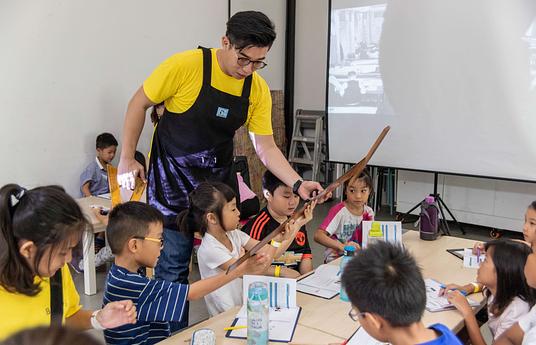
LivePBL takes place in real community contexts. A typical LivePBL cycle begins with a local situation that naturally involves learners, families, teachers, and community partners. Families, parents, children, local libraries, and youth clubs recorded stories, prepared presentations, and shared them with other households. What had been passive screen time became shared learning time, and participants gradually became co-learners and facilitators.
In later music education projects, children, parents, teachers, and community members co-created small performances or storytelling events. International students sometimes joined these sessions online, contributing songs or cultural stories from their own backgrounds.
These activities follow the 4 stages of LivePBL DEEP design. 1. Direction identifies a real community context. 2. Education provides the necessary knowledge and skills. 3. Event brings participants together in a live collaborative activity. 4. Project stage produces outcomes, feedback, reflection, and overall evaluation.
Beyond these projects, LivePBL also supports participants in documenting and sharing their practice. Teachers, students, and even parents have co-authored papers and presented their work at international conferences and in publications, including volumes with IGI Global, Taylor & Francis, Oxford, and other academic platforms. In this way, community practice becomes both a learning experience and a source of new learning and skilled experiences.
LivePBL has been spreading through academic publications, international workshops, and active research and development involving a network of universities, colleges, schools, and children’s clubs. This educational model gains further exposure and credibility by being featured in scholarly articles and at global conferences, allowing for the sharing of best practices and innovations. Additionally, word of mouth in communities has played a crucial role in its organic growth. Success stories and positive outcomes from students spreading the word about the benefits and impact of LivePBL. This grassroots level promotion enhances community buy-in and engagement.
LivePBL is now seeking international partners to expand its impact, integrate diverse educational practices, and enhance global reach.
To try Live Project-Based Learning (LivePBL), you can begin by contacting our team. We offer various programs that integrate the LivePBL approach, such as the Music Stay program, Sino-International Cloud Family Visit, and Home Intergenerational Digital Literacy courses. Each program offers a unique opportunity to experience how LivePBL operates in real-world settings