Across Nepal, many professional development offerings are short, one-way, and often disconnected from teachers’ day-to-day teaching realities. Teachers frequently return to the classroom with ideas but lack ongoing support, critical discussions, or a community that sustains their professional growth.
To address this gap, CIPL envisioned Empowering Hours as:
A community of practice for teachers who want deeper learning and reflection, not just training hours.
A platform to reflect on pedagogy, how learning happens, beyond best practices and tools.
A space to nurture empowered and reflective teachers and learners.
A consistent and sustainable model of professional development.
In practice, Empowering Hours functions as a sustained learning ecosystem rather than a one-off professional development workshop. Instead of isolated events, it offers regular sessions that ensure continuity of learning, allowing ideas to deepen over time and translate into lasting changes in teaching and learning practices. This rhythm helps participants reflect, experiment in their classrooms, and return with insights, questions, and evidence from practice.
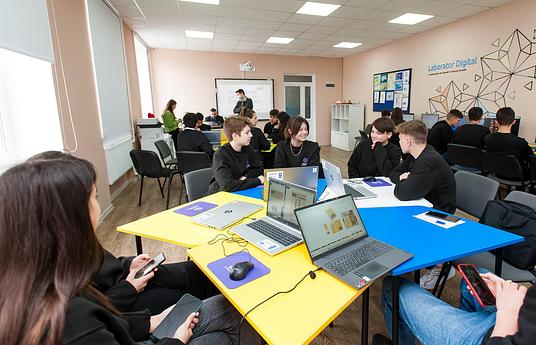
Each Empowering Hours session is peer-driven and intentionally structured around two core components: the Thinking Session and the Featured Presentation. The Thinking Session focuses on how learning works-drawing from cognitive science, classroom research, and reflective inquiry-while the Featured Presentation is led by educators or practitioners who share lived classroom experiences, course designs, research reflections, or book reviews. This peer-led model shifts expertise from external “trainers” to a shared community of practice.
The innovation is also practical by design. Every session emphasizes strategies that teachers can apply immediately in lesson planning, assessment, classroom interaction, or course design. Participants leave not with abstract theories, but with concrete approaches they can test the very next day.
Empowering Hours is deliberately open and inclusive. Teachers and students from any institution, discipline, or professional background are welcome, creating a diverse learning space
Empowering Hours has grown steadily as a thinking-centered professional learning initiative with measurable reach and continuity. Since 2016, it has been empowering minds through structured, reflective sessions focused on how learning happens, not just what is taught. Over the years, the initiative has conducted 29+ Thinking Sessions, supported by 30+ featured presentations and contributions from 50+ featured speakers across disciplines and professional backgrounds.
Its impact extends across institutions, with participation from 1,000+ educators and learners representing multiple schools, colleges, and learning communities. Each Empowering Hours session typically runs for 60–90 minutes, combining cognitive science–based mini-workshops, guest-led presentations (30–45 minutes), and guided reflection through research insights, classroom experiences, and book reviews.
The consistency of these sessions has helped build a sustainable community of practice, where teachers learn with teachers and students engage as reflective thinkers. Rather than one-off trainings, the regular format has enabled long-term pedagogical shifts, practical classroom experimentation, and cross-institutional learning.
This growth culminated in a major milestone on December 13, 2025, when Empowering Day brought together 100 teachers and students for a full-day immersive program dedicated entirely to thinking, practice, and reflection.
We are working to expand Empowering Hours into a structured, scalable learning pathway by designing tiered modules for different stages of the teaching–learning journey. Building on insights from years of reflective practice, we are developing dedicated modules for students, students who aspire to become teachers, novice teachers, intermediate teachers, and expert teachers. This ensures that learning is developmentally appropriate, relevant, and responsive to participants’ lived experiences.
A key modification is the shift from open sessions alone to a full-fledged, cohort-based teaching and learning model. Participants will engage in guided learning over a defined period, allowing time for reflection, experimentation, feedback, and growth. Rather than consuming content passively, learners will move through carefully sequenced modules that integrate theory, classroom application, peer discussion, and reflective writing.
We have also added personalization and mentorship as core design principles. Each cohort will be supported through guided facilitation, reflective prompts, and opportunities for individualized feedback, helping participants connect ideas directly to their contexts. This makes the learning process more intentional, insightful, and transformative. To broaden access and impact, these modules are being designed for national and international online delivery, enabling educators and learners beyond physical boundaries to participate.
Begin by showing up, with curiosity, not perfection.
If you are a teacher, a student, or simply someone who cares deeply about learning, Empowering Hours asks only one thing from you at the start: a willingness to think and grow together. You do not need to be an expert, and you do not need to have all the answers. What matters is your openness to reflect on your own learning, your classroom, and your experiences.
Join an Empowering Hours session and listen, to others, and to yourself. Bring your questions, your struggles, and even your uncertainties. These sessions are not about being evaluated or told what to do. They are about being heard, being challenged gently, and being supported by a community that believes teaching is a human, evolving practice.
Try one idea from a session in your classroom or learning space. It does not have to be perfect. Come back and share what worked, what did not, and what surprised you. This cycle of thinking, trying, reflecting, and returning is where real growth happens.
If you wish to go deeper, step into our cohort-based modules designed for learners, aspiring teachers, and educators at different stages of their journey. Here, learning is guided, personal, reflective, and paced, so you are never learning alone.