During my Fulbright research, I saw that many learners experienced STEM as disconnected formulas rather than a way to understand real issues. In low income and multilingual classrooms in India and in other countries where I have worked, students often struggled because STEM felt abstract and unrelated to their lives. At the same time, challenges such as misinformation, conflict, climate change, and social inequality require young people to think critically and analyse information responsibly.
I created this innovation to address these gaps by designing STEM based “hooks” that make learning meaningful and engaging. These hooks use real world scenarios, ethical questions, community stories, and data investigations to spark curiosity and deepen understanding. Whether students explore nuclear energy through 'Mathematics of Peace', fairness through 'Mathematics of Values', intuitive reasoning through 'Mathematics Without Formulas', or community issues through Data and Society, each hook offers a strong entry point into STEM.
The innovation was also created to support learners who are behind grade level, in fragile contexts, or returning to education as adults. They need accessible ways to reconnect with STEM and build confidence. The hooks help learners see STEM as a tool for understanding their world and contributing to positive social change.
In practice, the innovation functions as a set of STEM based “hooks” that teachers use to begin lessons with curiosity and relevance. Each hook starts with a real world scenario, ethical question, story, visual, or data set that draws learners into the concept before formal instruction begins.
For example, 'Mathematics of Peace' uses energy data and physics to analyse decisions related to conflict.
'Mathematics of Values' helps quantify fairness and social awareness. 'Mathematics Without Formulas' builds intuition through patterns and visuals. Storytelling through Mathematics makes abstract ideas easier to grasp through narrative.
Role Models in STEM shows students examples of people from similar backgrounds who used STEM for positive change. Data and Society uses charts and statistics to analyse issues such as climate trends or misinformation. Community Connected Tasks link STEM to local problems, and Future Thinking with STEM invites learners to model solutions for challenges they may face in the years ahead.
These hooks are low resource and adaptable. Teachers use a board, simple visuals, and guided questions. The approach works in schools, community spaces, and adult learning environments, especially where learners are behind grade level or learning in multilingual settings. The result is a classroom where STEM feels meaningful, engaging, and connected to life.
The innovation has spread through Fulbright networks, Harvard Graduate School of Education, global teacher communities, and my peer reviewed publication. During my Fulbright Scholarship, the STEM hooks were shared widely across schools in the United States. Mathematics of Peace, published in the Ohio Journal of School Mathematics (October 2024), expanded international access and strengthened academic credibility.
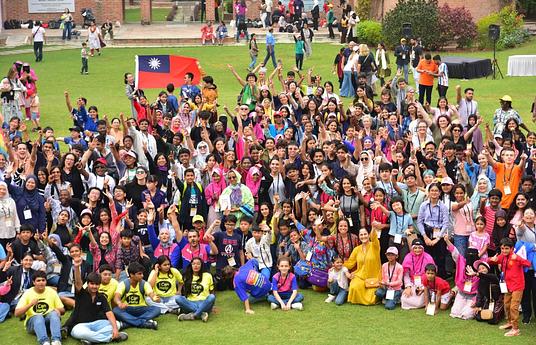
Through Teach For India and the Teach For All network, the hooks have been adapted in India, Nepal, Ethiopia, Nigeria, Uzbekistan, Afghanistan, and Lebanon. In Nepal, Uzbekistan, and Nigeria, they were introduced during Summer Training Institutes. In Ethiopia and Afghanistan, I collaborated with teachers over several months to refine the hooks for multilingual and low resource settings. In Lebanon, they were integrated into training programs supporting learners in fragile contexts.
My selection as a Finalist for the Global Teacher Prize by the Varkey Foundation and UNESCO amplified visibility and enabled me to connect with more than 450 educators across the world who are among the most impactful practitioners in their regions. This network accelerated global interest, especially in crisis affected and underserved communities. The spread continues because the hooks are low cost, adaptable, and easy to integrate into any STEM lesson.
The innovation has evolved as it has been adapted across countries, languages, and learner needs. Teacher feedback during my Fulbright research and through networks in India, Nepal, Ethiopia, and the United States strengthened the STEM hooks and made them more adaptable. In Nepal, teachers suggested separating “Knowledge” and “Skill,” which improved clarity and planning.
For multilingual classrooms, I added visual supports, language scaffolds, and stepwise reasoning. 'Mathematics of Peace' expanded to include sustainability and ethical decision making. 'Mathematics of Values' and Data and Society incorporated local issues so learners could analyse community challenges. 'Mathematics Without Formulas' added more intuitive models to support learners behind grade level.
Work with adolescent girls and adult women in Eastern India led to adapting hooks to build confidence, numeracy, and decision making for everyday life. In Ethiopia, teachers requested regular reinforcement, leading to quarterly versions delivered before or after class hours to protect syllabus time.
The hooks now cover themes such as climate resilience, misinformation, and social responsibility. These modifications help the pedagogy stay relevant, flexible, and effective across schools, community settings, and fragile contexts.
Begin by selecting one of the STEM hooks that matches your learning goal. Start with a short diagnostic to understand gaps in reasoning, comprehension, or foundational skills.
Introduce the hook through a story, visual, ethical prompt, or real world scenario that connects directly to the STEM concept you want to teach. This creates curiosity and provides an accessible entry point for learners.
Use guided questions and simple tasks to help students explore patterns, data, models, or community issues linked to the hook. For example, use Mathematics of Peace for data analysis and physics, Mathematics Without Formulas for intuitive reasoning, Mathematics of Values for fairness and decision making, and Data and Society for real world interpretation.
No technology is required. A board, markers, and simple worksheets are enough. The hooks work in multilingual classrooms, low income schools, community centers, and adult learning spaces. Micro assessments help you check understanding and adjust pacing.
Begin with one hook, try it over one or two lessons, and then expand to others as students grow comfortable. Each hook is flexible and can be adapted to local issues, age groups, or subject areas. Teachers can implement the innovation independently, and sharing experiences within school or network communities helps strengthen practice and spread the approach.
.jpeg)