Cookie preferences

HundrED uses cookies to enhance user experiences, to personalise content, and analyse our web traffic. By clicking "Accept all" you agree to the use of all cookies, including marketing cookies that may help us deliver personalised marketing content to users. By selecting "Accept necessary" only essential cookies, such as those needed for basic functionality and internal analytics, will be enabled.
For more details, please review our Cookie Policy.
Accept all
Accept necessary
search
clear

Community-Owned Resilient Education (CORE)

place India

Powering community-owned learning for resilient futures.

Community-Owned Resilient Education (CORE) reimagines learning as a women-led, community-driven system. It addresses foundational learning gaps by training local women as educators and turning village spaces into learning hubs. Blending curriculum, life skills, and digital support, CORE ensures relevant education while strengthening women’s leadership and resilient communities.

Overview

Information on this page is provided by the innovator and has not been evaluated by HundrED.

Updated April 2026
Created by

Sunaayy Human Welfare Foundation

Visit Organisation's Site
Web presence

1

Countries
All students
Target group
CORE envisions a shift in education—from a narrow focus on schooling to a broader process of building human capability, leadership, and community ownership. It reimagines learning as something deeply rooted in local realities, where children not only acquire foundational skills but also develop critical thinking, values, and problem-solving abilities relevant to their everyday lives. At its center, the model seeks to transform learners into active participants in their communities, rather than passive recipients of education. A central part of this change is the recognition of women as leaders within education systems—as educators, mentors, and decision-makers shaping the learning environment. At a systemic level, G-CORE moves away from fragmented, siloed interventions toward an integrated, ecosystem-based approach, where education becomes the entry point for wider social transformation. In this vision, communities are not beneficiaries, but drivers of their own development—capable of identifying challenges, building collective solutions, engaging with institutions, and sustaining long-term change. Ultimately, the goal is not just improved learning outcomes, but the emergence of self-reliant, resilient communities led by informed and empowered individuals.

About the innovation

Why did you create this innovation?

Globally, over 240 million children are out of school, and many more attend classrooms without acquiring foundational literacy and numeracy skills. In India, despite high enrolment, many children—especially in rural areas—struggle with basic reading, comprehension, and application. This crisis is deeper among migrant and vulnerable communities, where disruptions and limited support hinder continuity. At the same time, education systems remain largely top-down, limiting community ownership and failing to build agency or real-world relevance.
Our experience shows education is closely tied to nutrition, migration, and social norms, yet communities—especially women—are excluded from shaping these systems. The CORE Learning Ecosystem addresses this by positioning education as a community-owned process. By enabling women as educators and embedding learning within local contexts, it strengthens educational outcomes, leadership, and community resilience for sustainable development.

What does your innovation look like in practice?

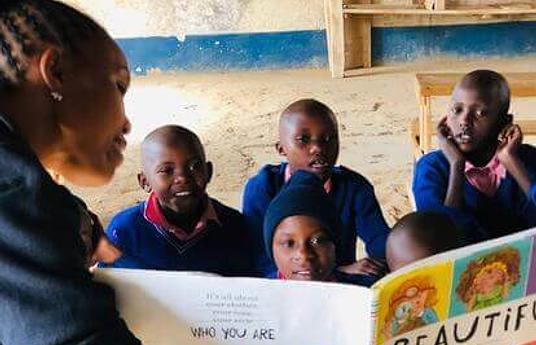
In practice, the CORE Learning Ecosystem operates through decentralized Village Learning Labs—safe, community-anchored spaces that go beyond classrooms. These hubs integrate learning, leadership, and community engagement on a single platform. At the core is a women-led model where local women are trained as educators and facilitators, supported by a blend of digital tools and in-person methods to ensure quality and contextual relevance. Technology complements human interaction through a “dual-teacher” approach.
Learning extends beyond textbooks to include foundational literacy and numeracy, life skills, communication, and real-world problem-solving rooted in local contexts. Children engage through interactive, activity-based methods that make learning meaningful. Women educators also work closely with families, strengthening trust and participation.
Each lab serves as a platform for broader community development—enabling dialogue on social issues, improving access to services, and promoting wellbeing. Over time, communities co-create solutions, becoming active drivers of their own development.

How has it been spreading?

CORE has evolved from open-air classes with migrant children in Delhi into a women-led, grassroots learning ecosystem across four regions in India, spanning urban and rural communities. It now reaches 600+ children through 30+ trained women educators, operating in 3 urban pavement learning centers and 9 village learning labs. Each center is built locally by identifying, training, and mentoring women from within the community, ensuring expansion strengthens ownership rather than dependency.
Its growth is driven by improved learning outcomes, higher retention, community trust, and the visible transformation of women into confident educators and leaders. Supported by a structured curriculum and digital tools, the model remains adaptable across contexts. As women progress, they mentor others and help establish new centers, creating a self-sustaining leadership pipeline. CORE thus scales as a community-owned system, with each center acting as a nucleus for long-term impact.

How have you modified or added to your innovation?

This is a new innovation we are submitting.

If I want to try it, what should I do?

To implement the CORE model, the starting point is not infrastructure, but community engagement and trust-building. The process begins by identifying a village or underserved community and creating a safe, accessible learning space that brings children together. At the same time, local women are identified and engaged—not based on formal qualifications, but on their potential to lead and their commitment to the community. They are then supported through continuous, hands-on mentoring to become educators and facilitators, with training focused on foundational teaching practices, classroom facilitation, community engagement, and the use of basic digital tools. A structured yet flexible curriculum, supported by simple digital systems, helps ensure quality learning while allowing adaptation to local contexts. As the model evolves, the learning space expands beyond academics to become a community platform—engaging parents, fostering youth aspirations, enabling dialogue on local issues, and linking families to existing government systems and opportunities. The key is to grow gradually and organically—from a single learning space into a women-led, community-owned ecosystem—where local leadership drives sustainability, scale, and long-term impact.
Implementation steps

Community Listening & Trust Building
Begin with informal engagement to understand local needs, aspirations, and social dynamics while building trust within the community.
Creating a Safe Learning Space
Set up a simple, accessible, and welcoming space where children feel comfortable to learn and participate. This can be done with the community stakeholders as in people who are part of the decision making body of the particular village/ community where we desire to work.
Identifying Local Women Leaders
Select women from the community based on interest and potential, not only formal qualifications, to ensure inclusivity and ownership. These women will become educators (through training) and manage the rural learning centers.
Capacity Building & Mentorship
Provide continuous, hands-on training in teaching, facilitation, and community engagement to strengthen their confidence and skills. The idea is to transform community level facilitators or teachers to become village champions and educators.
Contextual Learning Implementation
Introduce a flexible curriculum supported by activity-based methods and simple digital tools to ensure quality and relevance. This curriculum and learning content will include Basic Literacy, Numeracy, Life Skills, Climate Education components.
Family & Community Engagement
Actively involve families, build trust, and create spaces for dialogue on local issues and shared learning.
Ecosystem Linkages
Connect with schools, government systems, local and community partners, stakeholders, local institutions to expand access to resources and opportunities.
Transition to Community Ownership
Gradually evolve into a women-led, community-owned ecosystem where children, youth, and women co-create sustainable change.