We created this innovation to bridge the deep learning gap facing rural children in Uganda. Many of them walk long distances to overcrowded schools, sit on dusty floors without books, and leave school unable to read or write. As someone who studied in both rural and urban settings, I saw how unfair this gap is; children in villages are just as bright, but their environment limits their potential.
We wanted to change that by creating a simple, low-cost, and community-driven way to help every child learn. Instead of waiting for more teachers or classrooms, we turned to the most available resource, local youth. These young people already understand the language, culture, and struggles of their communities. By training them in teaching at the right level, play-based learning, and life skills, we empowered them to become Literacy Champions who bring education directly to children’s doorsteps.
Our goal was not only to improve literacy and numeracy but also to restore hope, dignity, and confidence among rural learners. By teaching under trees, in church shelters, and on community grounds, we proved that learning can happen anywhere, with joy, creativity, and purpose.
This innovation was born from the belief that education should not depend on where a child is born and that young people can lead the change their communities need.
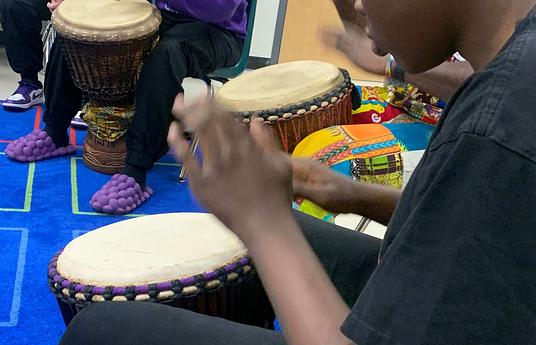
In practice, our innovation looks like youth on bicycles riding from village to village, carrying simple teaching kits of charts, storybooks, and local games. These Literacy Champions, aged 13–18, set up learning spaces under trees, in school compounds, or near church shelters where children gather after school or on weekends. Using songs, storytelling, and familiar games, they teach reading, writing, and numeracy through play and group interaction.
Each session begins with fun activities to assess each child’s level using the Teaching at the Right Level approach, then they form small groups so every learner progresses at their own pace. Lessons include local stories, role plays, debates, and panel discussions that also build confidence and life skills.
Community members join in; parents cheer, teachers collaborate, and local leaders help identify learning spaces. The Champions meet weekly at Amuno Rural Hub for reflection, mentorship, and planning.
The model is flexible, low-cost, and joyful. No child pays to attend, and no classroom is required, only the will to learn. Through this, more than 700 children have learned to read, write, and dream again, proving that meaningful education can truly happen anywhere.
Our innovation has been spreading organically through community trust, youth leadership, and visible results. Parents see their children learning to read and write, and they invite our Literacy Champions to new villages. Local leaders and schools request to join the program after witnessing the progress of nearby learners.
We also train new groups of youth each year, expanding our network of Champions who carry the model to their own communities using bicycles provided by Amuno. This peer-to-peer approach allows the idea to grow without needing large funding.
Partnerships have also supported its spread; we collaborate with the Global Fund for Children under the “Thriving Through Play” project and with the Read to Learn Foundation to train more youth educators. These collaborations help us improve quality and extend reach to more rural areas.
We share our success stories through community events, radio talks, and social media, inspiring others to replicate the model. Because it’s simple, low-cost, and adaptable, schools, churches, and youth groups have started adopting similar methods.
What began in a few villages of Bukedea District is now inspiring neighboring communities, proving that when young people lead, learning can reach even the most remote child.
Since launching the Literacy Champions Program, we have continuously adapted and improved the model based on feedback from learners, youth educators, and the community.
Initially, sessions focused mainly on literacy and numeracy, but we realized children also needed life skills to thrive. We therefore integrated debates, panel discussions, teamwork exercises, and problem-solving activities to help children develop confidence, communication skills, and civic awareness.
We also refined our teaching methods by fully adopting Teaching at the Right Level (TaRL) to ensure every child learns at their own pace and expanded our play-based approach using local songs, games, and storytelling to make lessons more engaging and culturally relevant.
Logistically, we added bicycle distribution and route planning for Literacy Champions, allowing them to reach more remote villages efficiently. We also began organizing weekly reflection and mentorship sessions for youth educators, helping them improve their teaching skills, track progress, and share challenges.
Finally, we created community engagement strategies, inviting parents, teachers, and local leaders to participate in sessions, provide feedback, and support learning spaces. These adjustments have made the innovation more effective, scalable, and sustainable, while keeping it joyful, inclusive, and rooted in the local context.
If you want to try the Literacy Champions model, start by identifying local youth aged 13–18 who can read, write, and are motivated to help their community. These youth will become your Literacy Champions. Train them in Teaching at the Right Level (TaRL), play-based learning, and life skills such as debates, teamwork, and storytelling.
Plan outreach routes to nearby villages and provide bicycles if possible. Set up learning spaces in safe, accessible areas like school compounds, church shelters, or under trees. Engage parents, teachers, and local leaders to support children’s participation.
During sessions, start with fun activities to assess each child’s level. Use small groups so every learner progresses at their own pace. Integrate literacy, numeracy, and life skills using local stories, games, and songs to make learning engaging and culturally relevant.
Hold weekly reflection sessions with youth educators to track progress, share challenges, and improve teaching methods. Keep simple records of attendance, learning outcomes, and skill development, and collect stories from children and parents to show impact.
Finally, adapt and scale the program based on feedback. Adjust teaching methods, routes, or activities as needed and gradually expand to reach more villages. Following these steps, you can replicate Amuno’s model to bring joyful, community-led literacy and life skills education to children in even the most remote areas.