.jpg)
I started this because I saw the struggles in villages through my mother who taught for 30 years. Children lacked schools, teachers, books, and many girls dropped out. I wanted to continue her legacy by creating a solution that gives rural children access to quality education and equal opportunities to succeed.
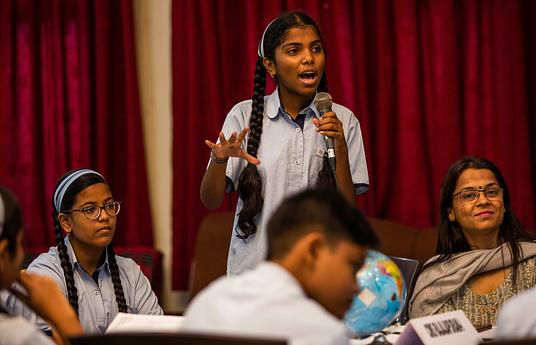
In real life, our innovation looks like children in villages getting school supplies, extra tutoring, and mentorship. Teachers are supported with training and materials, while schools get better classrooms and small libraries. At the same time, we talk with parents so they see the value of education, especially for girls. Step by step, this makes school a place where children want to stay and can actually learn.
Our idea has been spreading because communities themselves are asking for it. When one school sees the results, another nearby school invites us. Teachers tell other teachers, and parents tell other parents. Volunteers and youth also carry the model into new places. Little by little, what started in one village is growing into many.
When we first started, our focus was mainly on giving children school supplies and helping them go back to school. But as we worked more in the villages, we realized that wasn’t enough children also needed support to learn well and stay in school.
So, we added:
After-school clubs to help children with reading and maths.
Teacher training sessions so teachers could use better methods.
Small libraries and learning corners to make learning fun.
Health and hygiene programs because we saw many children missed school due to sickness.
Parent awareness meetings so families understand the importance of education, especially for girls.
Each time we saw a new challenge, we adapted our approach. This way, the innovation keeps growing to meet the real needs of children, teachers, and communities.
If you want to try this innovation in your own community, start small and practical:
Identify the Need – Talk to schools, teachers, and parents to understand what children are lacking (books, fees, classrooms, or support in learning).
Start with One Action – Begin with something simple, like a back-to-school drive or a reading club, to show quick impact.
Work with Local Partners – Involve teachers, community leaders, and volunteers so that the community owns the project.
Add Support Step by Step – As you grow, you can introduce teacher training, small libraries, or parent awareness programs.
Keep it Flexible – Adapt based on what works best for the children in your area.
The beauty of this innovation is that it does not require huge resources to begin just commitment, community support, and the willingness to put children first. From there, it grows naturally.