Many children do not enjoy school. This is not a fringe complaint, It is a structural reality that educators and policymakers quietly acknowledge and rarely address. Conventional schooling delivers content top-down, prescribes outcomes, and treats creativity as an afterthought. I spent two decades watching children light up the moment they were given real freedom — and shut down the moment it was taken back. I watched a child named Abhi arrive at an after-school space with an empty tin box, a borrowed lens, and a plan nobody had given him. Within days he had built a working solar cooker. Nobody assigned the project. Nobody graded it. The learning happened because the conditions existed — and because someone had the wisdom to stay out of the way. I created T-LAB because that kind of learning — purposeful, joyful, self-directed — was not available to most children in most schools. STEAM spaces existed, but they reproduced the same top-down logic: teacher prescribes, student executes. The child remained peripheral to the very process designed to serve them. T-LAB was built on one conviction: if you place a child's happiness at the centre of learning — not as a reward for compliance, but as the engine — genuine learning follows naturally.
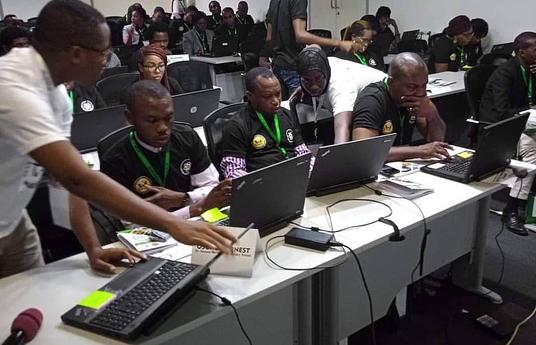
Walk into a T-LAB and children are already at work — no coaxing, no warm-up. Each child pursues a project they chose: 3D games, circuits, electromagnetic models, chemistry experiments, structural designs. They arrived with a plan, bought materials using T-LAB's own printed currency, and went straight to work. Three structural innovations define T-LAB:
1. Self-directed project work. Children choose projects and work at their own pace. A work-in-progress area holds ongoing projects between sessions. At the Podium Desk, children present finished and unfinished work alike — because failure is evidence, not embarrassment. A peer's project is the most powerful trigger for the next idea.
2. Internal currency system. T-LAB prints its own notes, bearing denomination 1, 10, 100, 1000 and students' faces. Children purchase materials and sell completed projects back. Resource management and budgeting emerge as natural consequences — not taught subjects.
3. Democratic governance. Three teams — Planning, Bank, Material — are elected by ballot. Children campaign and deliver speeches. These teams run the lab entirely, freeing teachers to ask questions instead of enforcing rules.
Result: session after session, nearly every child is working on a project of interest, at their pace (100% engagement), Hundreds of self-directed projects.
No proprietary technology. No specialist equipment.
Children work on their own STEAM projects, in an environment of trust, responsibility and freedom
T-LAB's story began in 2015 with a single after-school space in Bhopal, MP modest in size, but what unfolded inside was anything but ordinary. Within those first few years, something rare emerged: 100% participation, processes that kept evolving, and children returning session after session, driven by their own curiosity. A currency system deepened that intrinsic motivation further.
But one space could only reach so many children. So the model moved to where children already were, i.e. schools. That pivot brought real challenges, and those challenges forced innovation. What evolved was a children-led STEAM process complete with an election system, children voting to form a bank team, a materials team, and a planning team, each managing their own piece of the lab's living ecosystem.
The journey continued. Over ten years, T-LAB has taken root in approximately 32 schools across India, private and government schools alike, through NGO partnerships - spanning Maharashtra, MP, UP, Bihar, and Gujarat. From one room to five states. From after-school to in-school. Along the way came recognition: awards, a TEDx talk, and articles in education magazines.
The next phase plants 50 model labs, each one as a seed. Every lab carries the motto forward and demonstrates to the next school what is possible. And alongside, Miniguru, a free digital platform, carries the same spirit to every child. Real projects. Peer learning. Creative momentum that doesn't stop at the school gate.
What began as an experiment grounded in one simple belief ‘believe in children’ has shaped every modification T-LAB has made since.
The first addition was the currency system. Early labs gave children open access to materials, and waste followed naturally. T-LAB introduced its own printed currency, carrying students' own faces, to build accountability from within. The behavioural change was immediate. Children became planners, not just tinkerers.
The planning board followed a similar arc. Initially managed by facilitators, it was gradually handed to children in school-based labs. The shift was revealing, peers approval is rather reasonable and enough to move forward. The lab breathed differently when it belonged to them.
In schools, teachers, however well-meaning, began to subtly dominate the space. The response was deliberate: a fully student-run lab model was introduced and it worked. Children, when genuinely trusted, rise.
The most recent and perhaps most urgent modification addresses isolation. I have observed that peer projects have been greatest trigger for a child to start a new project. This is what Miniguru is, tested about to launch the miniguru.in, which children would plan their builds using an in-app planning page, and spend their digital scores on materials and upload project videos to earn a value, Every child becomes a guru to another. It is a knowledge bank built by children, for children, ensuring that what's made in one lab sparks something in the next
If something in T-LAB's story resonates, as a teacher, parent, school leader, or simply someone who believes children deserve better, the most honest first step is not to replicate. It is to unlearn.
T-LAB's foundation rests on one quietly radical act: trusting children before you have proof they deserve it. Most of us carry years of conditioning from systems where control, adult approval, and prescribed outcomes were the default. That conditioning needs examining first. What T-LAB demonstrates, repeatedly, is that when children work on their own ideas, not a single moment is wasted.
To go deeper into the thinking, Pramod Maithil's TEDx talk at IIITDM Jabalpur, "The Science of Natural Learning," is the clearest entry point into the philosophy.
Once that shift begins internally, trying is concrete. Create a space, a corner, a spare period, a room, with basic accessible materials and no fixed agenda. Let children choose what to make. Resist redirecting, assessing, or finishing things for them. Observe what unfolds without intervening.
The blog at tinkeringlab.wordpress.com carries field notes, visitor observations, and evolving ideas from the lab floor. His book "School for My Child," published by Partridge Penguin, documents years of experiments across pedagogy, democratic schooling, and autonomous learning.
To explore partnership or setting up a lab, reach Pramod directly at pramod.maithil@gmail.com or through LinkedIn and Facebook.