Robles del Futuro is an extracurricular activity designed to educate and train young people between the ages of 14 and 18—high school students—in leadership skills, socio-emotional competencies, civic engagement, and communication skills in a second language. This activity is implemented through agile and experiential methodologies that foster in participants mastery of goal tracking and planning, self-exploration of strengths, development of critical thinking and bias detection, the ability to work in high-performing teams, and autonomy in decision-making. Each participant engages in a two-year training program totaling approximately 280 hours to enhance their personal skills and positively influence others.
The transformative leadership potential of young people is very high, given their stage of life, where peer influence is widespread, their drive is strong, and their use of technology as a high-profile and influential network is increasingly prevalent. This natural capital is our starting point for mentoring the participants. We aim to influence their ethical profile from an early age, so that their understanding and respect for human relationships becomes a guide for achieving goals and building a life plan. The impact that the Robles del Futuro program has had on students from different schools motivates us to promote this educational innovation as a structure that enhances knowledge acquisition, the development of influential leadership, and social awareness.
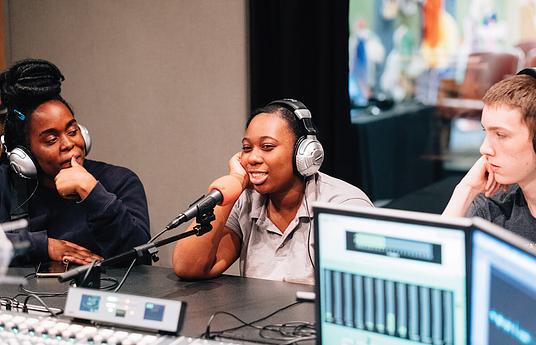
The following four components represent the delivery of the two-year Robles del Futuro program: First, program content: where the development of life skills, leadership, and social entrepreneurship are combined with experiential learning and cutting-edge methodologies such as: a self-concept and self-esteem workshop, podcast development for public speaking, a masterclass in critical thinking, bias identification and argumentation, a skills bootcamp for self-awareness of learning styles to enhance academic performance, biodanza as a bodywork technique, vocational coaching, and intensive training in self-regulation and mindfulness techniques. Second, mentoring for goal planning: personalized support through 15 follow-up sessions with mentors trained in planning, to encourage young people to achieve three self-identified goals: Academic, Well-being, and Common Good, over a period of 9 months. Third, the Youth Initiative for the Common Good: a 10-month group project that raises awareness among young people about environmental issues and empowers them as agents of change. It encompasses project-based learning, problem identification, proposed solutions, implementation, and systematization of the results of this socially focused entrepreneurship. And finally, the newest learning component: the Conversation Club, a space designed to practice conversational skills and help young people gain self-confidence, opening doors to opportunities that make them eligible for opportunities.
Since its inception in 2011, 530 leaders have successfully completed the certification process, and more than 9,000 people have directly benefited from its social projects, which have spanned 11 editions. The Robles del Futuro Program has directly impacted 321 schools in the metropolitan area of Caracas, located in three states in the central region of the country (Miranda, Capital District, and Vargas) and nine municipalities. Some graduates have launched their own social enterprises to continue impacting more people: values-based sports schools, community intervention programs for families in Caracas neighborhoods, and elder care services. In addition, four graduates are part of the team at the Civil Association, where various programs are implemented. We currently offer the program's methodology and resources to partner schools.
The pandemic prompted the organization to recognize the need to firmly integrate digital skills into the training of young leaders. Currently, students in the program demonstrate their progress in this area by proposing innovative solutions to the challenges in their environment, leveraging the versatility of web environments, social media, and digital communication channels as fundamental tools. At the same time, an additional component was incorporated into the program: the English Conversation Club. This program offers opportunities to improve a second language crucial for future leaders, specifically conversational fluency, enabling them to connect and collaborate effectively on a global scale. While the Venezuelan education system includes English as a mandatory subject, recent studies reveal that only a minority of students (approximately two out of ten) achieve adequate proficiency in the language. Aware of this reality, the Robles del Futuro program seeks to significantly enhance this essential skill for the personal and professional development of its participants. Finally, and most recently, the "Pillars of Financial Education" course has been added as an annual elective. This is a series of two meetings to explain and discuss financial concepts and best practices for young people.
Robles del Futuro has been developed so that it can be applied by other actors, and for this reason its programmatic structure is sufficiently systematized and documented. Based on the shared educational model of Robles del Futuro, a group of graduates developed the Eudomonía project, a training proposal for 68 young people in their 5th year of high school at the Andrés Bello Didactic Institute.